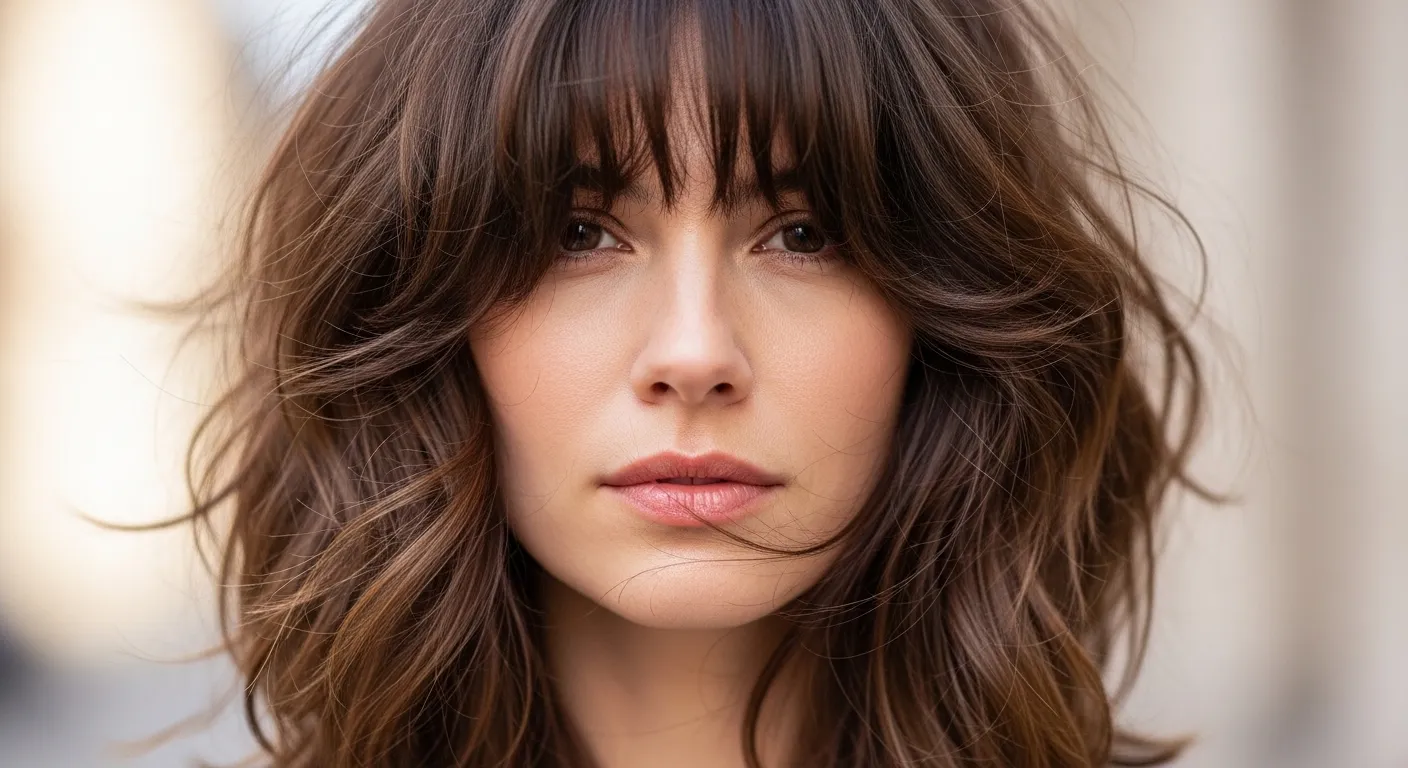
Medium shaggy haircut ideas are having a serious moment and for very good reason. They sit right in the sweet spot between short and long, giving you enough length to play with while keeping things manageable and full of movement. The shag works on straight hair, wavy hair, curly hair, thick hair, and fine hair alike. It adds layers where you want them, removes bulk where you do not, and creates that effortless, undone texture that looks like you woke up looking this good. Whether you are growing out a pixie, tired of your blunt lob, or just ready for something with more personality, a medium shag delivers without requiring daily styling hours. These 23 ideas cover every variation of the cut so you can walk into your next salon appointment knowing exactly what you want. If you’re also exploring 90s pixie cut ideas, this bold, layered style pairs perfectly with that same effortless texture and adds a retro edge to modern hair trends.
The Classic 70s
medium. Shaggy Haircut ideas with Curtain Bangs
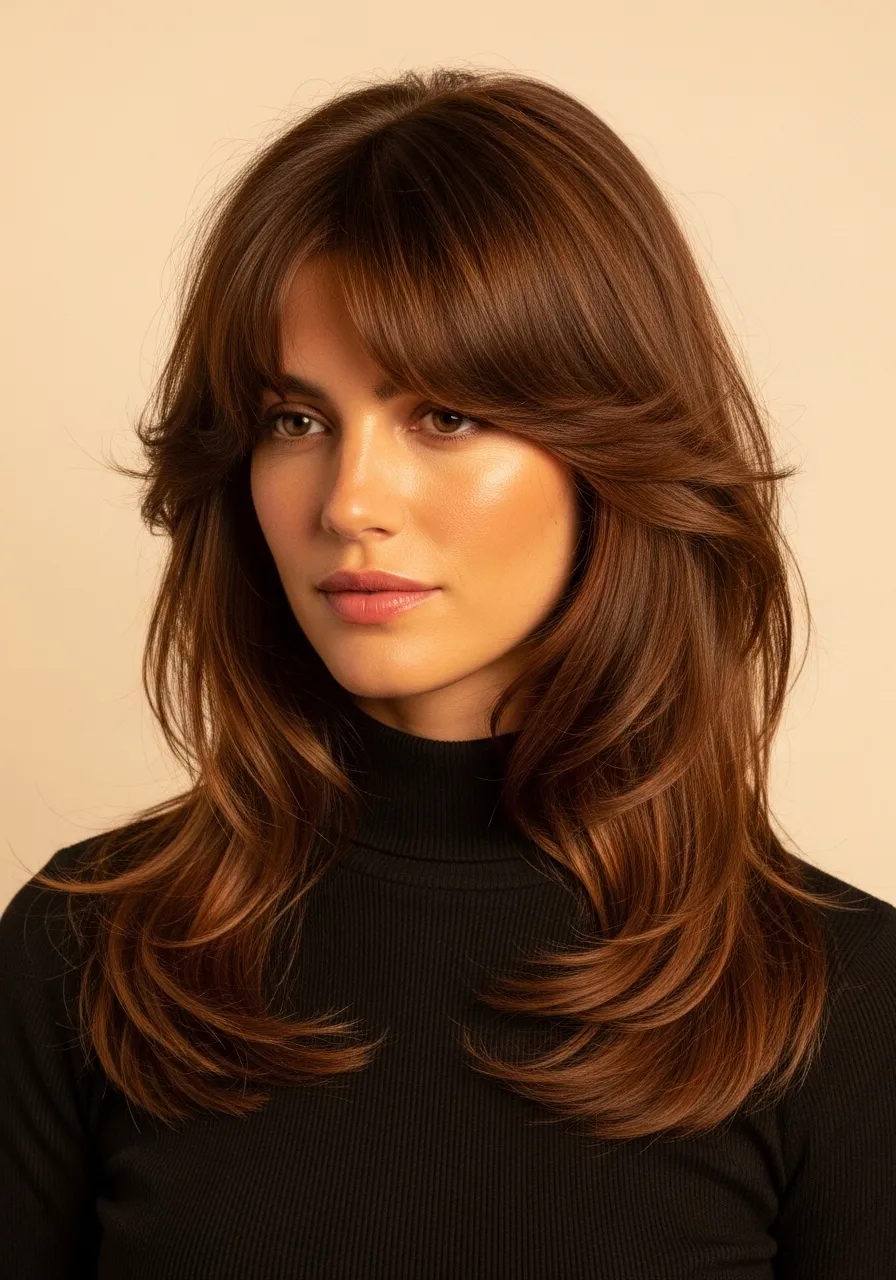
The 70s shag is the original version of this cut and it has never really gone out of style.
The key features are curtain bangs that part in the middle and frame the face, layers that start at the cheekbone level, and feathered ends throughout the length.
This cut works especially well on oval, heart, and square face shapes because the curtain bangs soften the forehead and the layers add width at the cheekbones.
Ask your stylist for a “70s inspired shag with face-framing layers and curtain bangs.” Bring a reference photo to be specific.
To style at home, apply a small amount of mousse to damp hair and scrunch gently. Diffuse on low heat or let air dry for a natural, effortless finish.
A light-hold texturizing spray adds that final feathered softness once the hair is fully dry.
The curtain bangs grow out gracefully, which means you are not locked into constant bang maintenance. They simply become longer face-framing layers over time.
This is a low-maintenance cut that looks intentional even on days when you do nothing to it. For fine hair, it adds the appearance of density through all those layers. For thick hair, it removes weight and bulk beautifully.
Budget tip: This cut works well at mid-range salons. Bring a clear reference photo and any experienced stylist can execute it.
Wavy Shag with Lived-In Texture
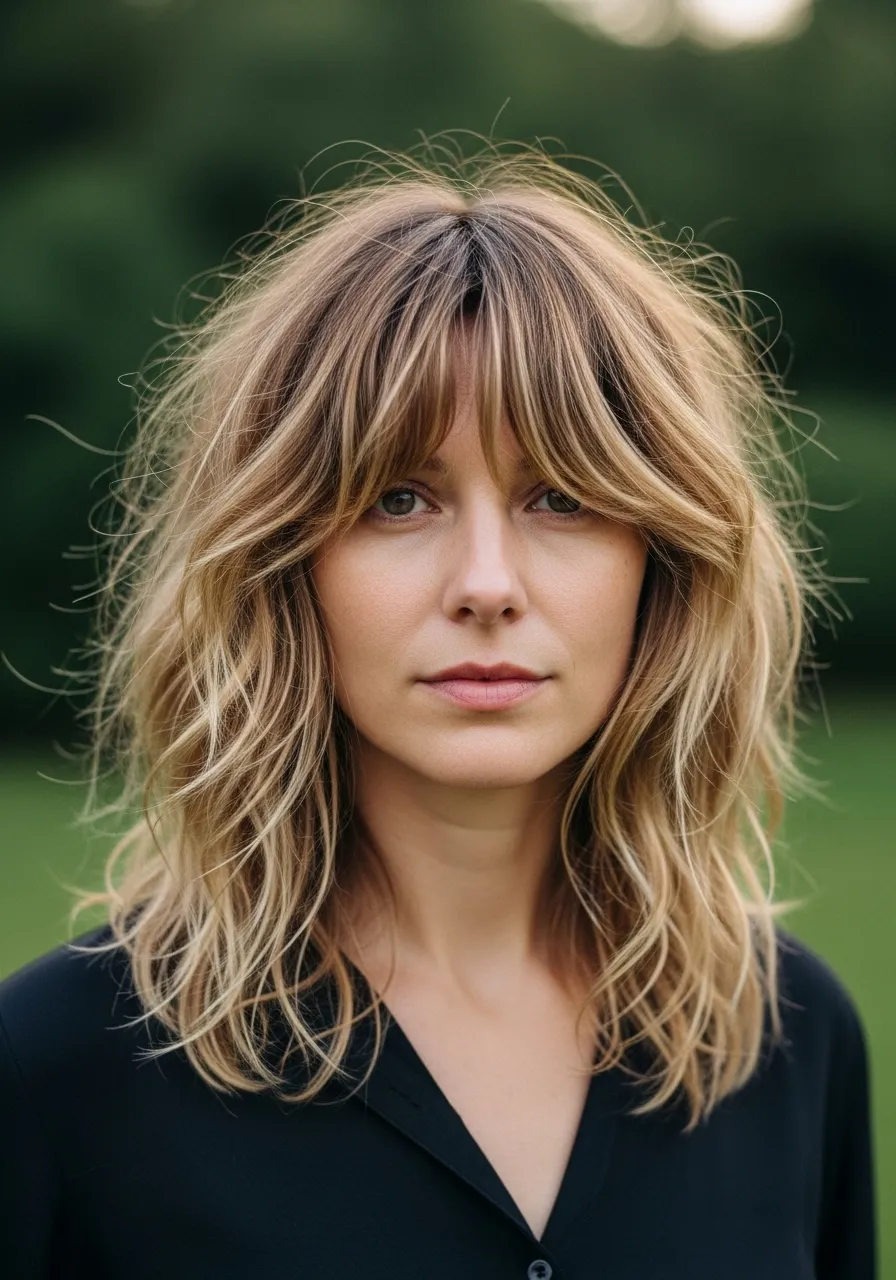
If you have naturally wavy hair, the shag cut is practically made for you.
Wavy texture and layered shag cuts work together rather than against each other. The layers encourage your natural wave pattern to form more defined, bouncy waves instead of falling flat under the weight of uncut length.
Ask for layers that start at the chin and gradually lengthen toward the shoulders, with plenty of texture cut into the ends.
Your stylist can use a razor or point-cutting technique to add extra movement to the ends, which gives wavy hair that perfectly undone look.
To style, apply a curl-enhancing cream or mousse to wet hair. Scrunch upward from the ends and either diffuse or air dry.
Once dry, break up any clumps gently with your fingers. Finish with a light spritz of salt spray for extra grit and definition.
The beauty of a wavy shag is that it looks better on the second and third day after washing. The natural oils and any leftover product settle into the layers and the waves become even more defined.
Budget tip: Invest in one good curl cream. The Aussie Miracle Curls cream costs around $5 and works beautifully for enhancing wavy shag texture without crunchy buildup.
Shaggy Lob with Subtle Layers
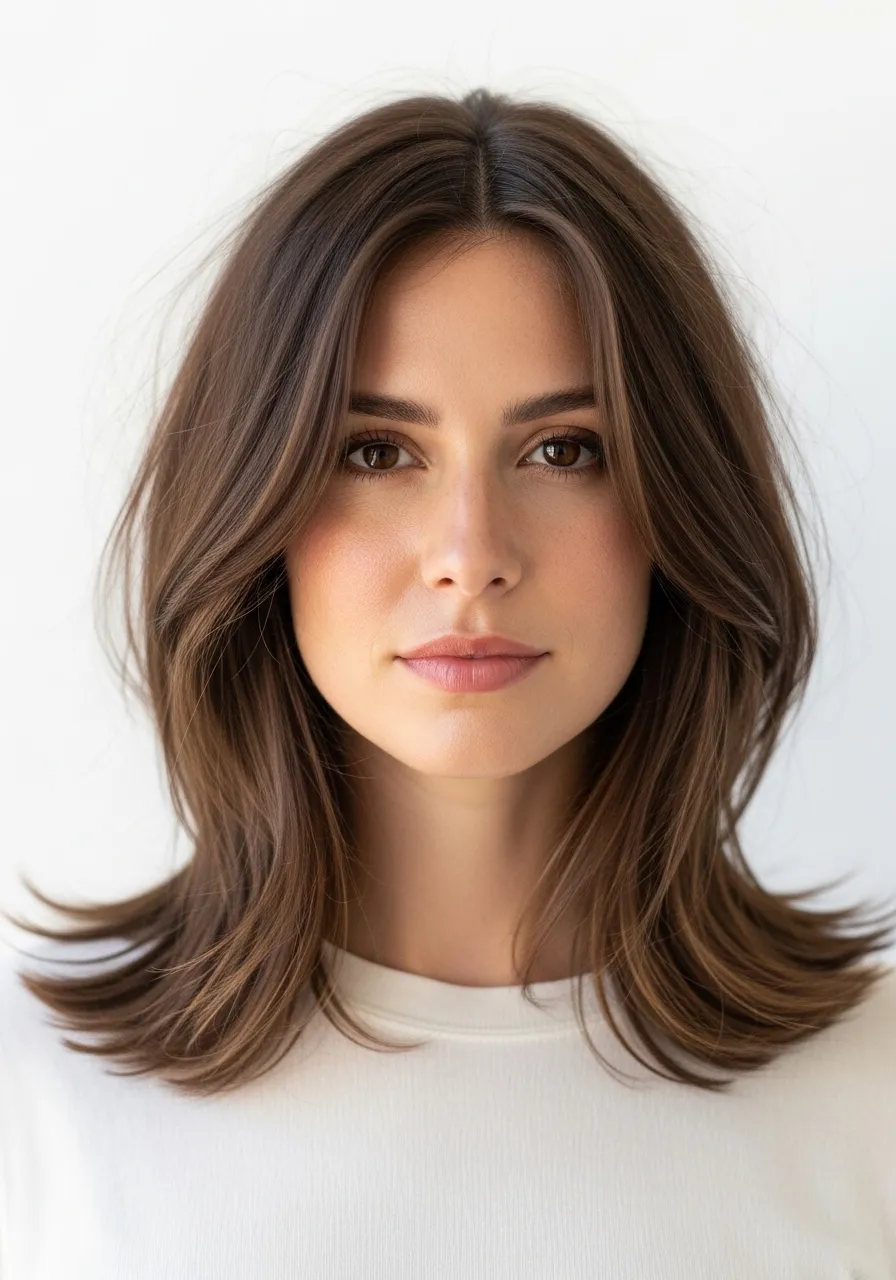
The shaggy lob is perfect for anyone who wants the personality of a shag without going too dramatically layered.
It keeps most of the length intact while adding enough layering to create movement and remove that heavy, blunt-edge look that a standard lob can have.
The layers in a shaggy lob are subtle, starting lower down around the collarbone rather than the cheekbone, and the ends are textured rather than blunt-cut.
This is a great starting point if you are new to shags and not sure how much layering you want. You can always add more layers at your next appointment.
Tell your stylist you want a “textured lob with soft internal layers and point-cut ends.” This gives them enough direction without requiring overly specific terminology.
Styling is simple. Apply a small amount of smoothing cream or light oil to damp hair and blow dry with a round brush. Finish with a flat iron on a few sections, turning the ends outward for a casual, natural finish.
Or skip all heat entirely, scrunch with a light mousse, and let air dry for a softer, more casual result.
The shaggy lob suits almost every face shape and hair type. It is one of the most universally flattering medium haircuts available and requires trims only every eight to ten weeks.
Curtain Bang Shag for Fine Hair
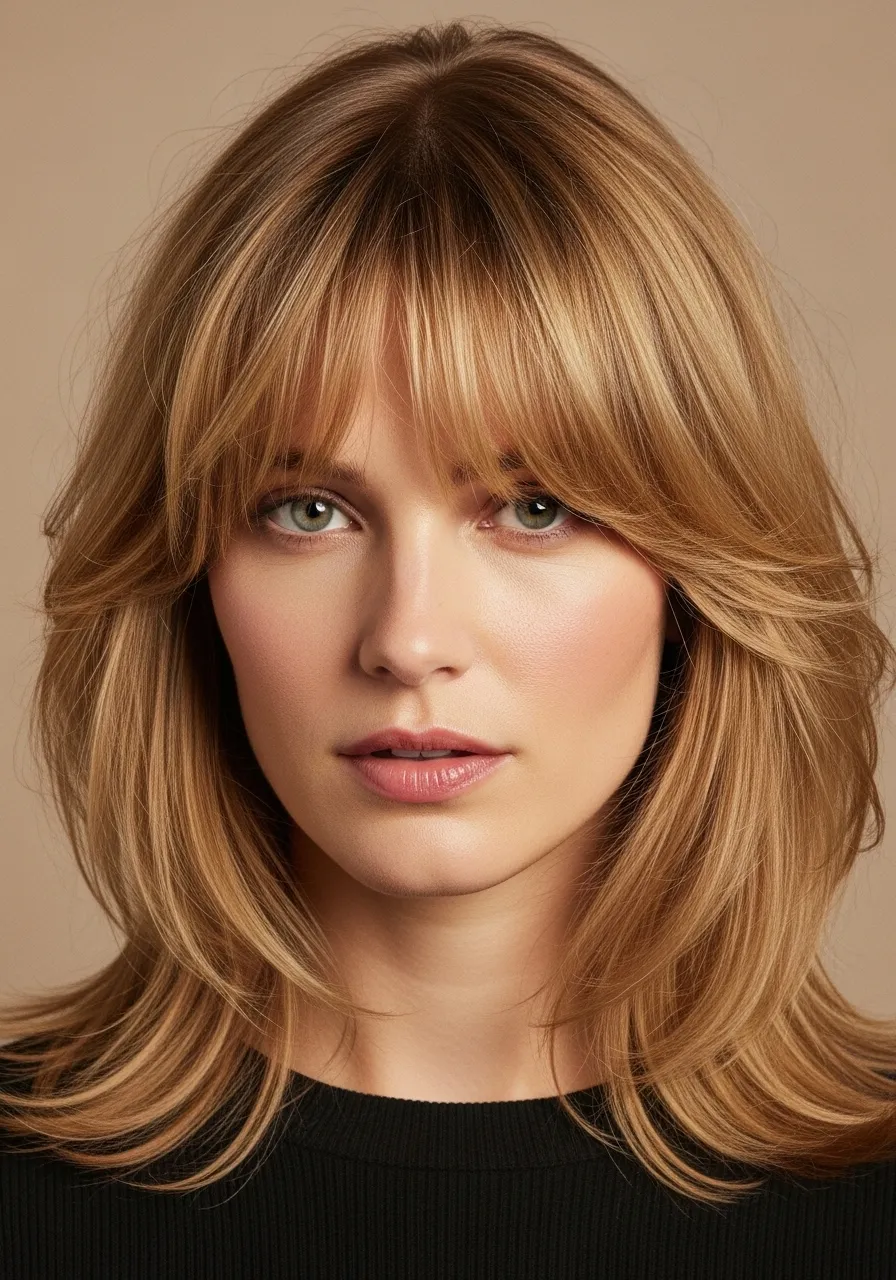
Fine hair and shag cuts are a genuinely great pairing.
The layering technique used in a shag removes weight from the perimeter of the hair, which allows fine strands to spring up and appear fuller and denser than they actually are.
The curtain bang addition is especially flattering for fine hair because it keeps the front of the style full and framing while the layers throughout add perceived volume.
Ask specifically for “short layers starting at the crown to create lift, with longer layers underneath for movement.” This two-layer approach gives fine hair its best chance at looking full.
Avoid heavy creams and oils when styling fine hair. These weigh the layers down and cancel out the volume the cut creates.
Use a volumizing mousse on damp hair instead. Blow dry upside down for maximum root lift. Finish with a light-hold hairspray rather than anything heavy.
Dry shampoo is a fine-haired shag wearer’s best friend. Spray at the roots between washes to maintain volume and extend the life of a blowout.
Budget tip: Batiste Original dry shampoo costs around $8 and performs as well as options three times the price. Keep it at your bathroom counter and use it daily if needed.
Shaggy Haircut with Bold Face-Framing Layers
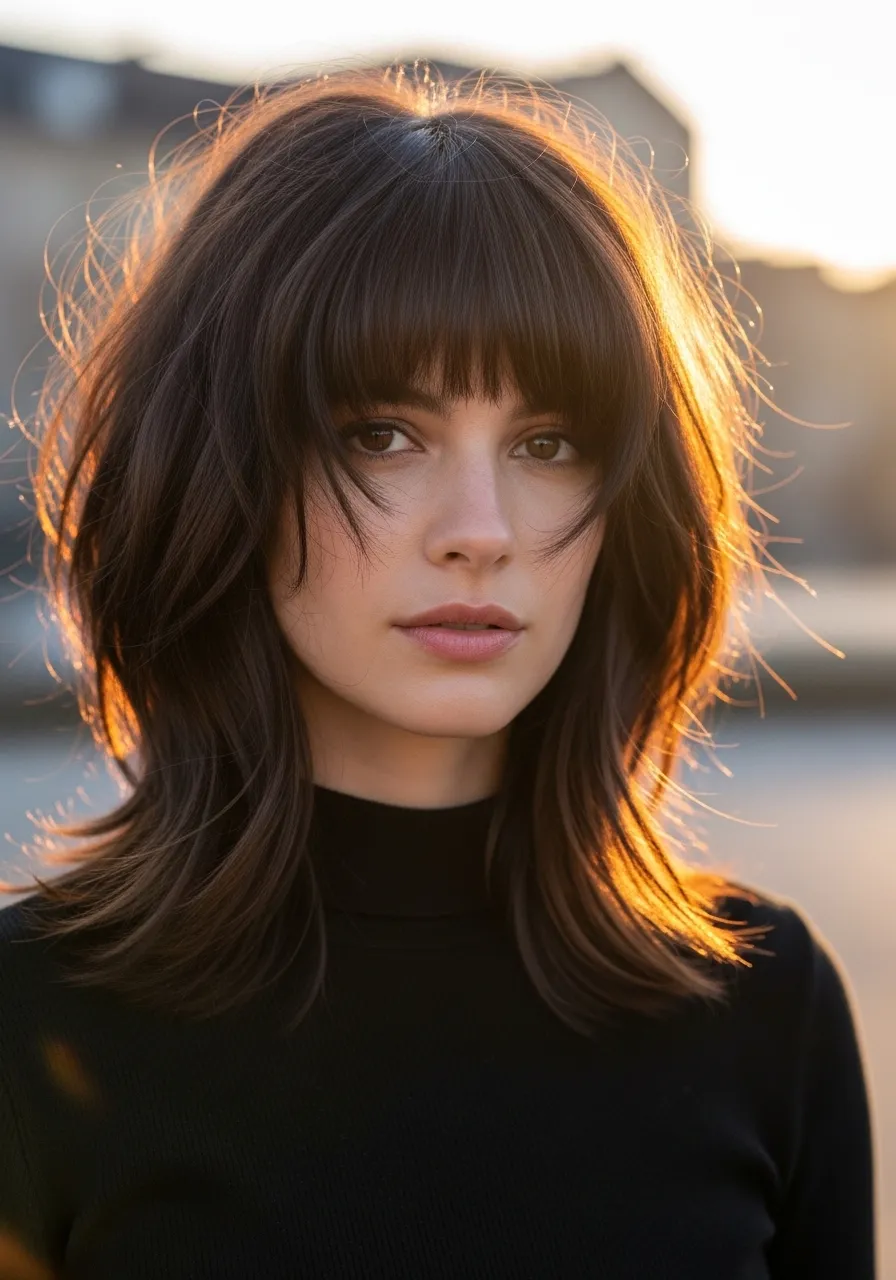
Face-framing layers are the most flattering feature you can add to any medium shag.
Unlike standard layers that blend throughout the hair, face-framing layers are specifically cut to sit shorter around the face and highlight your features.
The most dramatic version involves layers that sit at chin length around the face, with the rest of the hair staying at shoulder or collarbone length. This contrast creates a strong, intentional shape.
A softer version uses layers that begin at the jawline, which is more subtle but still adds significant face-framing movement.
Tell your stylist exactly where you want the shortest face-framing pieces to fall: at the chin, jaw, or cheekbone. This specificity matters more than any technical terminology.
To style face-framing layers so they fall forward beautifully, use a small round brush while blow-drying and direct the front sections inward toward your face rather than away from it.
A small amount of hair wax or pomade pressed between your fingers and smoothed over the front layers keeps them defined without looking stiff.
Face-framing layers also make growing out bangs much easier. The layers create a natural landing point for growing fringe so the awkward in-between stage is far less noticeable.
Shag Haircut for Thick Hair
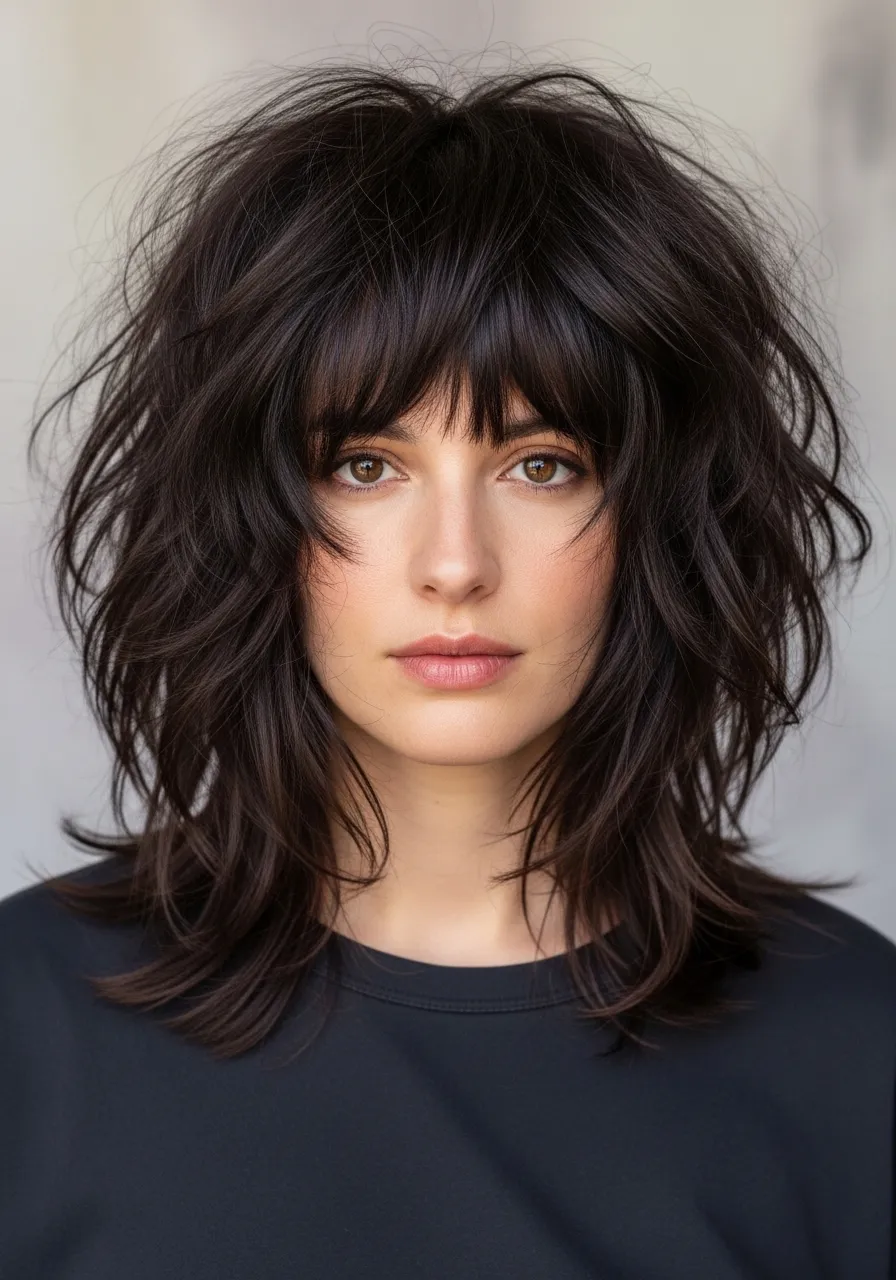
Thick hair can feel unmanageable at medium length without the right cut.
An unstructured medium cut leaves thick hair heavy and prone to puffing outward rather than falling in shape. A shag solves this by strategically removing interior bulk while keeping the exterior length.
The technique your stylist should use for thick hair is internal thinning combined with point cutting at the ends. This removes weight from inside the hair without reducing the visible fullness from outside.
Razor cutting is another option that works especially well on thick hair to add softness to ends that might otherwise feel blunt and heavy.
Ask your stylist for “a shag with interior thinning and lots of movement cut into the ends.” Mention that your hair is thick, so they allocate enough time and approach the cut accordingly.
Thick hair shag wearers benefit from using a smoothing serum on damp hair before diffusing or air drying. This controls any frizz or puffiness without flattening the layers.
In humid weather, a light anti-humidity spray over finished dry hair helps the layers hold their shape.
Budget tip: The Garnier Fructis Sleek and Shine serum costs around $4 and controls thick hair frizz as well as many premium options. Apply a small amount, emphasis on small, to avoid greasiness.
Curly Shag Haircut at Medium Length
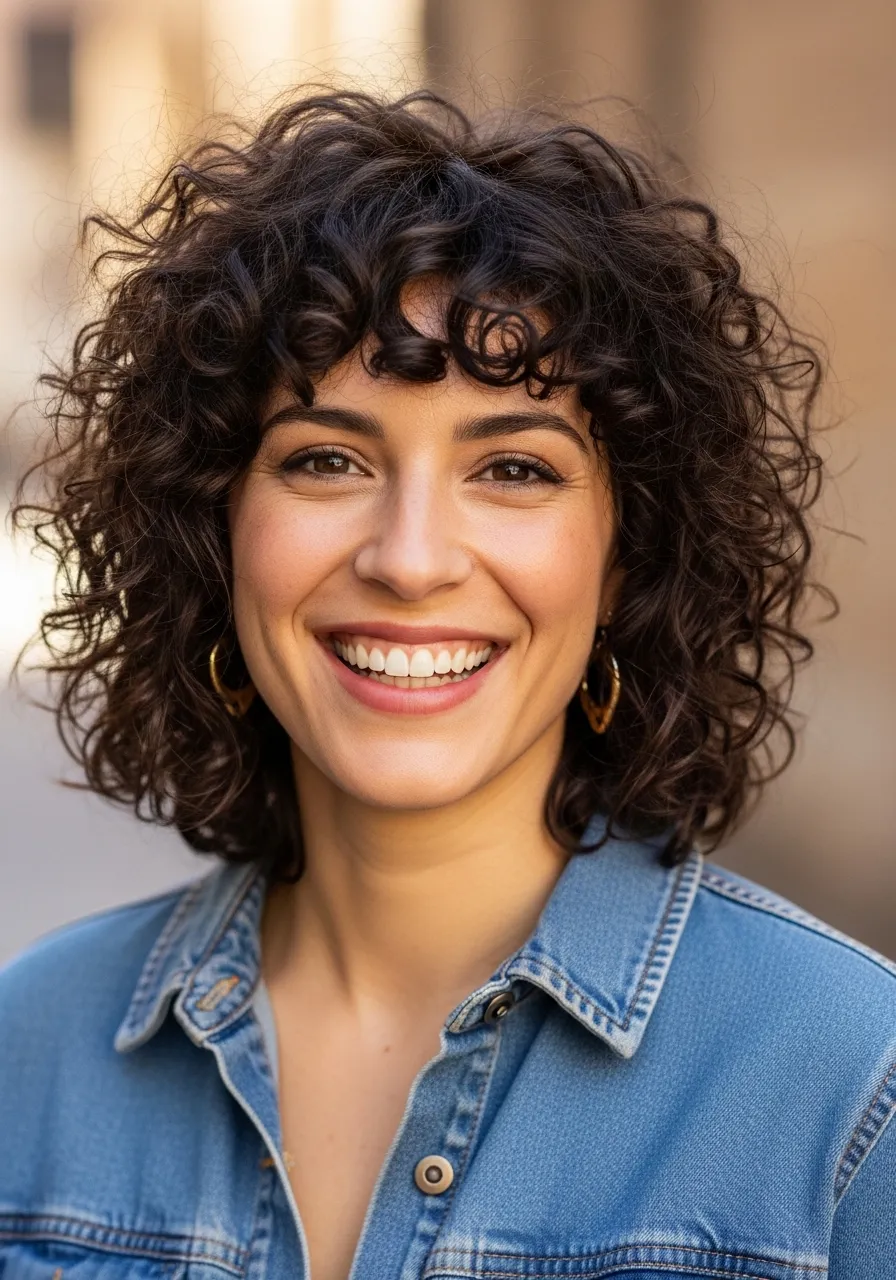
The curly shag is one of the most beautiful and liberating haircuts for naturally curly hair.
Curly hair often looks shorter than it actually is due to shrinkage, so a medium shag allows for good visible length while taking advantage of the natural curl pattern.
The Deva cut technique is popular for curly shags because the stylist cuts the hair dry and curly, seeing exactly how each curl falls before making any cut.
Ask for a curly shag with “graduated layers that follow the natural curl pattern,” and make sure your stylist has experience with curly hair cutting specifically.
The layers in a curly shag should be cut to encourage individual curls to spring and coil rather than lying flat under the weight of uncut length.
For styling, apply a generous amount of curl cream or gel to soaking wet hair. Scrunch firmly upward and either diffuse on low heat or air dry completely before touching.
Once fully dry, use your fingers to gently separate and shape the top layer of curls only. Touching too early or too vigorously causes frizz.
The curly shag looks more defined and bouncy on day two after refreshing with a spritz of water and a small amount of conditioner.
Budget tip: The LA Looks Sport Gel costs around $3 and gives curly shags incredible definition without the price tag of salon brands.
Shaggy Bob Hybrid Cut
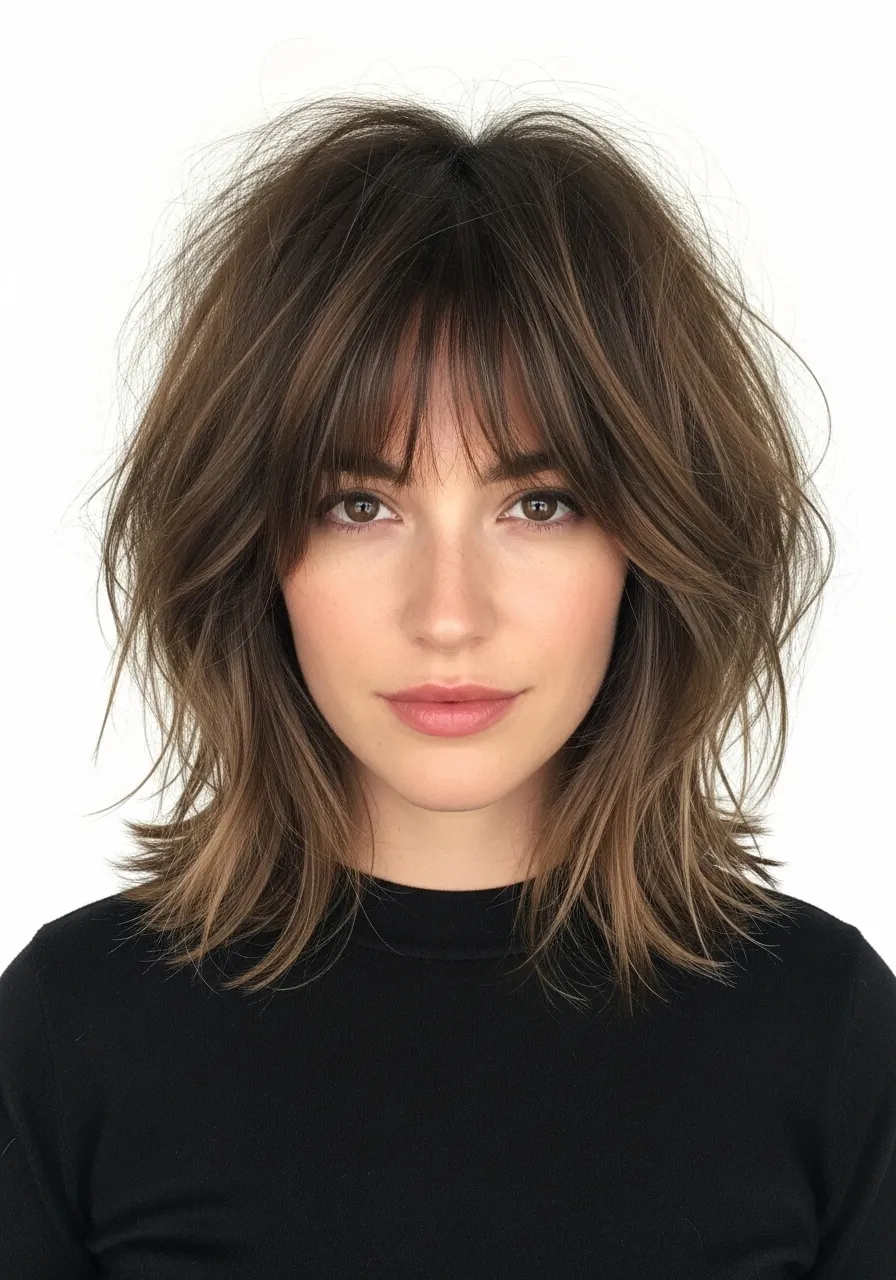
The shaggy bob sits at the shorter end of the medium range, hitting anywhere between the jaw and the chin with heavy texture throughout.
It is shorter than a traditional shag but carries all the same textured, layered character.
This cut works especially well for people who want a low-maintenance short style with more personality than a blunt bob and more shape than a standard pixie.
The shaggy bob often features a very slight V-shape or graduated back, meaning the back sits slightly shorter than the front for a flattering, face-lengthening silhouette.
Tell your stylist you want a “textured bob with shaggy layers and point-cut ends.” Specifying that you do not want a blunt perimeter helps communicate the kind of finish you are after.
Styling a shaggy bob is fast. Apply a small amount of texturizing paste or mousse to damp hair, scrunch lightly, and air dry.
On days when you want more polish, a quick blow dry with a paddle brush takes under five minutes at this length.
A flat iron on low heat with the ends curled slightly outward gives the shaggy bob a deliberately undone finish that photographs beautifully.
The shaggy bob grows out gracefully into a longer shag, so you are never really stuck in a difficult growing-out phase.
Shag with Wispy Ends and No Bang
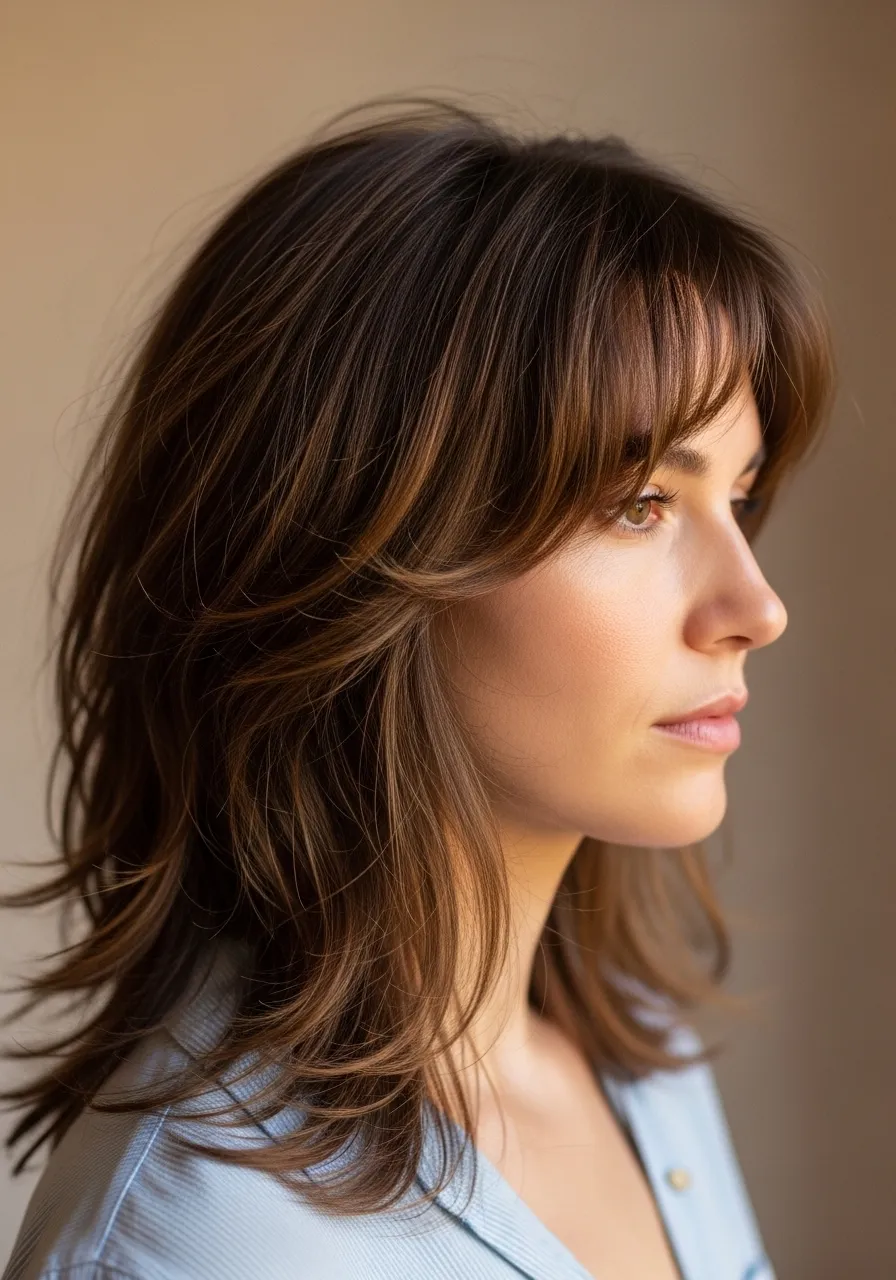
Not everyone wants bangs with their shag, and that is completely fine.
A bang-free shag is actually one of the most wearable versions of the cut because it suits almost every face shape without the commitment of fringe maintenance.
Wispy ends are the defining feature of a bang-free shag. The entire perimeter of the hair is point-cut or razor-cut to create a feathered, airy finish rather than a solid blunt edge.
This feathering technique prevents the hair from looking like a generic layered cut. The ends have visible separation and movement that gives the whole style life.
Ask your stylist for “a medium shag with no bangs, plenty of internal layers, and wispy textured ends throughout.”
To style wispy ends beautifully, use a small flat iron to bend the last two inches of random sections slightly in different directions. This randomness is what creates that naturally undone, textured look.
Finish with a pea-sized amount of flexible wax or a light texturizing spray distributed through the ends with your fingers.
Avoid trimming the wispy ends yourself between appointments because even small changes alter the feathered perimeter. Wait for your stylist and communicate clearly that you want to preserve the wispiness.
Trims every eight weeks keep this style looking intentional rather than grown out.
Shaggy Haircut with Money Piece Highlights
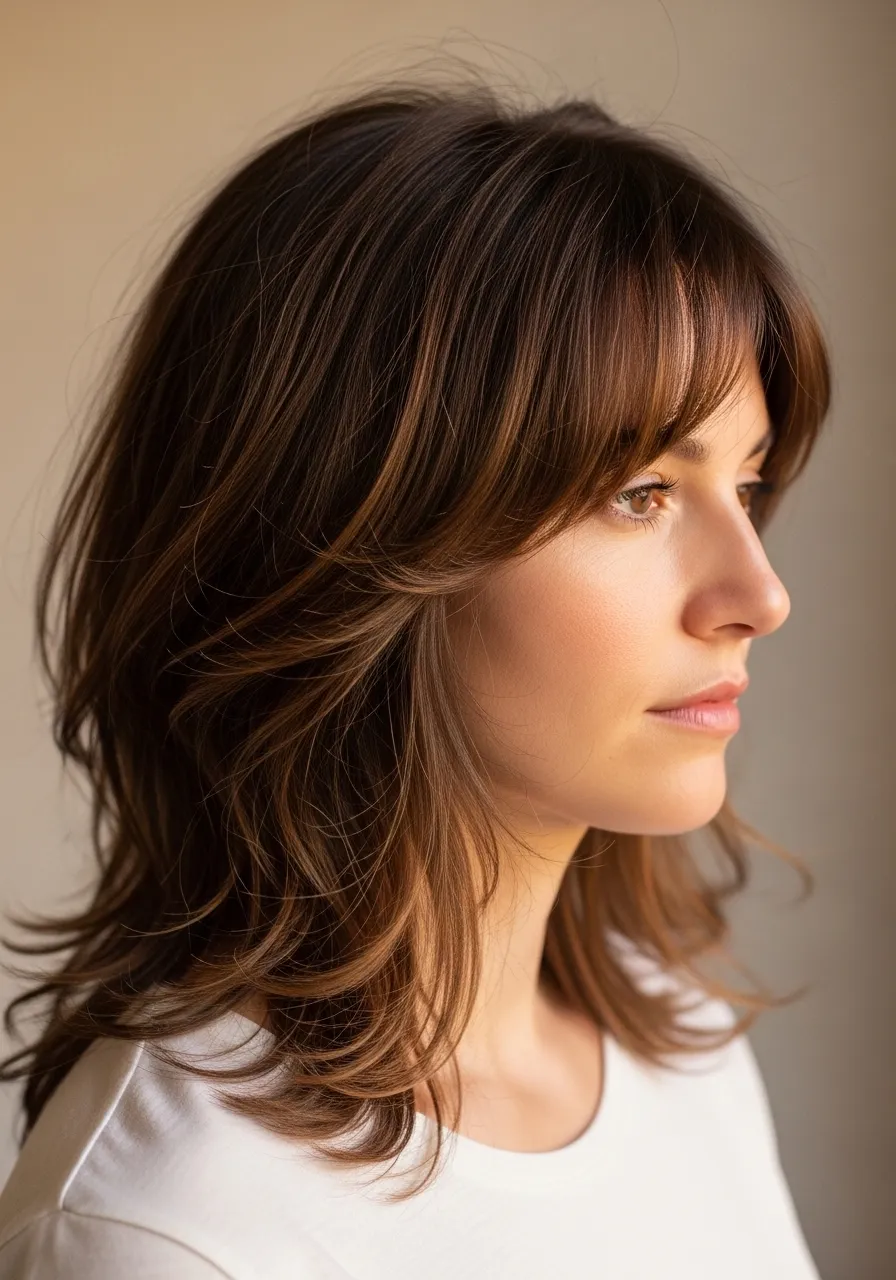
Money piece highlights are face-framing color sections that sit at the very front of the hair, usually significantly lighter than the base shade.
When paired with a medium shag, they draw attention directly to the face-framing layers that already define the cut.
The contrast between a dark base and bright blonde money piece sections makes the layering dramatically more visible, which adds perceived dimension and depth to the whole style.
This color technique is one of the most affordable highlighting options because it uses a small amount of bleach or lightener applied only to the front sections, which takes far less time than a full head of highlights.
At a salon, a money piece application typically costs $60 to $120 depending on your location and stylist.
For a DIY approach, clip-in highlight extensions in a lighter shade give a similar visual effect without any chemical commitment. These cost $15 to $40 online.
At-home highlighting kits with a precise applicator brush let you target only the front sections if you want a more permanent result. Follow the instructions carefully and do a strand test first.
Money piece highlights grow out gracefully because the lightened sections are naturally positioned at the front where they remain visible and intentional-looking for a long time without touch-ups.
Bohemian Shag with Loose Layers
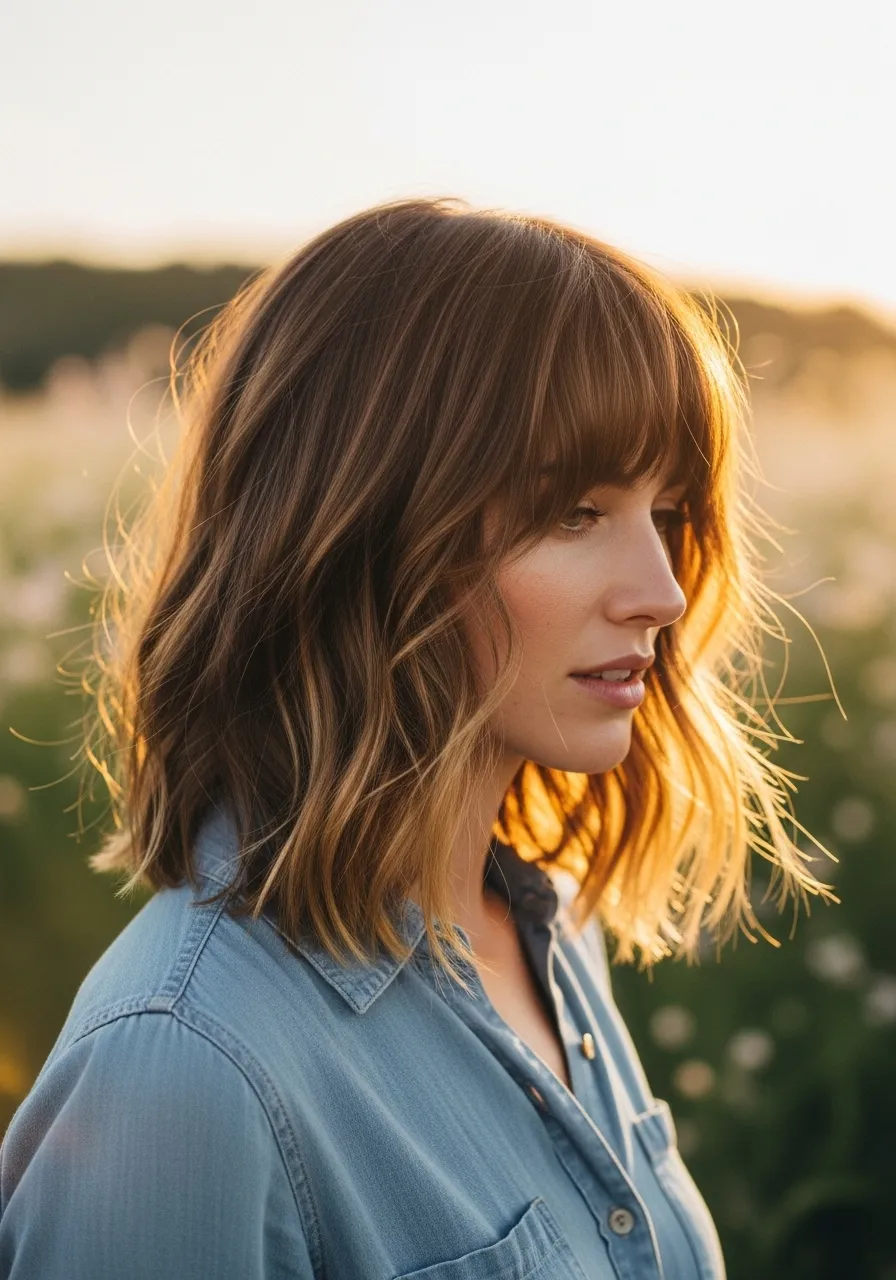
The bohemian shag is the most relaxed interpretation of the cut.
It is less structured than the 70s shag and less polished than the shaggy lob. The layers are loose, the texture is natural, and the overall effect is deliberately carefree.
This look is built on air-dried or minimally styled hair with layers that fall where they want rather than being directed into a specific shape.
Natural earthy hair colors work especially beautifully for the boho shag: rich brunettes, warm honeys, sun-kissed sandy blondes, and auburn tones all suit the relaxed, natural character of the style.
To get the boho shag texture without much effort, apply a salt spray to damp hair and either scrunch gently or twist random sections loosely before air drying.
Once dry, pull a few front sections forward to sit beside your face and leave everything else undone.
A wide-tooth comb or detangling brush run through dry hair gives a softer, less defined result that suits the boho aesthetic perfectly.
Avoid blow drying if you can. The whole point of a bohemian shag is that it looks like nature styled it.
Budget tip: A DIY salt spray takes five minutes to make. Mix one cup of warm water with one teaspoon of sea salt and a few drops of coconut oil in a spray bottle. Cost: under $2.
Shaggy Haircut with Bangs for Round Faces
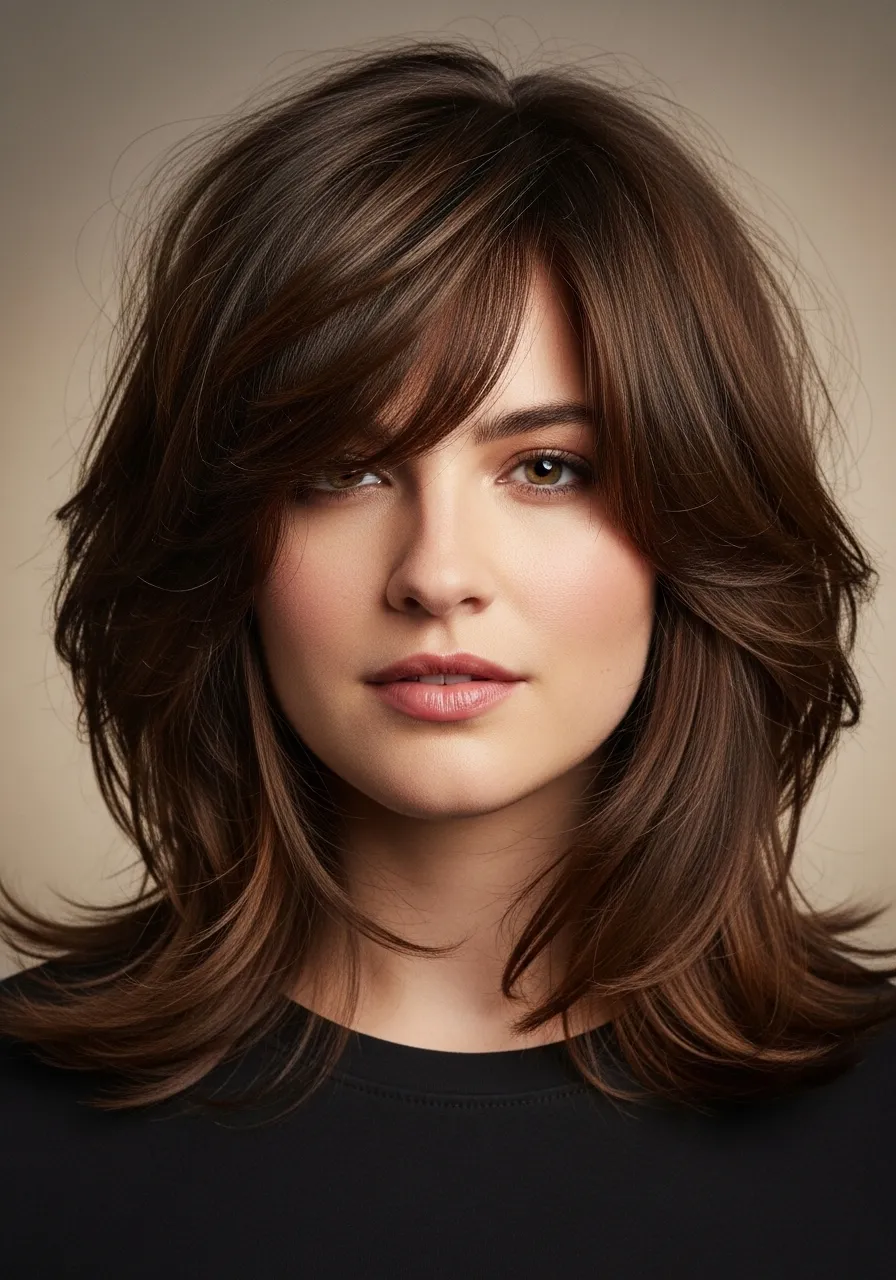
Round face shapes benefit from a specific kind of shag styling that adds length and reduces width.
The right shag cut creates the illusion of a more elongated face shape by drawing the eye up and down rather than across.
Long layers that start at the cheekbone and fall straight down are more flattering for round faces than short layers that add horizontal volume at the widest point.
Avoid very full curtain bangs that sit wide across the forehead on a round face. Instead, choose wispy side-swept bangs or very fine, thin curtain bangs that do not add width.
Ask your stylist for “a medium shag with long face-framing layers, minimal width at the cheeks, and wispy side-swept bangs.”
Styling with a center part can work for round faces when the layers are long enough to sit past the jaw. This creates a vertical line through the center of the face that elongates the appearance.
Avoid parting at the very side of the head for a round face shape. Center or slightly off-center parts are the most flattering options.
A small amount of smoothing serum on the face-framing layers keeps them falling flat and close to the face rather than fanning outward and adding width.
The shag is genuinely one of the most adaptable cuts for round faces when the layering is placed correctly.
Shag Haircut for Straight Hair
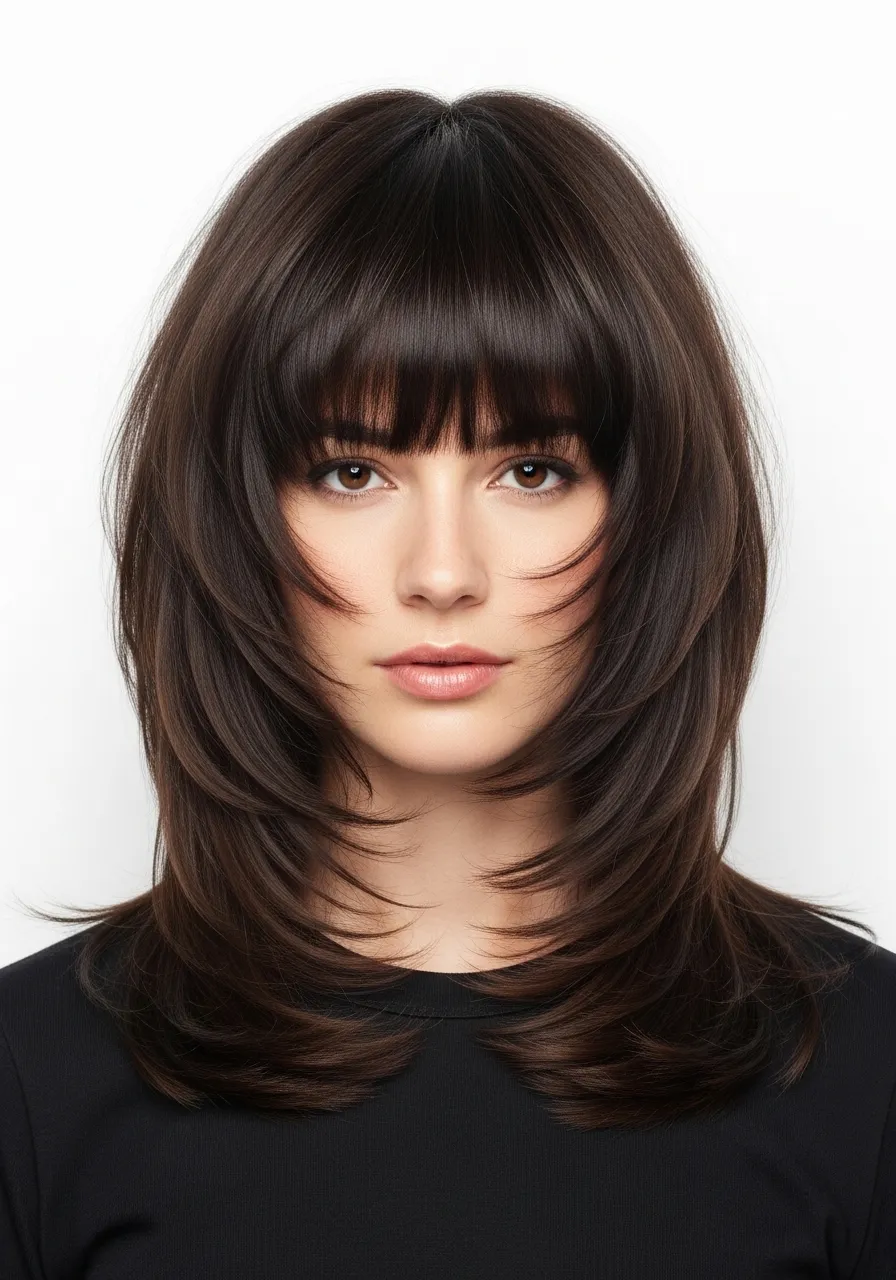
Straight hair and shag cuts are a combination that requires slightly more attention to achieve the right look but delivers beautifully once the cut is right.
Straight hair shows every layer very precisely, which means the shag cut needs to be well executed to look intentional rather than choppy.
Point cutting and razor cutting are the most important techniques for a straight hair shag because they soften the layer edges so they do not appear as hard lines running through the hair.
Ask your stylist for “a shag with softened layer edges using point cutting, especially around the face.”
Styling straight hair in a shag involves adding some movement to prevent the layers from just lying flat and parallel to each other.
A large-barrel curling iron used on alternating sections in alternating directions creates a soft, lived-in wave that makes the layers pop beautifully.
Or use a flat iron to curl the very ends of random sections outward and inward in no particular pattern for an effortlessly tousled result.
A texturizing spray pressed through dry styled hair separates and defines the layers, giving straight hair that sought-after dimensional look.
Budget tip: The OGX Texture and Volume spray costs around $6 and adds grit and separation to straight shag styles without weighing the layers down.
Shag with Middle Part and No Bangs
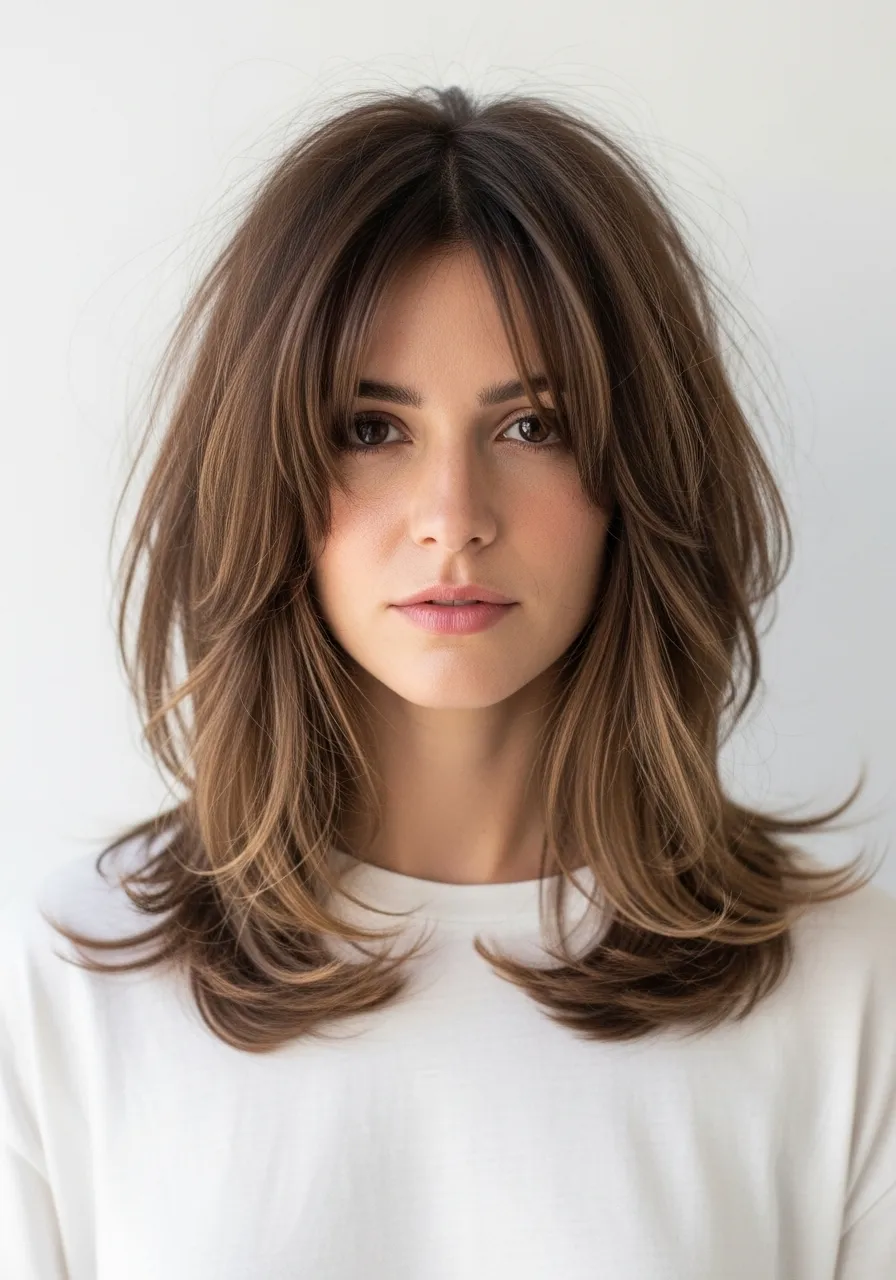
The middle part shag is a clean, modern take on the cut that works beautifully for people who prefer no bangs.
Parting the hair down the center creates a symmetrical, deliberate look that contrasts interestingly with the inherently undone texture of the shag layers.
This combination of precise part and loose layers gives the style a modern, editorial quality that works for both casual and more put-together occasions.
The middle part works best on oval, oblong, and heart face shapes. If you have a very round face, a slight off-center part about an inch from the middle often looks more flattering.
To maintain a clean center part, use a rat-tail comb and a small amount of lightweight gel or pomade pressed along the part line after styling.
Let the rest of the hair stay as loose and natural as possible so the precision of the part provides the only structured element.
For styling the layers in a middle-part shag, apply salt spray to dry hair and scrunch gently. This adds texture and definition without the precision of curling iron work.
The middle part shag photographs exceptionally well because the symmetry of the part creates a natural balance in images.
This version of the cut grows out cleanly because the middle part remains the defining element even as the layers grow longer.
Shaggy Haircut with Retro Fringe
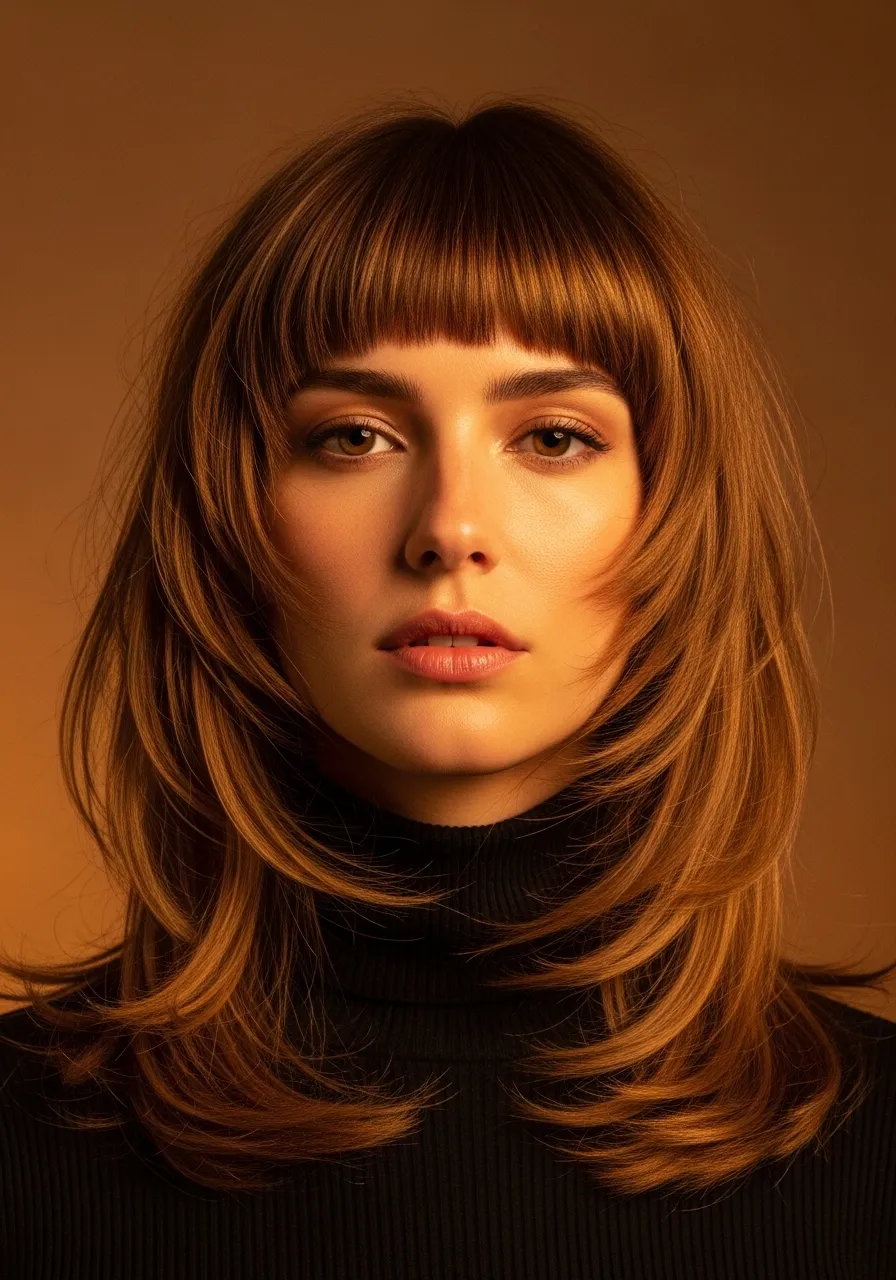
Retro fringe paired with a medium shag is one of the most striking and directional interpretations of this cut.
Instead of wispy curtain bangs, retro fringe is a blunter, heavier section that sits straight across the forehead at the brow line or just above.
The contrast between the blunt-cut fringe and the wispy, feathered layers creates a deliberate, graphic quality that feels very 70s without being costumey.
This is a commitment. Blunt fringe requires trimming every three to five weeks to stay looking precise. Growing it out is a multi-month process.
But if you love bangs and want something bolder than curtain bangs, retro fringe with a shag is a genuinely stunning combination.
Ask your stylist for “a medium shag with a blunt-cut fringe sitting at the brow.” Show a reference photo to align on the exact thickness and shape of the fringe you want.
Style the fringe by blow drying it straight downward with a flat brush while directing a round brush just slightly under the ends for a subtle curl toward the face.
A fine-toothed comb through dry fringe before styling ensures even distribution of the section.
For bang maintenance between appointments, a small pair of sharp hair scissors and a YouTube tutorial can extend the time between salon visits by two to three weeks.
Layered Shag with Curtain Bangs and Highlights
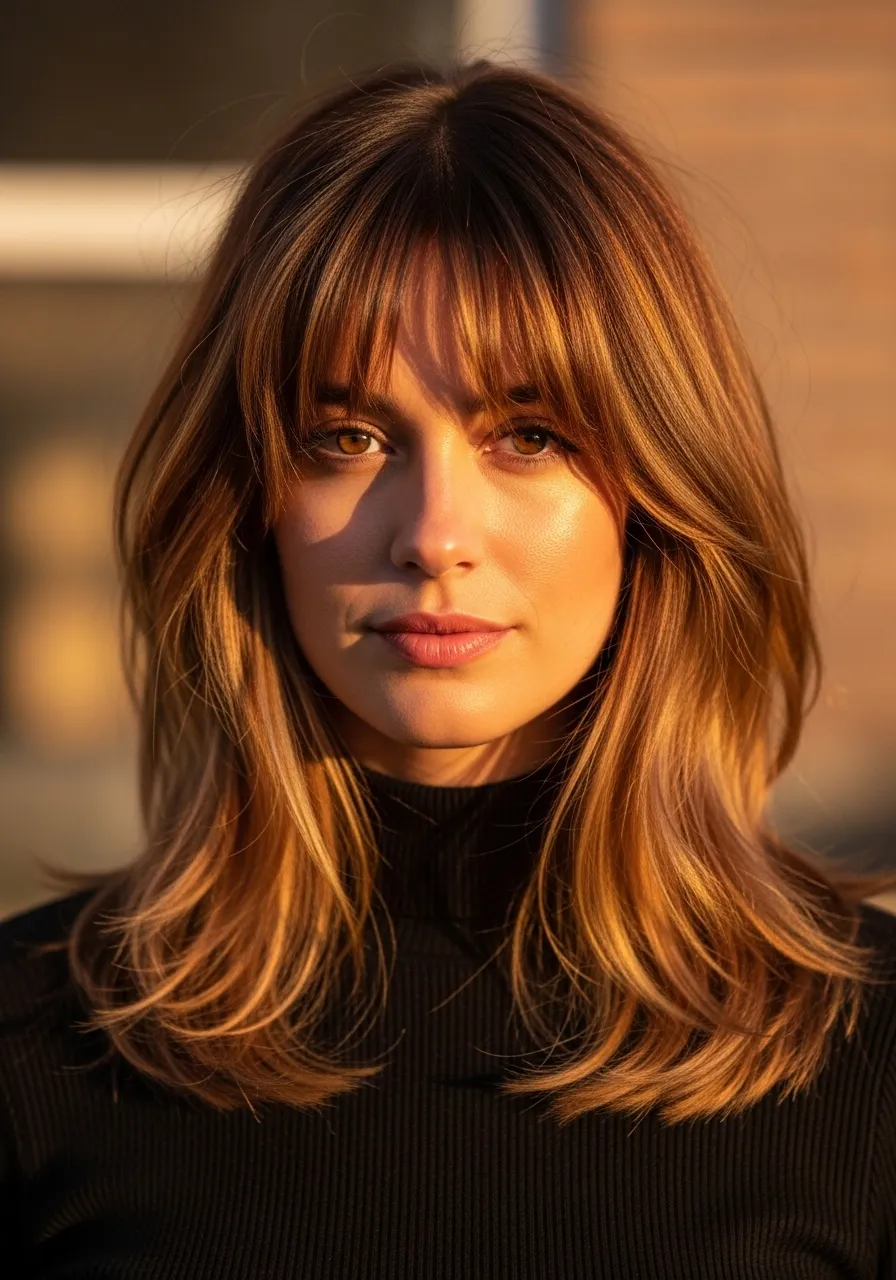
Combining curtain bangs, layers, and highlights in a medium shag creates one of the most dimensional and visually rich hair styles possible.
Each element reinforces the others. The highlights make the layering more visible. The layers make the highlights look more dimensional. The curtain bangs frame everything and draw attention to the face.
Balayage and lived-in highlights work best for a shag because the color is applied freehand and grows out naturally without a harsh line of demarcation. This means you can go longer between color appointments.
A balayage application on medium hair typically costs $100 to $200 at a mid-range salon. The results last three to five months before needing a refresh.
For a budget alternative, sun-in spray or honey lightening treatments applied during summer months give a natural, warm highlight effect with minimal cost.
To style a highlighted shag beautifully, work a curl cream through damp layers and diffuse or air dry. The highlights catch the light most dramatically on hair with natural wave and movement.
A few spritzes of a glossing spray over dry styled hair amplifies the shine across the highlighted sections.
For home color maintenance, a weekly gloss treatment in a warm toning shade keeps highlights looking fresh and prevents them from going brassy between salon visits.
Shag Cut with Undercut for Volume
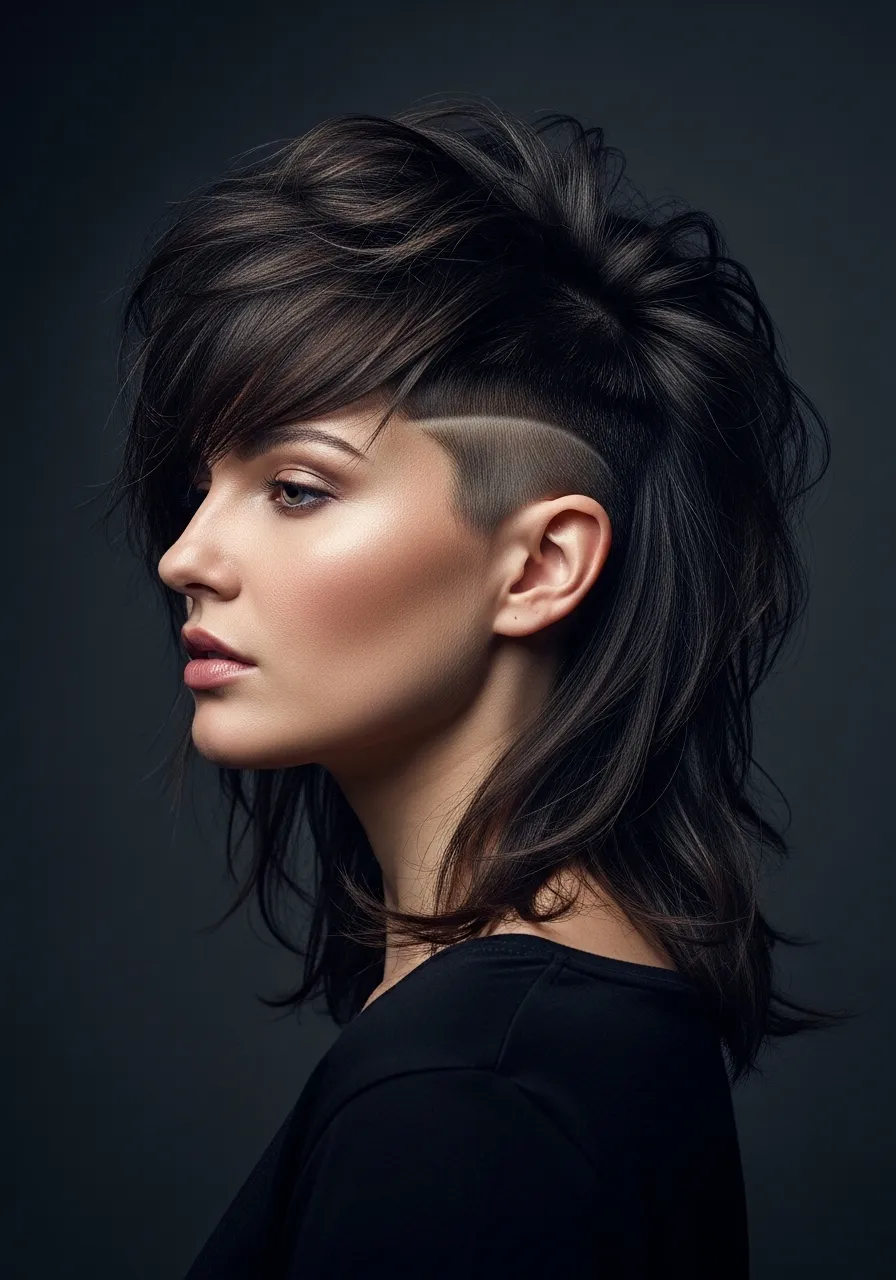
An undercut hidden beneath the outer layers of a medium shag is one of the best-kept secrets for achieving serious volume.
By removing weight from the lower sections of hair near the nape, the top layers are freed to sit higher and fuller without the bottom sections dragging everything down.
This technique is especially powerful for people with very thick or heavy hair who find that even with a shag cut, the lower sections pull the style flat by the end of the day.
The undercut is invisible in most styling situations. It only shows when the hair is pulled up or blown sideways, making it a private structural tool rather than a visible style statement.
Ask your stylist to “remove weight from the lower nape sections with a disconnected undercut layer, keeping it hidden beneath the outer length.”
Not all stylists offer this routinely so be specific about what you want.
The undercut has a practical side effect: it significantly reduces the amount of hair you are working with when styling, cutting blow dry time noticeably.
It also makes the top layers bounce and move more freely because there is less underneath to anchor them down.
This cut grows out easily because the undercut sections simply become part of the regular layering structure over time.
Shaggy Haircut with Copper or Red Tones
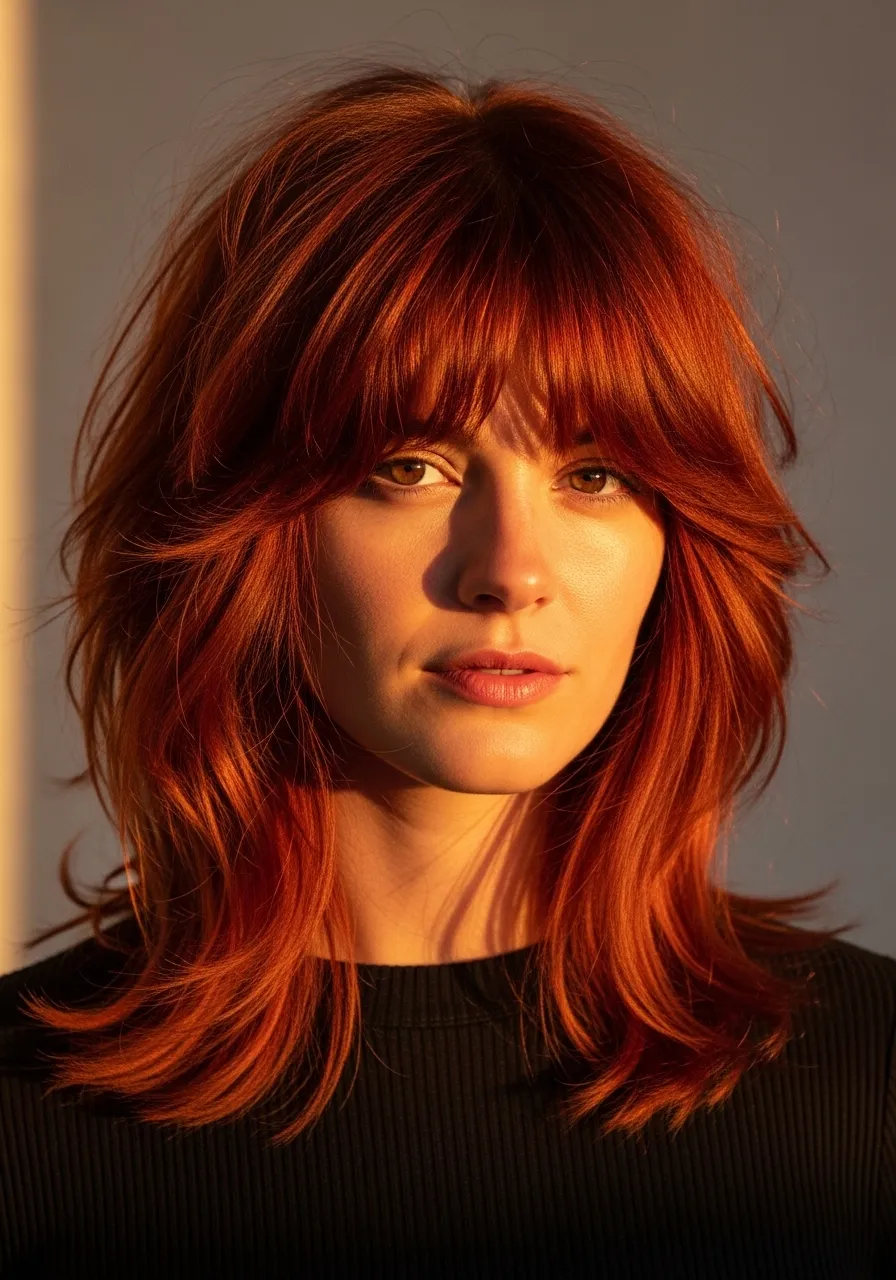
Copper and red toned hair colors and medium shag cuts were made for each other.
The warm tones in copper and auburn hair are amplified by layering because each layer catches the light at a different angle, creating incredible depth and visual richness in the color.
Copper shades range from bright metallic orange to deeper auburn brick depending on your natural base and how much lift is applied during the coloring process.
Copper requires more maintenance than other hair colors because it fades relatively quickly, especially in sunlight and with frequent washing.
Washing hair in cool water and using a color-safe or sulfate-free shampoo extends the life of copper tones noticeably.
A monthly color-depositing conditioner in a copper or red shade refreshes the tone between salon visits at home. These cost $15 to $30 and take about ten minutes to apply.
At a salon, an all-over copper or auburn color on medium hair typically runs $80 to $150 depending on your starting shade and whether bleach is required to lift the base.
To style a copper shag, work with the natural texture rather than fighting it. The warmth of the color looks most beautiful with soft, natural movement rather than perfectly smooth or perfectly curly styling.
A light oil serum through the ends adds shine and makes the copper tones glow in photographs and in person.
Low-Maintenance Shag Haircut
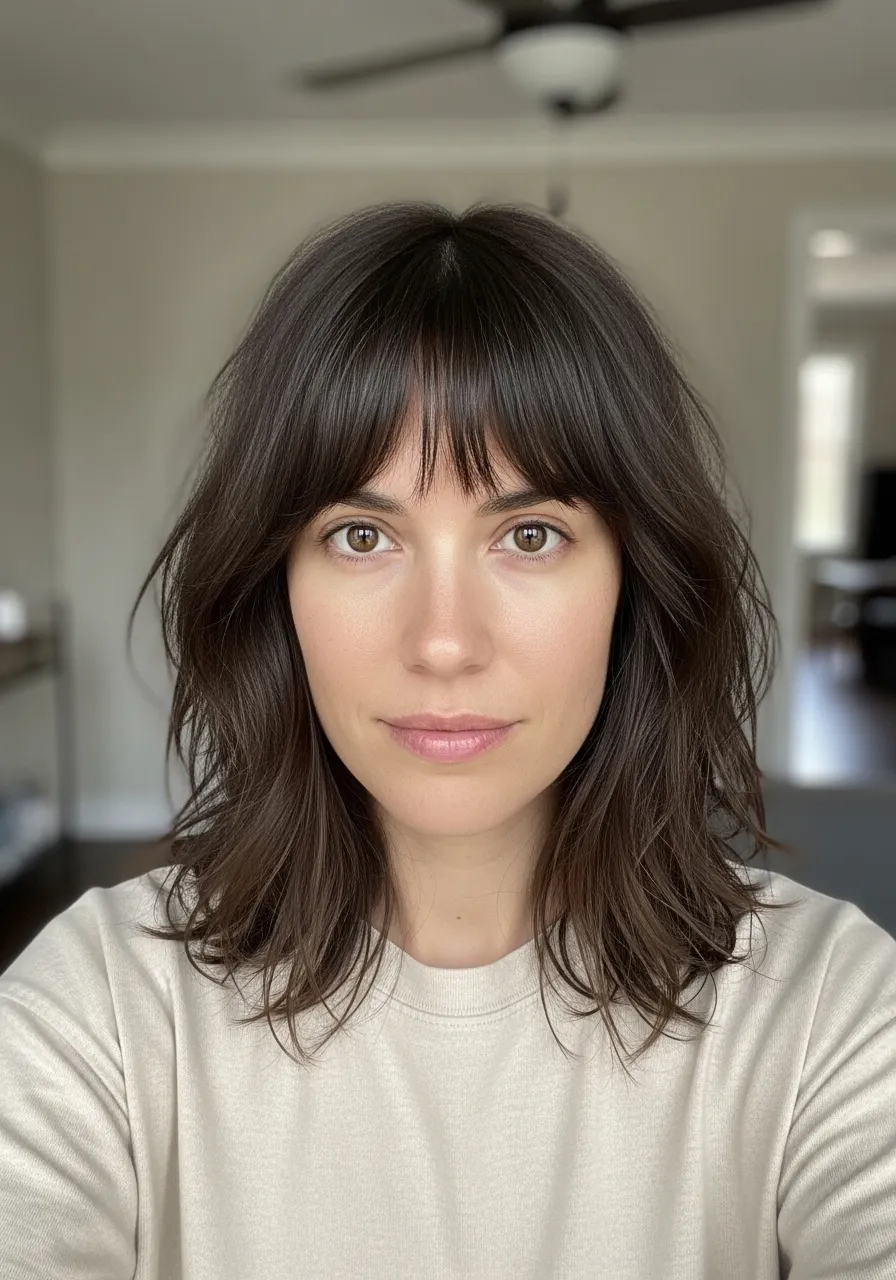
Not everyone wants to spend time styling their hair every day, and the shag cut can absolutely accommodate that.
A low-maintenance shag is specifically cut and designed to look good with minimal or zero daily effort.
The key features of a truly low-maintenance shag are built-in texture at the cut level, a length that air dries in a reasonable time, and a natural hair color that does not require frequent touch-ups.
Ask your stylist for “a shag designed for air drying, with enough texture cut into the ends that it looks finished without styling.”
This often means more aggressive point cutting and razoring at the ends so the hair does its own work once dry.
Your shampoo and conditioner routine also matters for a low-maintenance shag. Using a moisturizing shampoo and a lightweight conditioner mid-shaft to ends gives the layers enough hydration to fall softly without needing product.
On days when you wash your hair, apply a small amount of leave-in conditioner or a light curl cream to damp hair and leave it. Let it dry however it wants to.
On non-wash days, a quick spritz of water and scrunch with your hands revives the texture in about two minutes.
Budget tip: The Tresemmé Botanique Nourish and Replenish conditioner costs around $6 and keeps air-dried shag layers looking smooth and intentional rather than frizzy and ignored.
Shag Haircut with Geometric Shape at the Back
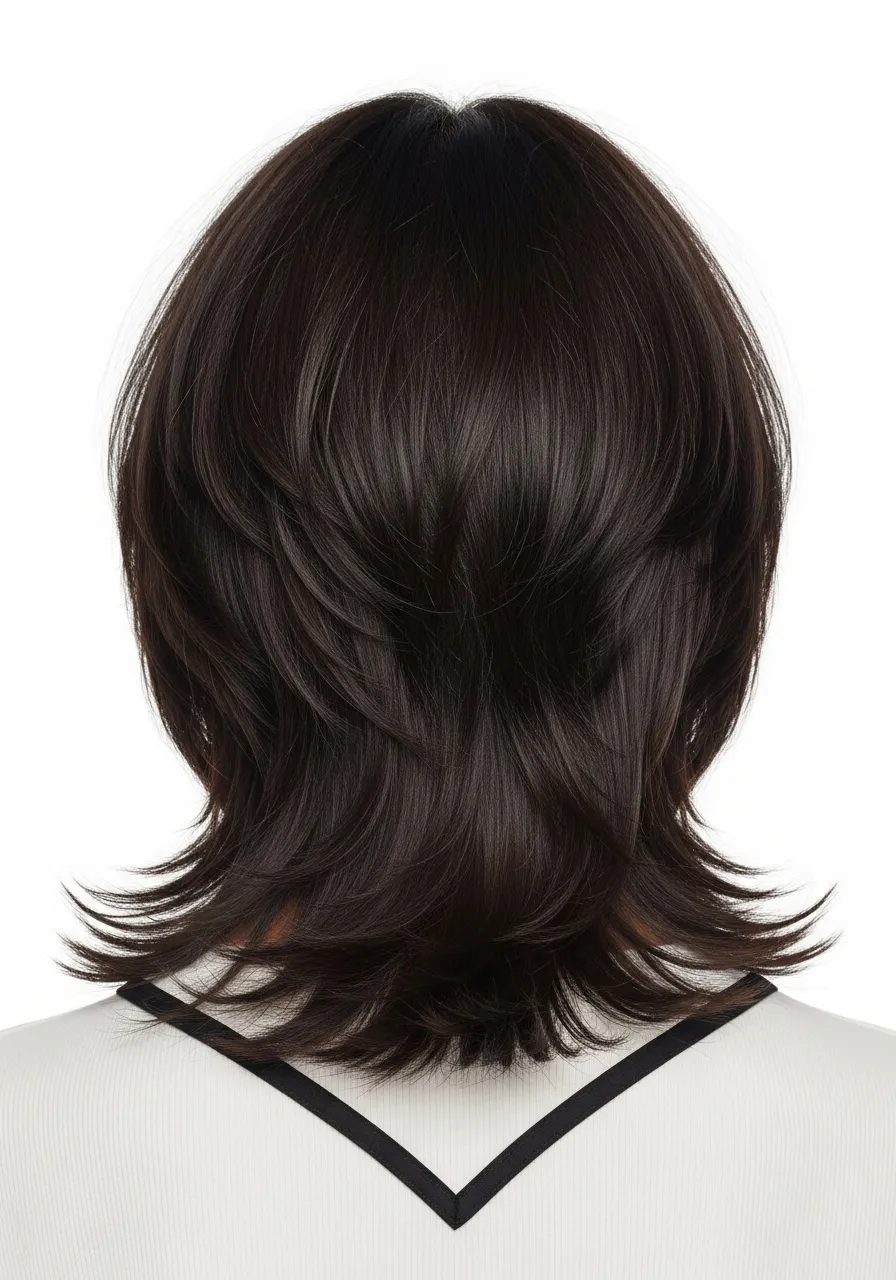
Most shag conversations focus on the front and sides of the hair, but the back shape matters just as much.
A geometric back perimeter, either a clean V-shape or a U-shape, adds structure and intentionality to what might otherwise be a shapeless-looking style from behind.
The contrast between a clean geometric perimeter and the wispy, layered texture throughout the body of the hair creates a deliberate, designer quality to the cut.
Ask your stylist to “cut a clean V or U perimeter at the back while keeping the layering wispy and textured throughout.”
This geometric approach also photographs beautifully from behind, which matters when you are documenting your style.
From the front, you would not know the back has this architectural detail. It is a subtle element that makes a meaningful visual difference when the hair moves.
Maintaining the geometric back requires clean perimeter trims every six to eight weeks. Ask your stylist to specifically refresh the back perimeter at each appointment rather than just trimming the lengths.
If you blow dry your shag, use a paddle brush to smooth the back layers downward while a round brush works the front sections. This keeps the geometric line at the back looking clean and intentional.
This version of the shag suits people who want a style with real shape and structure but still carry all the textured personality of the classic shag.
Shag Cut Styled with Braids or Hair Accessories
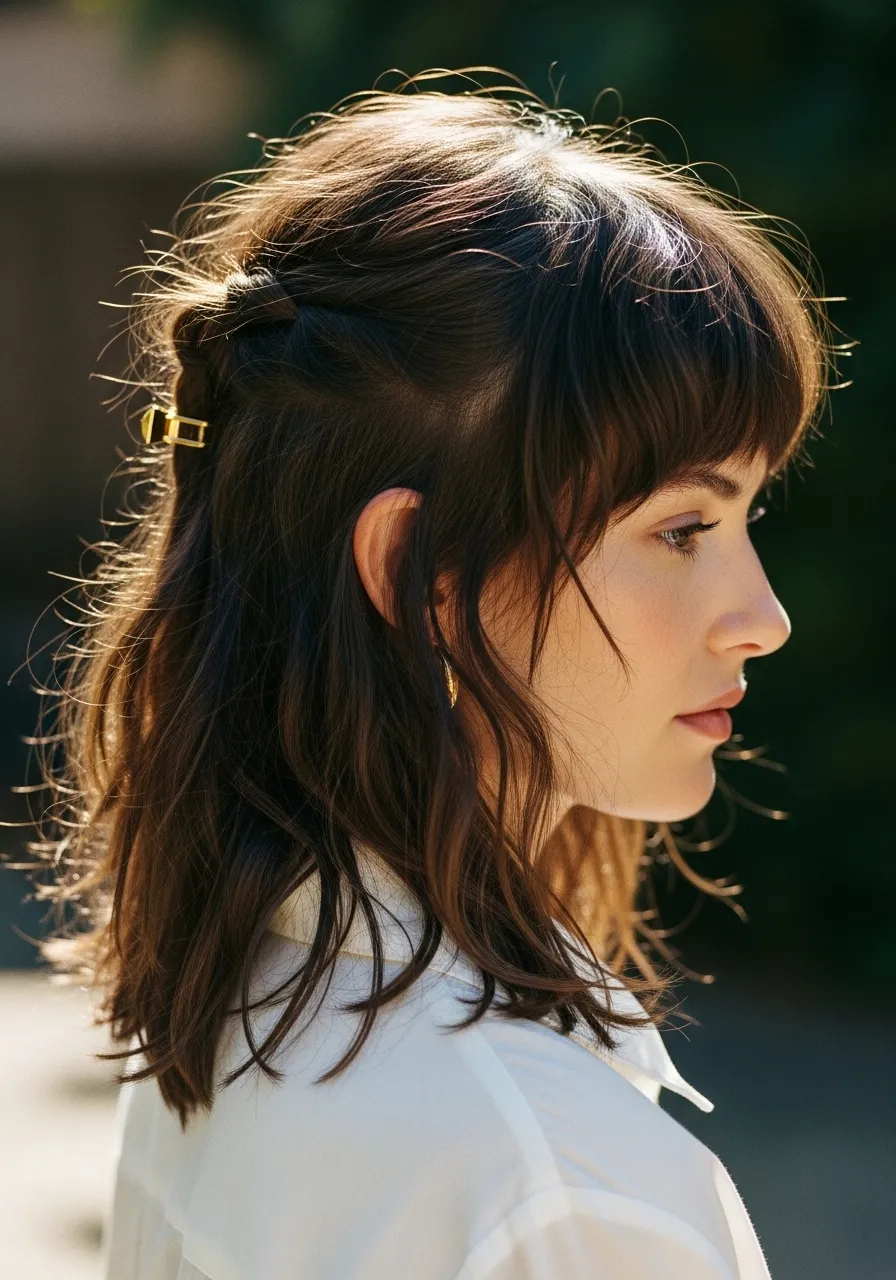
One of the most underrated qualities of a medium shag is how beautifully it works with accessories and simple braiding.
The layers and texture of a shag actually hold clips, pins, and braids better than smooth, one-length hair because the texture gives accessories something to grip.
Simple styles like two thin braids pulled back from each temple and clipped at the back work especially well on a shag because the rest of the textured layers remain loose and visible.
Half-up styles with claw clips look particularly good on shaggy medium hair because the layers that fall from the clip have built-in texture and movement rather than just hanging straight.
Snap clips and bobby pins can be used to pin back the face-framing layers on low-effort days, transforming the shag into a cleaner-looking style in under a minute.
Headbands work with medium shags but choose ones with some grip teeth rather than smooth bands, which tend to slide on layered hair.
For braids specifically, a day-old shag with some dry shampoo at the roots provides the best grip and hold. Fresh-washed shag hair is often too slippery to hold a neat braid.
Budget tip: Claw clips cost $5 to $12 for a set of mixed sizes. Having multiple sizes means you can adapt to how much hair you want pulled up on any given day.
Shag Haircut for Older Women

The medium shag is genuinely one of the most flattering haircuts for women over 50.
As hair naturally becomes finer and less dense with age, the shag’s layering technique adds the appearance of volume and movement that single-length or blunt cuts often remove.
Face-framing layers in a mature shag soften the area around the jawline and cheekbones, which many women find more flattering than blunt cuts that can emphasize rather than soften facial changes.
Curtain bangs are especially popular for older women with shags because they cover the forehead softly without the harshness of a solid blunt fringe.
Silver and white hair looks absolutely stunning in a shag cut. The layering catches light across different tones in naturally grey hair and creates beautiful dimension without any color treatment.
Ask your stylist specifically for “face-softening layers and a shag designed for fine, mature hair.”
Lightweight volumizing mousse is the most effective product for a mature fine-hair shag. Apply to damp hair and diffuse for maximum root lift without any weighing down.
Avoid heavy creams or thick serums on fine hair. These flatten the very volume the cut creates.
A quick touch of a large-barrel curling iron on a few sections adds bounce that lasts all day on layered hair.
The mature shag is low-maintenance, age-appropriate without being dowdy, and genuinely beautiful at every stage of the grey journey.
Shag Haircut Inspired by 90s Grunge
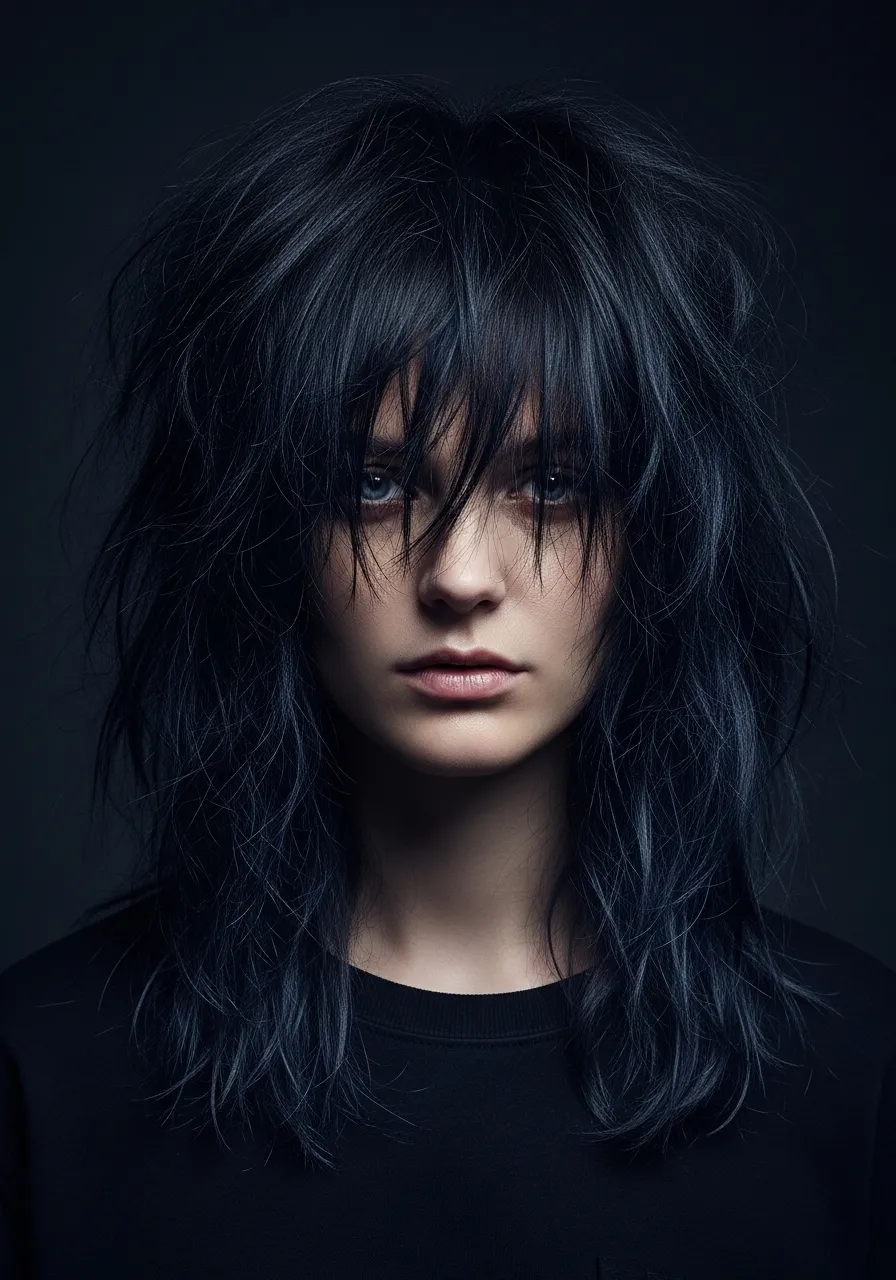
The 90s grunge shag is the most deliberately undone and edgy interpretation of this cut.
Where the 70s shag is romantic and feathered, the 90s grunge version is choppy, slightly imperfect, and intentionally raw-looking.
The layers in a grunge shag are more disconnected and less blended than in classic versions. The ends look almost choppy rather than smoothly feathered.
Dark hair colors suit the grunge shag best: deep brunette, near-black, cooled-down dark brunette with blue or violet undertones, and even faded dark fashion colors all work.
Ask your stylist for “a medium shag with disconnected layers and a choppy, lived-in finish rather than a smooth blended look.”
Styling a grunge shag is deliberately hands-off. Scrunch in a small amount of matte texture paste and let the hair do whatever it wants while drying.
Once dry, run your fingers through it roughly a couple of times. The imperfection is the point.
Avoid glossy finishing sprays and smoothing serums. These products contradict the raw, undone quality the grunge shag is built on.
A matte dry shampoo or clay spray adds grittiness and separation that suits the aesthetic perfectly.
Budget tip: The Not Your Mother’s Curl Talk Mousse costs around $7 and adds texture and hold to grunge shag styles without producing unwanted shine.
Shag Haircut with Sun-Kissed Ends
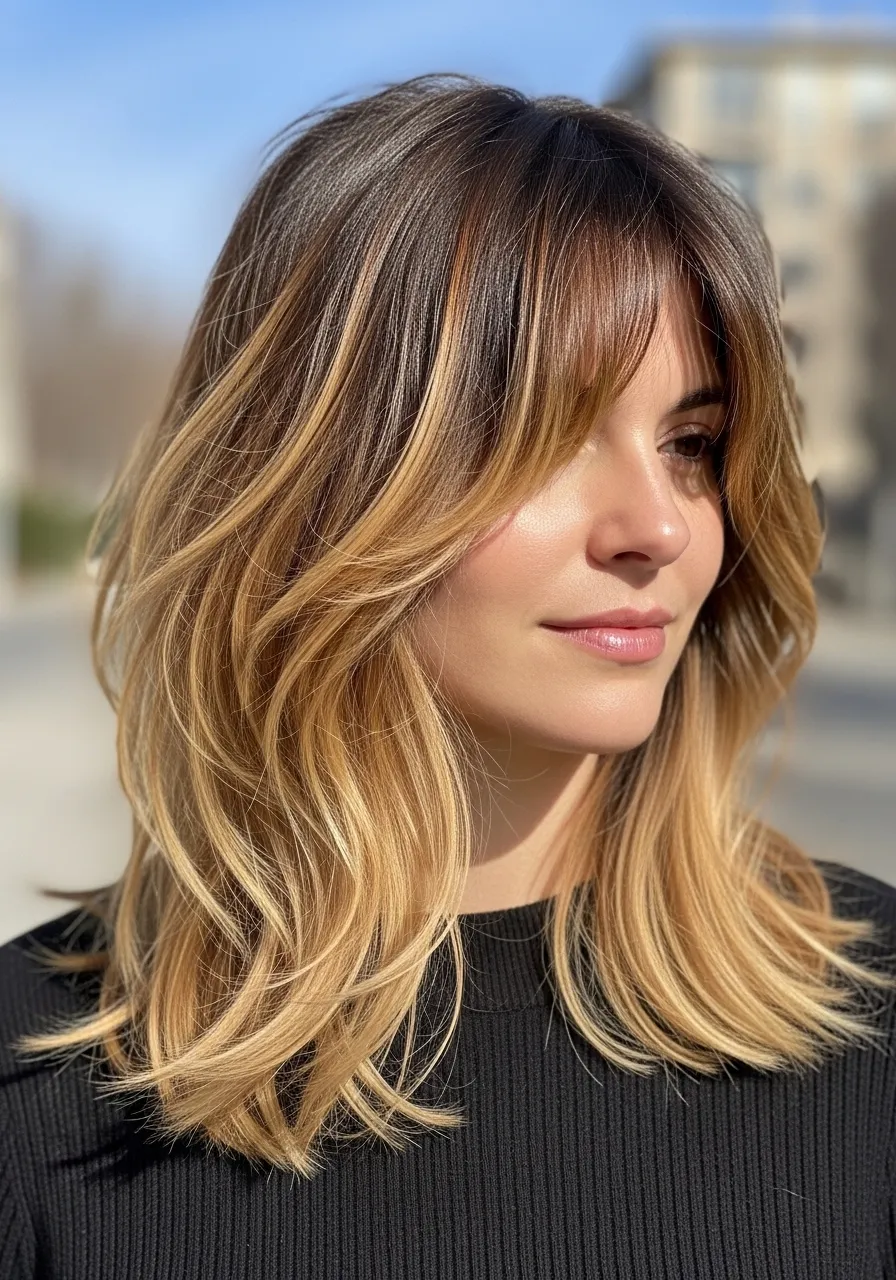
Sun-kissed ends on a medium shag are one of the most natural-looking and low-maintenance color combinations available.
The darker root grows into lighter, warmer ends seamlessly and the graduation looks deliberate and beautiful even as it grows out.
This color effect is achieved through a balayage or sun-lightening technique applied only to the ends and mid-lengths of the hair, leaving the roots entirely in their natural shade.
The shag layering makes this color technique especially striking because each layer shows a slightly different point in the color graduation. The overall effect is rich, dimensional, and warm.
At a salon, a basic balayage or foil-free lightening on the ends runs $80 to $150 depending on the salon and your starting color.
For a more budget approach, lemon juice or chamomile tea rinses applied before spending time outdoors encourage natural lightening in summer months. This is a slow process but costs almost nothing.
Sun-kissed ends grow out beautifully because there is no sharp demarcation line to reveal. The gradient simply becomes longer and more gradual as the hair grows.
Maintain the warm tones with a weekly gloss or toning conditioner in a honey or golden shade.
The sun-kissed shag is the ultimate version of hair that looks like you just got back from a long summer trip, relaxed and naturally beautiful without any obvious effort.
Conclusion
A medium shag haircut is one of those rare styles that adapts to you rather than requiring you to adapt to it.
It works with your natural texture, suits your face shape when the layering is right, and can be as high-maintenance or as effortless as your lifestyle allows. Whether you want the romantic softness of curtain bangs and feathered layers or the raw edge of a 90s-inspired choppy cut, there is a version of this style that fits exactly who you are right now.
The best thing you can do is save two or three images from this list that genuinely excite you, book an appointment with a stylist you trust, and walk in with those references. A clear visual reference removes guesswork and helps any stylist understand exactly what you want without needing you to master technical hair terminology.
Your hair grows back if you decide it is not for you, but most people who try a medium shag find themselves going back for it every single time.
Leave a Reply