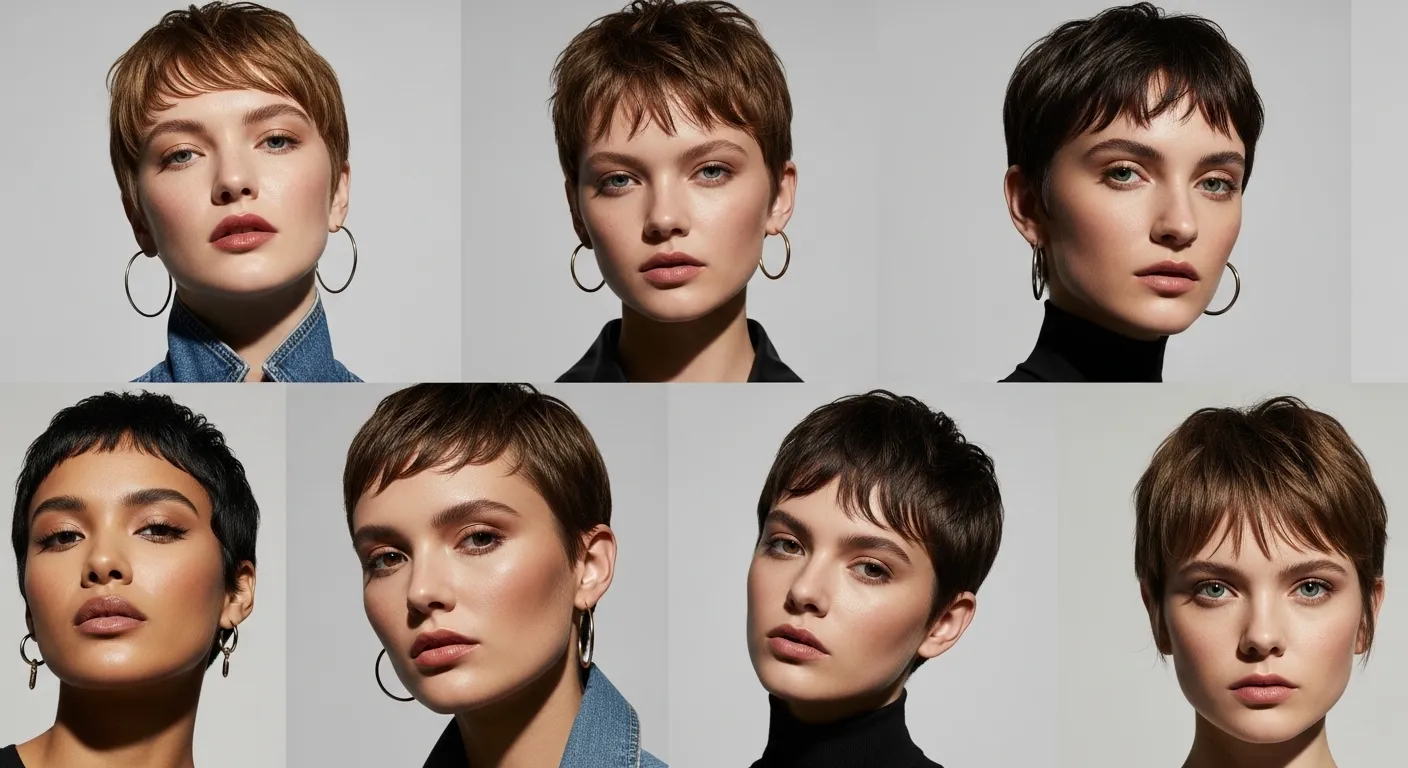
The 90s pixie cut ideas is one of those hairstyles that never really left. It just waited for the right moment to come back around. And that moment is right now. Short, sharp, and full of attitude, the 90s pixie carries the spirit of an era defined by bold choices and effortless cool. Whether you grew up watching Halle Berry on the red carpet or discovering Winona Ryder in grainy magazine photos, you already know the energy this cut brings. This guide covers 23 real, wearable versions of the retro pixie that you can actually bring to a salon appointment or even experiment with at home. If you’re also exploring pixie haircut for round face ideas, focusing on styles that add volume at the crown and create slight angles can help balance and visually lengthen softer face shapes.
1. The Classic 90s Pixie Cut Ideas
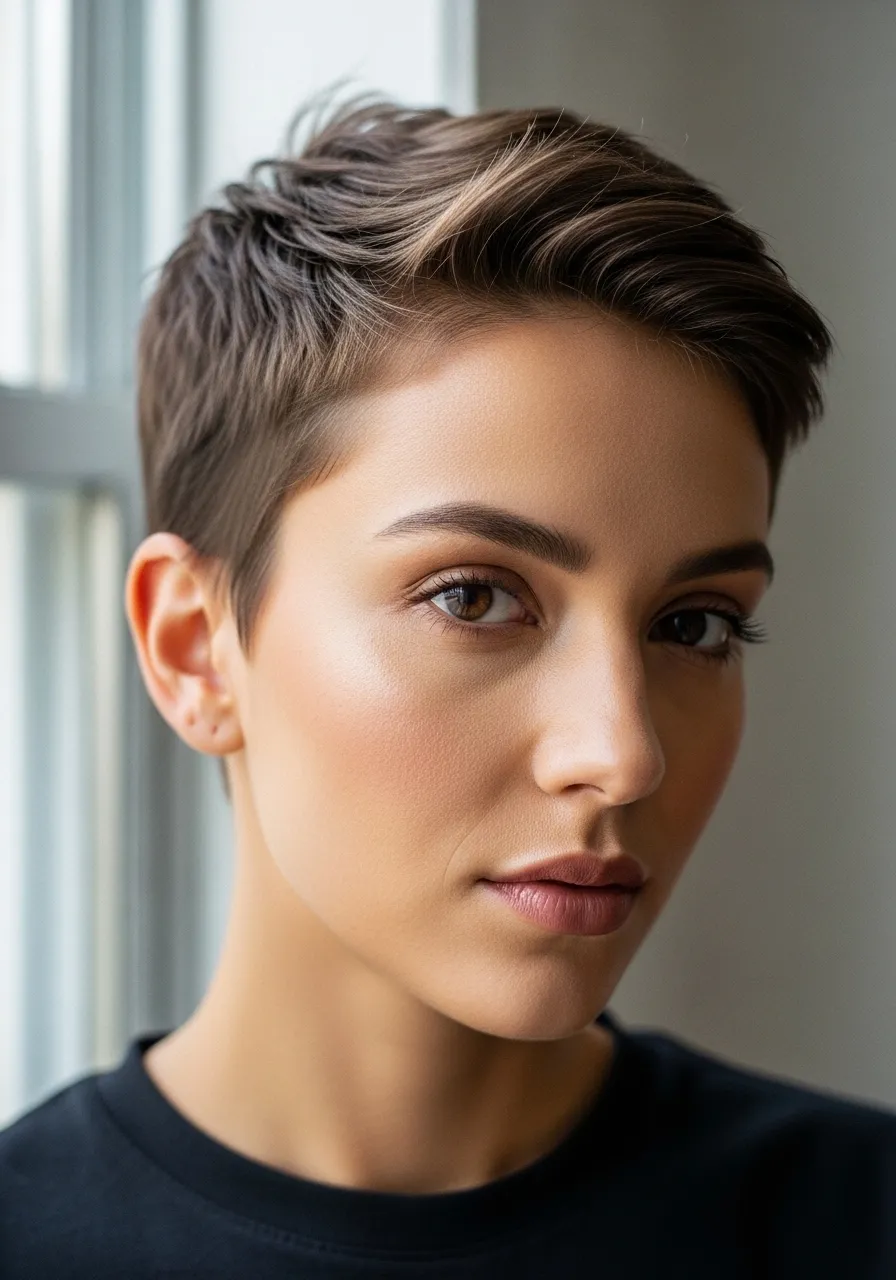
This is the one that started everything. The classic crop pixie sits close to the head on the sides and back with just enough length at the crown to show some texture.
It is clean. It is sharp. It is timeless.
Halle Berry made this cut iconic at the 1993 Oscars. That single moment put the short pixie on the map for a generation.
The beauty of this cut is its simplicity. There is not much to style and even less to go wrong.
At home, apply a small amount of pomade or wax to dry hair. Push the crown slightly forward or to one side. That is the complete styling routine.
For fine hair, this cut creates the illusion of thickness because close-cropped sides make the top appear fuller by contrast.
For thick hair, the close crop removes all the bulk that makes short hair hard to manage.
Ask your stylist to taper the nape and sides with clippers and leave the top long enough to style with your fingers. About one to two inches on top is the sweet spot.
Budget tip: once the shape is established, a simple cleanup trim every four to six weeks maintains it perfectly. These trims take less time and cost less than a full cut.
2. The Winona Ryder Wispy Pixie
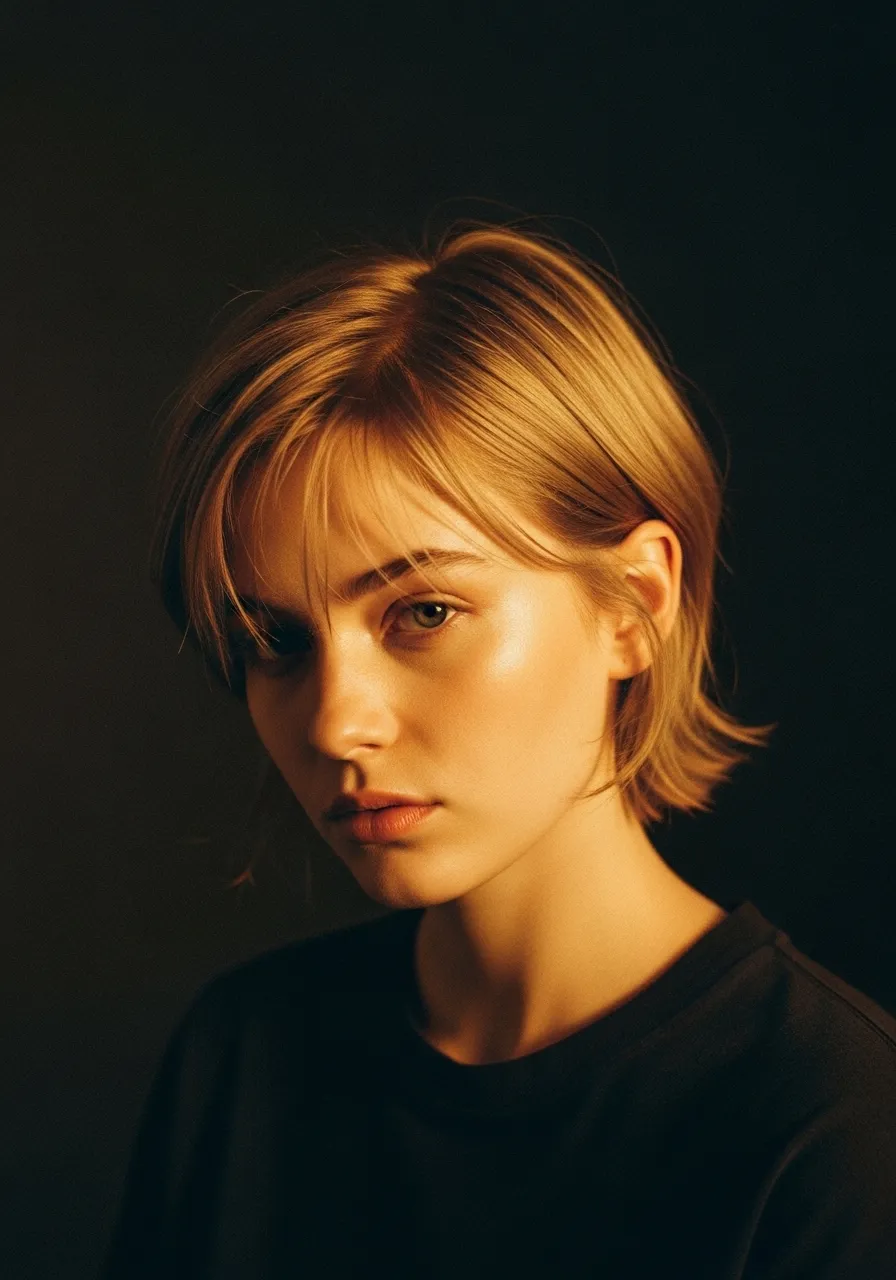
Winona Ryder defined a specific kind of pixie in the early 90s. It was not perfectly polished. It had wispy, almost unfinished-looking pieces around the face and ears.
That soft imperfection was the whole point.
This pixie is approachable and feminine without losing any of its edge.
The wispy pieces around the temples soften the cut dramatically. They frame the face without being bangs. They are something in between.
To style this look, rough dry your hair and then use your fingers to pull out a few small pieces around your face. Let them sit naturally rather than placing them precisely.
A tiny amount of light-hold cream on those wispy sections keeps them soft without weighing them down.
This works beautifully on naturally fine or thin hair. The wispy quality that thick-haired people might see as a limitation is actually the defining feature of this cut.
Ask your stylist to leave “face-framing pieces” around the temples and ears rather than cutting everything uniformly close.
Salon cost tip: this cut is simple enough that many junior stylists at training salons can execute it well. That can cut your cost by 30 to 50 percent.
3. The Textured Bedhead Pixie
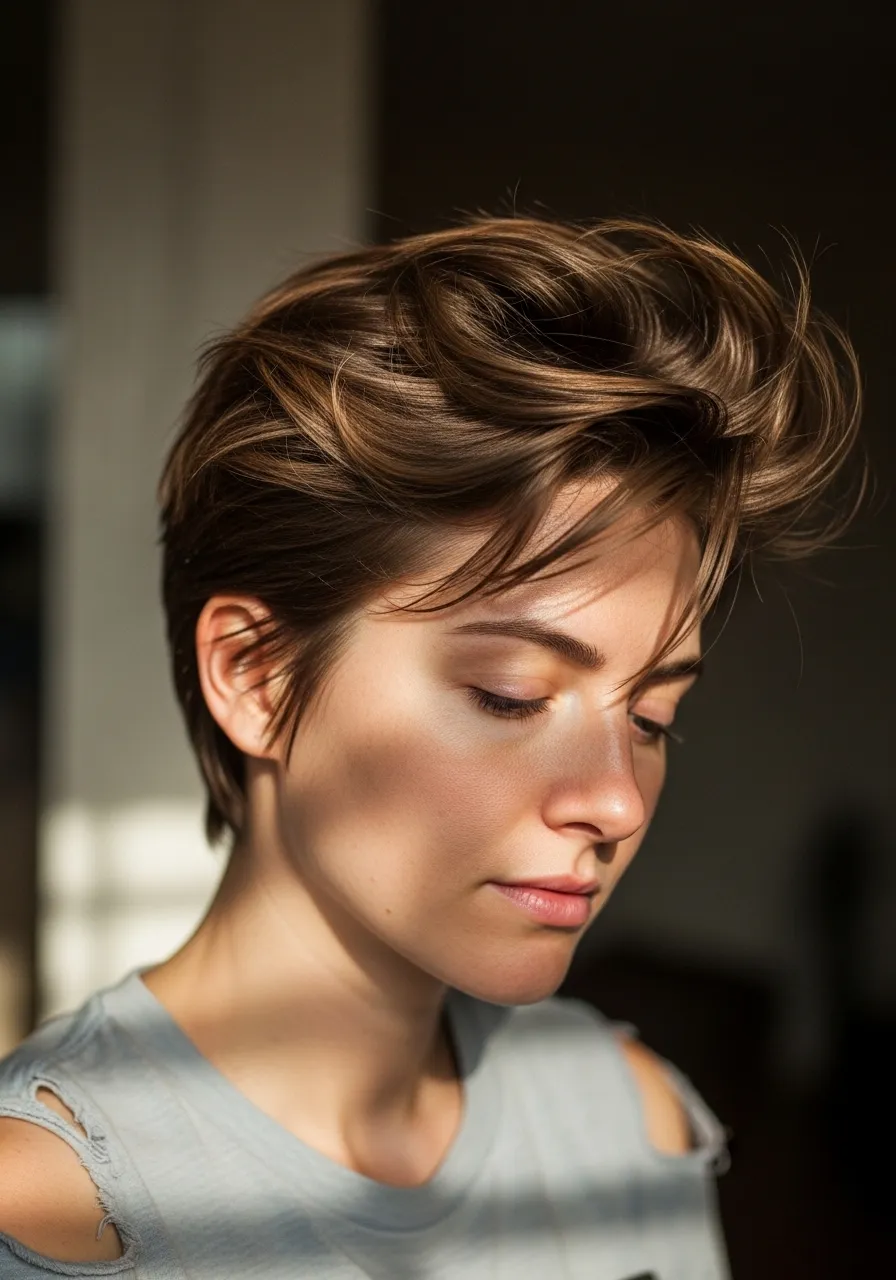
The bedhead pixie looks like you rolled out of bed, ran your fingers through your hair once, and somehow looked incredible.
That is not an accident. It is a very specific cut.
The layers need to be cut in multiple directions so that the hair naturally falls into a tousled, multi-directional pattern.
To get this look at home, apply a matte paste to slightly damp hair. Scrunch it in randomly without any particular direction. Let it air dry completely without touching it.
Once dry, use your fingertips to lightly lift and separate pieces at the crown.
The messier it looks, the more right you are doing it.
This cut works on almost every hair type. Straight hair creates clean, defined movement. Wavy hair adds extra texture on its own.
A drugstore matte paste works just as well as any salon product for this style. The finish you want is dry and natural-looking, not shiny or sculpted.
Ask your stylist to use point-cutting and slice-cutting techniques throughout the top. These methods create the unpredictable texture that makes this style work.
This is one of the easiest pixie cuts to style daily because perfection is not the goal.
4. The Spiky 90s Pixie
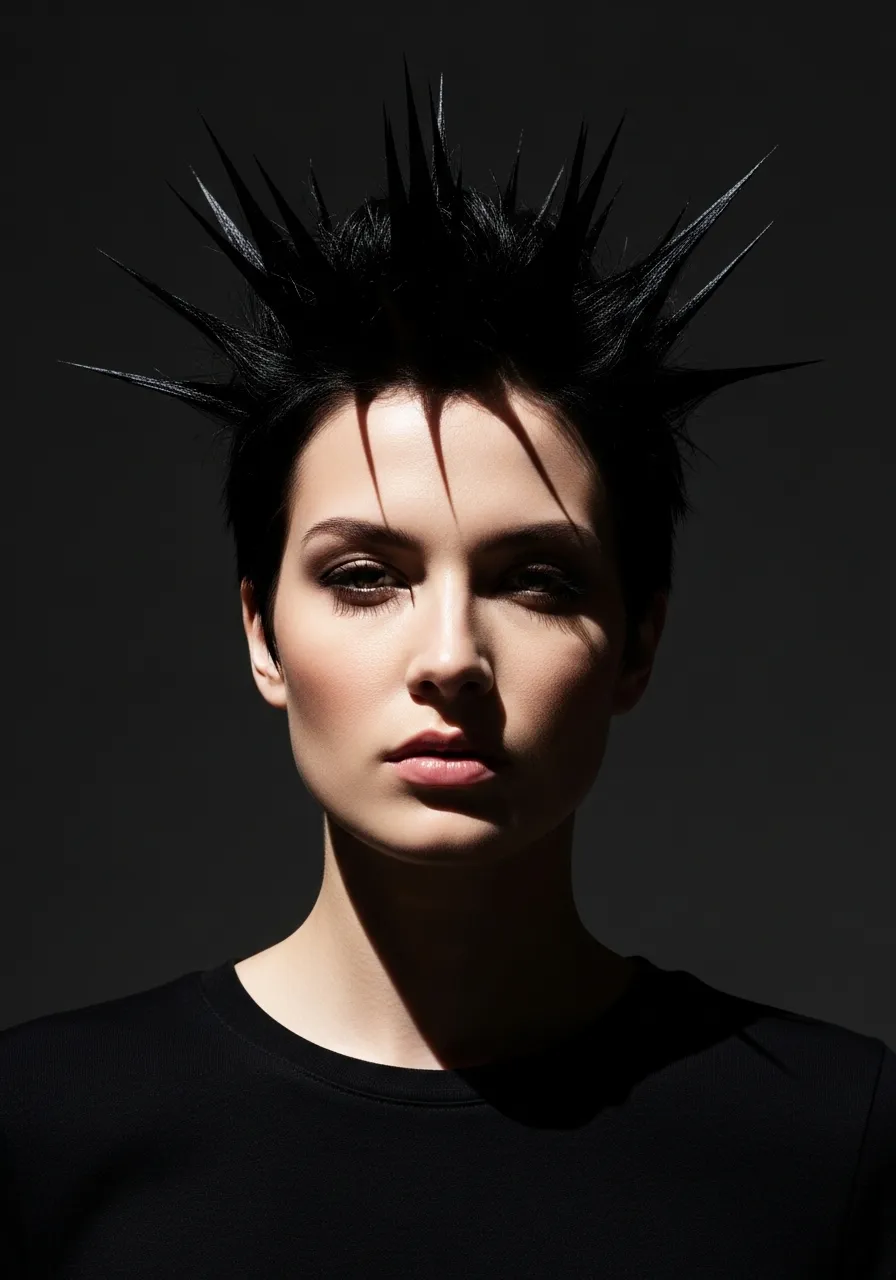
The spiky pixie was all over music videos and magazine covers throughout the 90s. It is sharp, direct, and completely unapologetic.
Individual sections of hair are pushed upward and outward into soft points. Not helmet-stiff spikes. Just enough lift to create attitude.
The key product for this look is a strong-hold wax or a firm pomade. A gel works too but can look crunchy if overdone.
Apply a small amount of product to clean dry hair. Work it between your palms first to warm it up. Then push sections upward and pinch the ends lightly to form soft points.
Less product is more. Start with a pea-sized amount and add only if needed.
This style suits oval, round, and heart face shapes especially well. The upward direction adds height that elongates the face.
For very fine hair, a light-hold mousse at the roots before drying adds grip that makes the spikes hold longer without heavy wax.
At home, practice the placement in front of a mirror. The first few times you do it, the spikes may not fall where you want. After a week of practice it becomes second nature.
Budget tip: a small tin of drugstore wax lasts months for this style because you use such a small amount each day.
5. The Curtain Bang Pixie
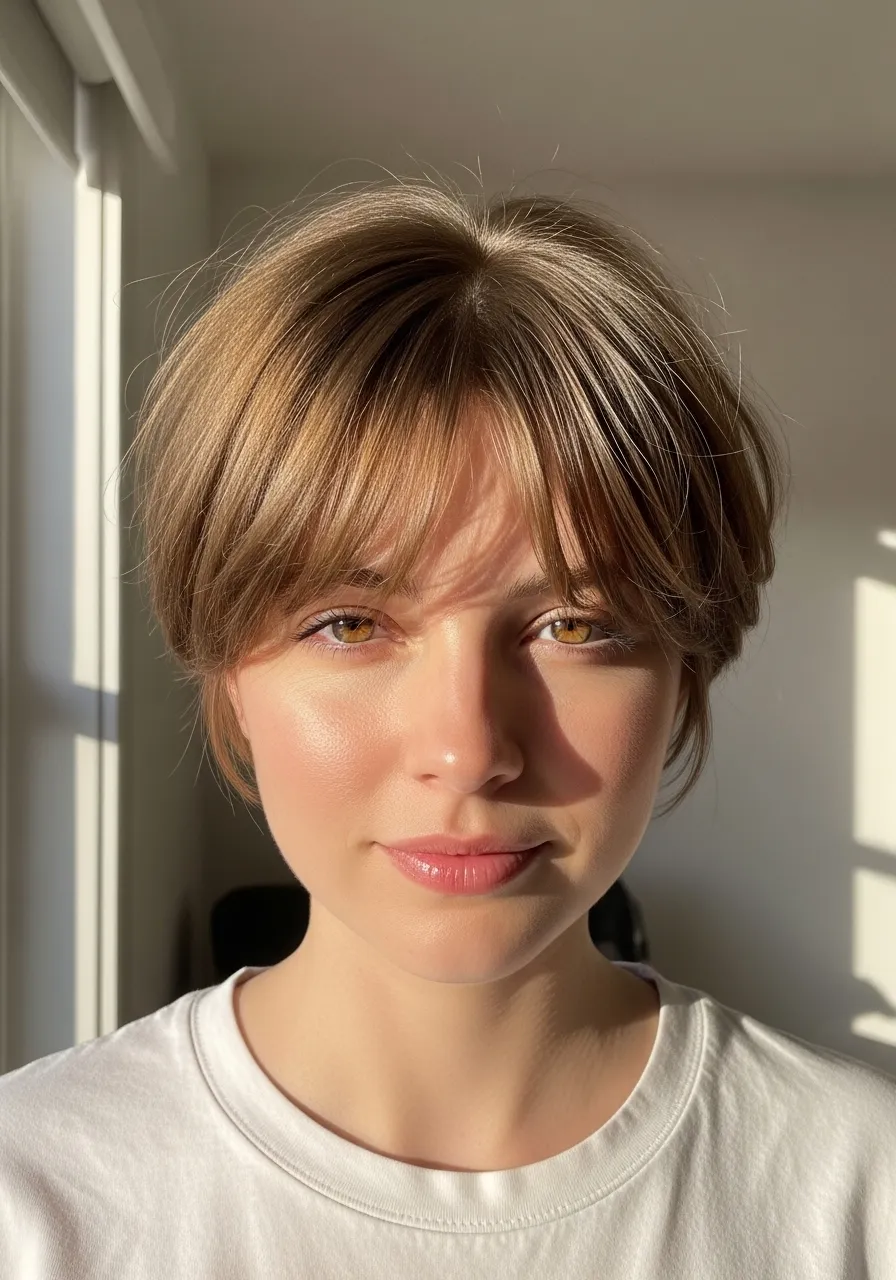
Curtain bangs are not just for longer hair. On a pixie, they create an entirely different kind of framing that feels very 90s and very right.
The bangs part in the middle and sweep slightly to each side. The rest of the cut remains close and textured.
This combination softens the pixie significantly while keeping its short, bold structure.
It is a great option for people who love the idea of a pixie but feel nervous about losing all the length around their face.
To style the bangs, push them to each side while damp and let them dry that way. They will fall naturally into the curtain shape.
If they need a little help, a very small amount of smoothing cream on the fingertips guides them into place without making them look stiff.
Curtain bangs grow out beautifully. Unlike blunt bangs that become awkward mid-grow, curtain bangs just get longer and blend into the sides of the cut.
Ask your stylist to start them slightly longer than you think you want. They will look shorter once they dry, especially if your hair has any natural texture.
This is one of the most flattering pixie variations for round and square face shapes.
6. The Side-Swept Pixie
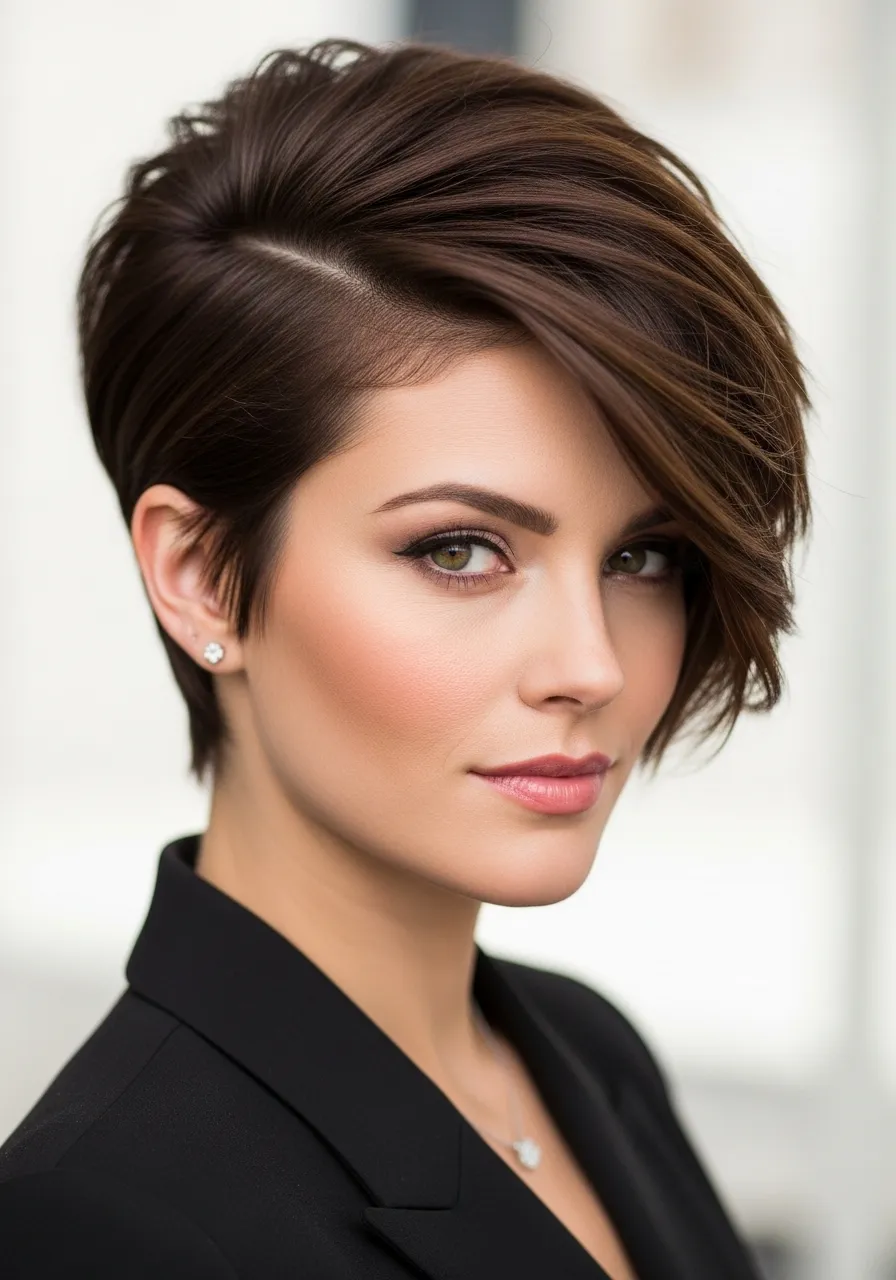
The side-swept pixie has a very specific old Hollywood quality that fits perfectly into the 90s glamour aesthetic.
A hard part on one side. All the top layers sweeping dramatically in the opposite direction. Clean, precise, and incredibly flattering.
The hard part is what makes this cut. Ask your stylist to cut or shave a clean, defined part on one side. That line becomes the architectural foundation of the entire style.
At home, use a fine-tooth comb to push all the top hair in the swept direction. Apply a light pomade to smooth any flyaways. Set with a light hairspray.
This style suits longer face shapes and oval faces particularly well. The horizontal sweep of the hair creates width that balances a long or narrow face.
For extra hold, blast the swept section with a blow dryer while holding it in the swept direction. The heat sets the shape and it holds much better through the day.
This look is one of the most office-appropriate pixie options on this list. It reads as polished and put-together while still being genuinely cool.
A fresh hard part can be added at any point during a maintenance trim without needing to restyle the entire cut.
7. The Undercut Pixie
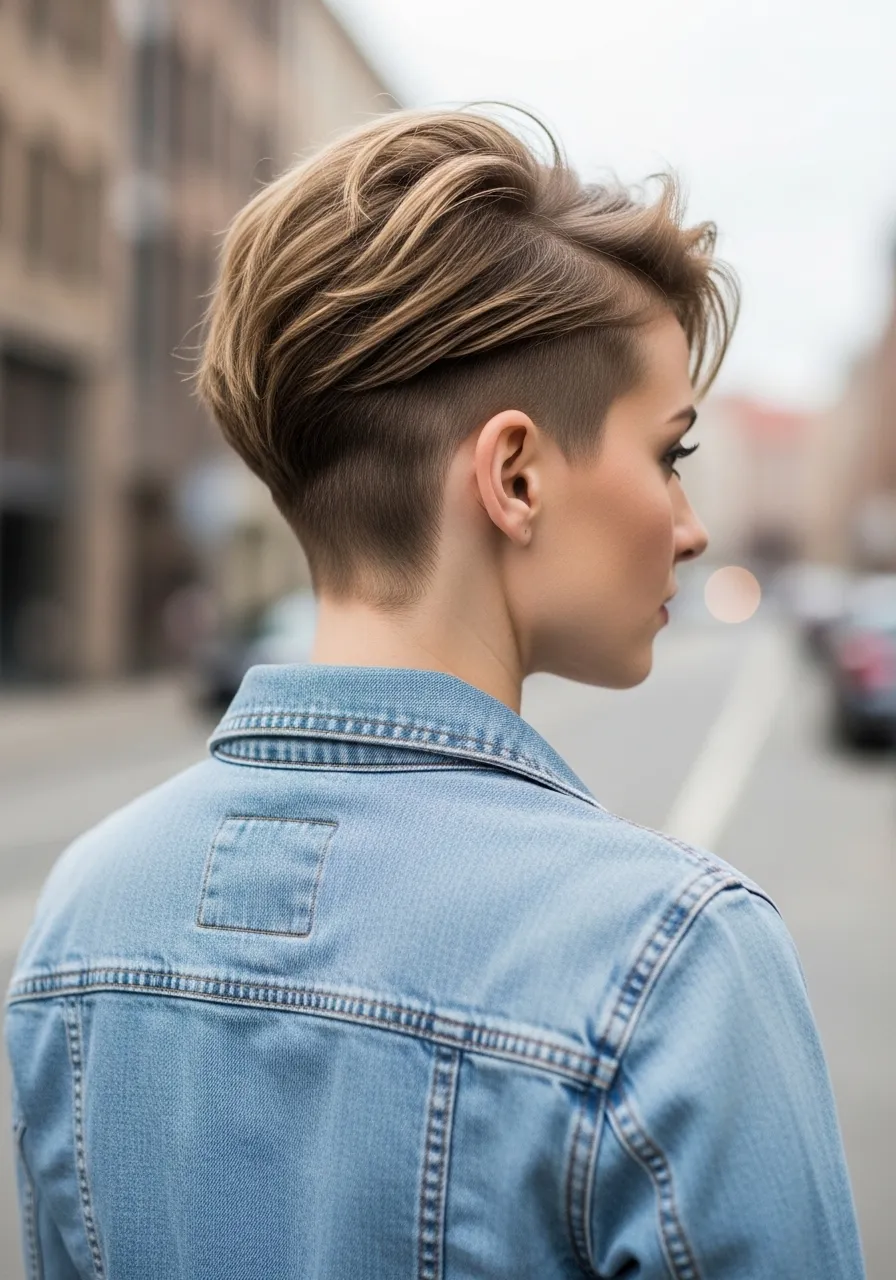
The undercut pixie was a genuine 90s subcultural statement. It said something about who you were and what you stood for.
Today it carries that same energy but reads as more mainstream. You see it everywhere from office hallways to red carpets.
The undercut removes all the hair from the sides and back close to the scalp, leaving the top section full and layered. The contrast between the two is the entire visual.
This is one of the most dramatic pixie options available. It is also one of the most practical for thick hair because it removes enormous amounts of weight.
At a barbershop, an undercut is a standard and usually inexpensive service. Many barbershops charge less than a full salon appointment for this kind of precision clipping work.
At home, a small clipper with a guard set to your preferred length can maintain the shaved sections between full appointments. This significantly extends the life of the cut.
For styling, the top section can be pushed forward, swept to one side, or tousled depending on the day. The undercut changes the silhouette completely regardless of how you style the top.
This is the boldest pixie on this list. It is a genuine commitment and a genuine statement.
8. The Textured Crop With Hard Part
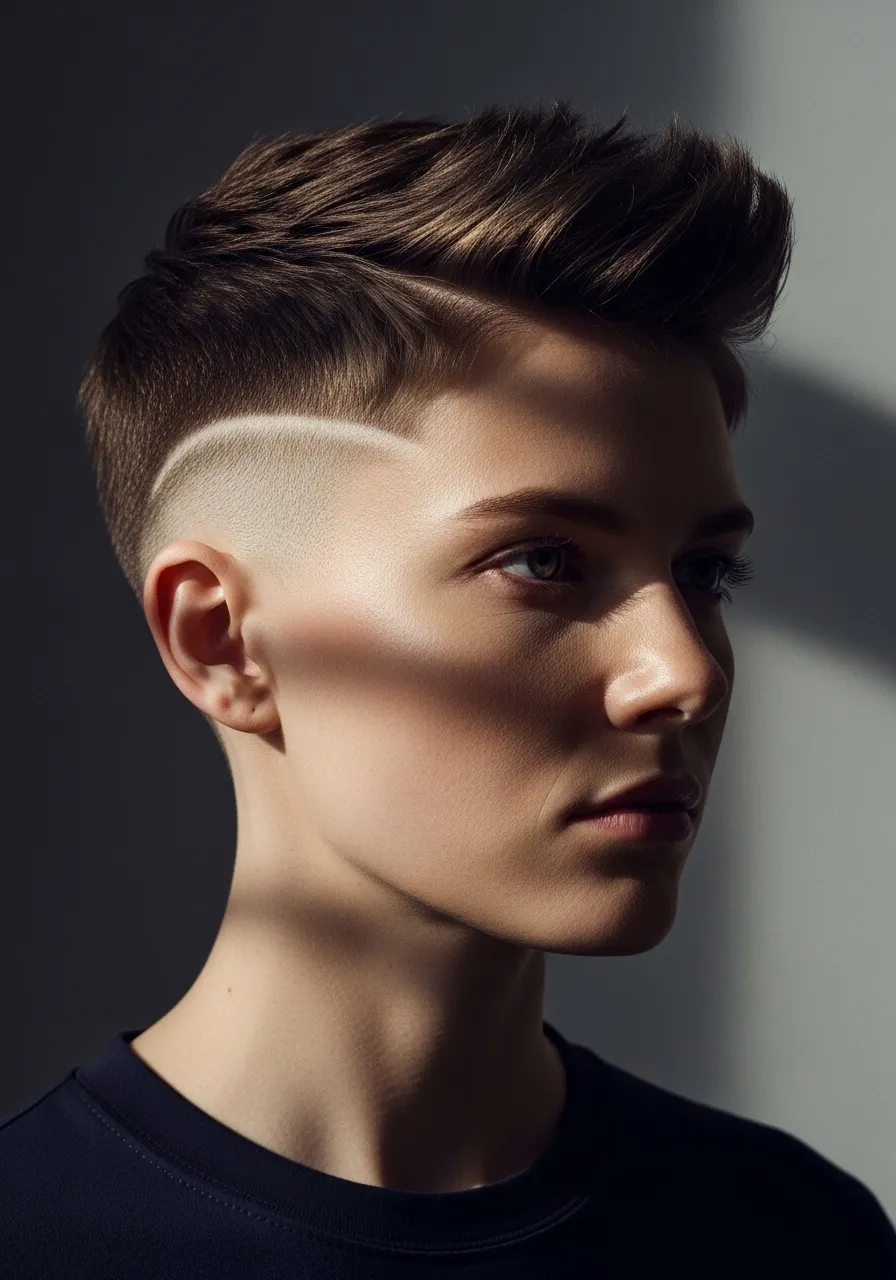
The hard part adds architecture to a textured crop. One clean shaved line separates the close sides from the textured top.
It is precise. It is modern. And it has a very cool 90s barbershop quality.
The hard part was a signature look in 90s hip-hop culture and it has aged incredibly well into contemporary style.
To get this cut, ask specifically for a “shaved part” or “hard part” on your preferred side. The stylist will use a razor or very fine clipper to draw a clean line.
Styling the top is simple. A matte paste or light wax worked through dry hair with fingers creates the piece-y texture that pairs with the hard part perfectly.
Do not over-apply product. The hard part is the star of this look. Heavy product on top can make the crown look greasy and distract from the clean line.
This cut looks particularly strong on natural hair textures. Coily and curly hair on top with a sharp hard part creates a beautiful contrast that is both structural and soft simultaneously.
Maintenance trims every three to four weeks keep the hard part sharp. Letting it grow out blurs the line and loses the effect.
9. The Pixie With Micro Bangs
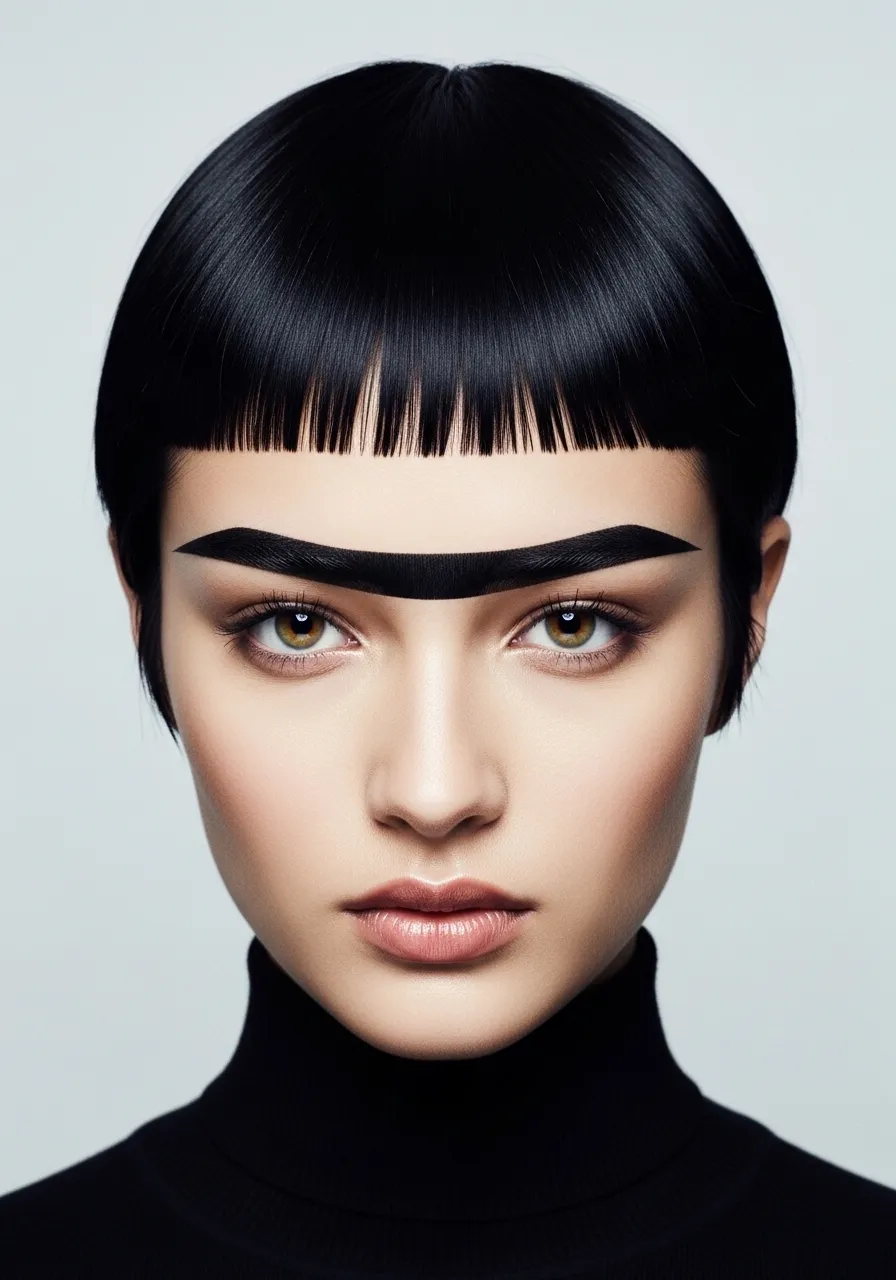
Micro bangs on a pixie are about as bold as hair gets. They sit very high on the forehead, barely past the hairline, and cut straight across.
Combined with a pixie, they create something that is simultaneously retro and completely modern.
This was a genuine 90s avant-garde move seen in fashion editorials and on runway models throughout the decade.
The micro bang frames the eyes in a very specific way. It draws all attention to the upper face. Eyebrows become a major feature.
This is a high-commitment choice. Micro bangs change your face significantly. Look at photos of others with this combination before you sit in the chair.
On the positive side, they grow out within six to eight weeks into a more standard short bang. The commitment is shorter than it might feel.
To style them, simply push them straight forward after washing. They are short enough that they do not have much choice about where to go.
A tiny bit of pomade smoothed across the surface keeps them flat and neat through the day.
Ask your stylist to cut them slightly longer the first time. Seeing them sit one centimeter higher than expected is jarring. You can always trim more. You cannot add length back.
10. The 90s Pixie With Frosted Tips
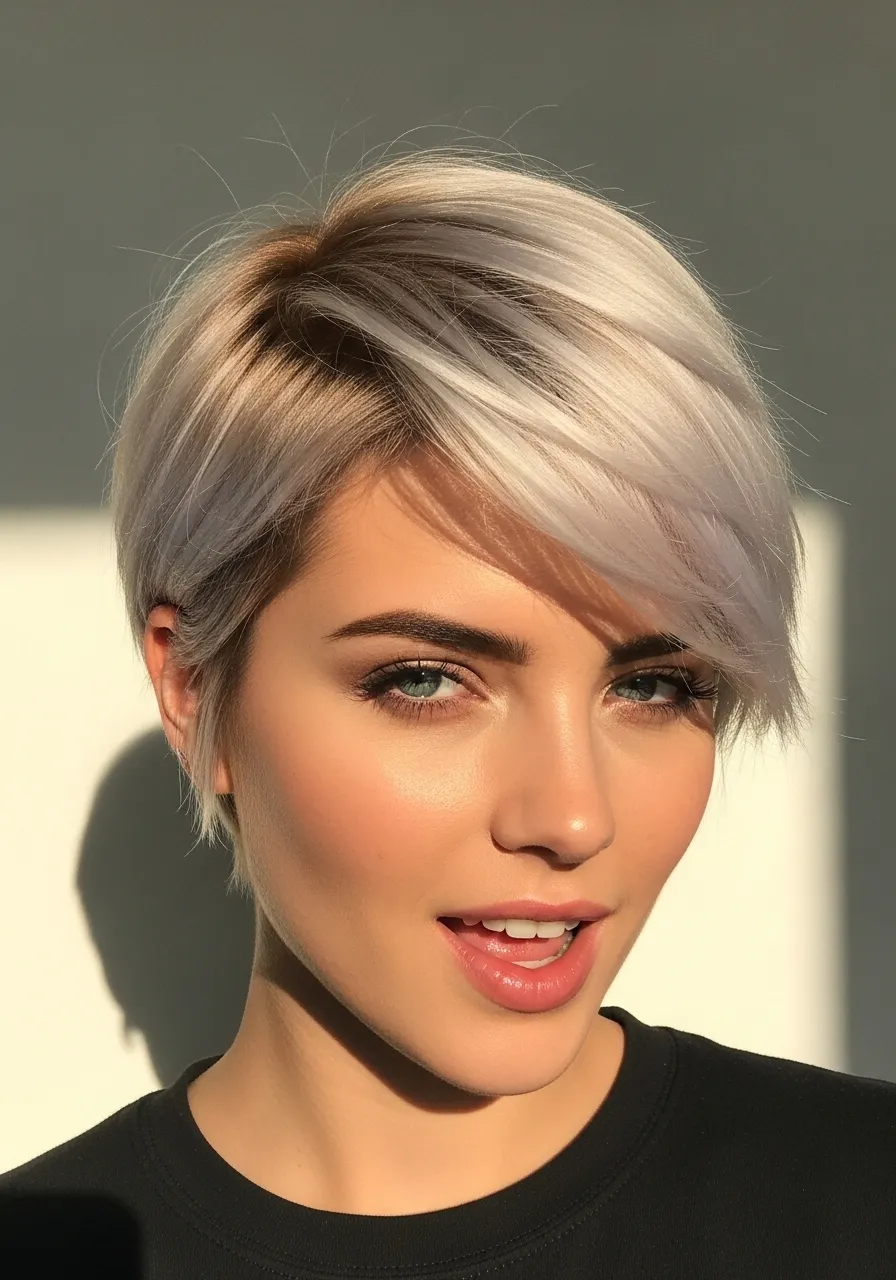
Frosted tips are one of the most recognizable beauty signatures of the 90s. On a pixie cut, they create a high-contrast, high-energy look that is genuinely fun.
The roots stay dark. The tips of the top layers are lightened to a pale blonde or platinum. The contrast does all the work.
This is a salon service that involves lightening only the very ends of the top section. It is a smaller, quicker process than a full color job.
Ask your colorist specifically for “frosted tips” or “tip bleaching.” Show a photo to make sure you are both picturing the same thing.
At home, a clip-on bleach kit works for this technique if you are comfortable with DIY color. Apply bleach only to the last centimeter of each tip. Set a timer. Rinse thoroughly.
Frosted tips require some maintenance. The contrast stays sharp when the roots are dark. When the roots start to lighten or when the tips fade, the effect blurs.
A toning shampoo once a week keeps the lightened tips bright and prevents them from going brassy.
This color technique suits virtually any skin tone because the contrast between root and tip is what creates the effect rather than one specific color.
11. The Grown-Out Pixie
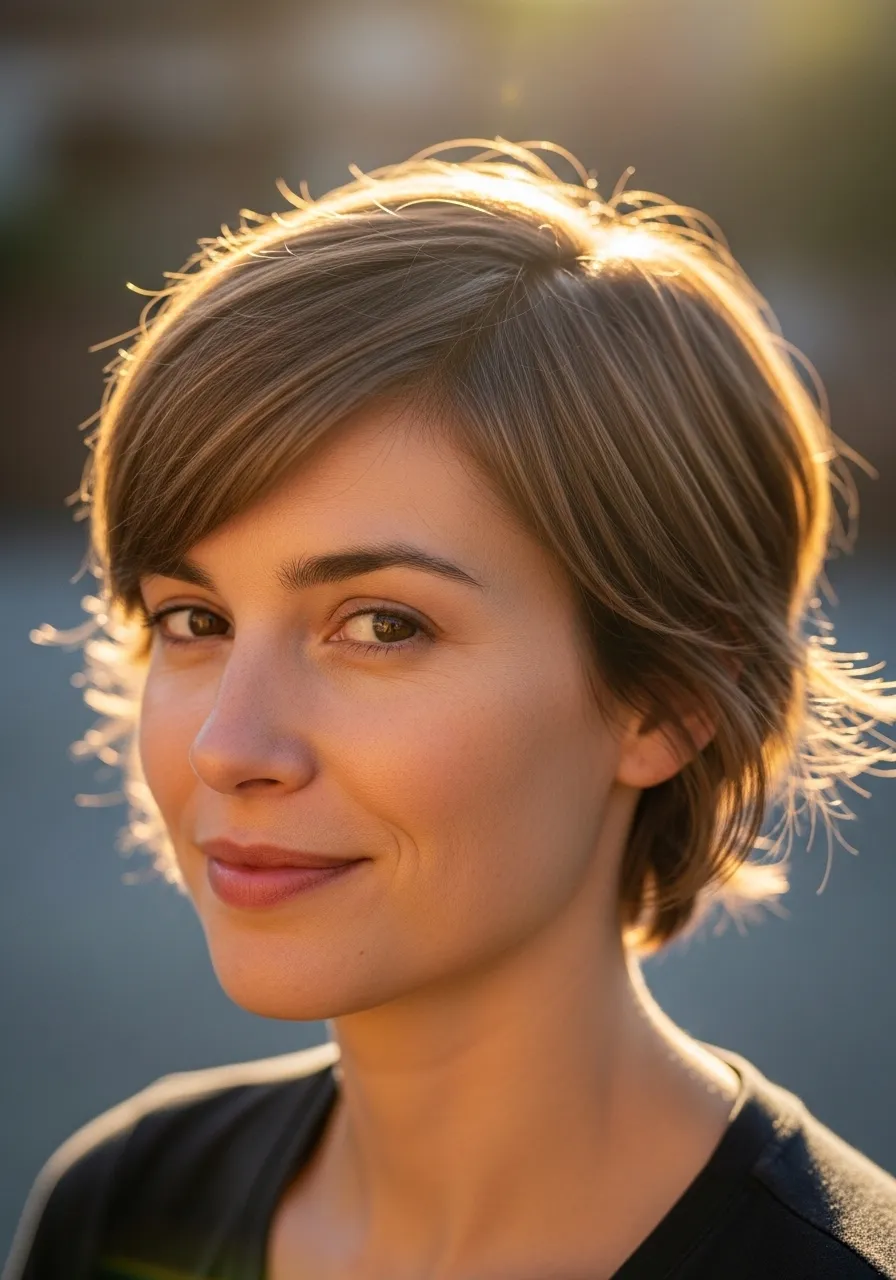
The grown-out pixie is what happens between appointments. And here is the thing: it is actually a beautiful stage in its own right.
Slightly longer layers around the ears. A little more length at the nape. The top starting to form a shape that is almost a mini shag.
Embrace the in-between stage instead of fighting it. The grown-out pixie has a soft, undone quality that is incredibly appealing.
To make the most of this stage, let the natural texture do its thing. Add a sea salt spray or a light mousse and air dry.
The sides growing over the ears create a soft, romantic framing effect that the cropped version cannot offer.
This stage usually lasts four to six weeks between trims. If you enjoy it, tell your stylist to add a little length to your next cut and lean into a more shaggy pixie direction.
Budget tip: skipping one trim cycle saves money and gives your hair time to grow into a slightly different shape. Sometimes the accidental grown-out version becomes your favorite.
Do not try to trim this stage yourself if you are not experienced. The growing layers need to be managed carefully to maintain balance.
12. The 90s Goth Pixie
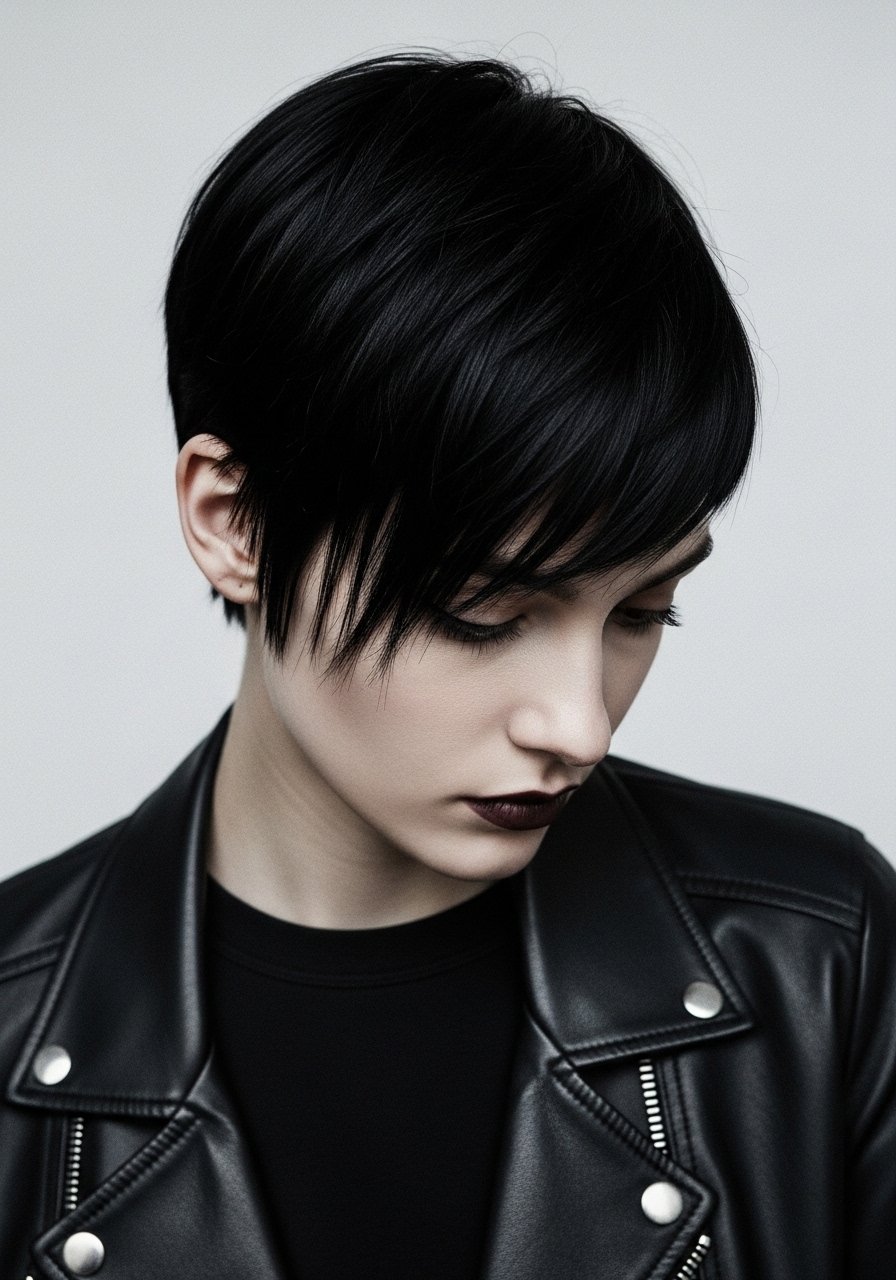
The 90s goth pixie is dark, precise, and full of mood. It is the pixie for people who want their hair to carry a statement before they say a single word.
Jet black color. Clean, sharp lines. Minimal styling. Maximum impact.
This cut works with the natural dark drama of black hair and amplifies it through the sharpness of the cut.
To achieve this look, the cut itself should be precise and close-cropped on the sides. The top should have just enough length for a small amount of texture or a deliberate flat finish.
Flat, smooth styling reads as more gothic than tousled texture. Use a fine-toothed comb and a light pomade for a sleek crown.
Black hair color is the most affordable box dye option available. Almost every drugstore carries permanent black in multiple shades from blue-black to soft black.
Cool-toned black with blue undertones is the most flattering for this aesthetic. It photographs beautifully.
Maintain the sharpness of the cut with regular trims. The goth pixie loses its effect when the lines get soft and overgrown.
Pair this with a strong brow and a dark lip for the full 90s goth reference. The hair alone carries significant weight but these additional elements complete the vision.
13. The Natural Coil Pixie
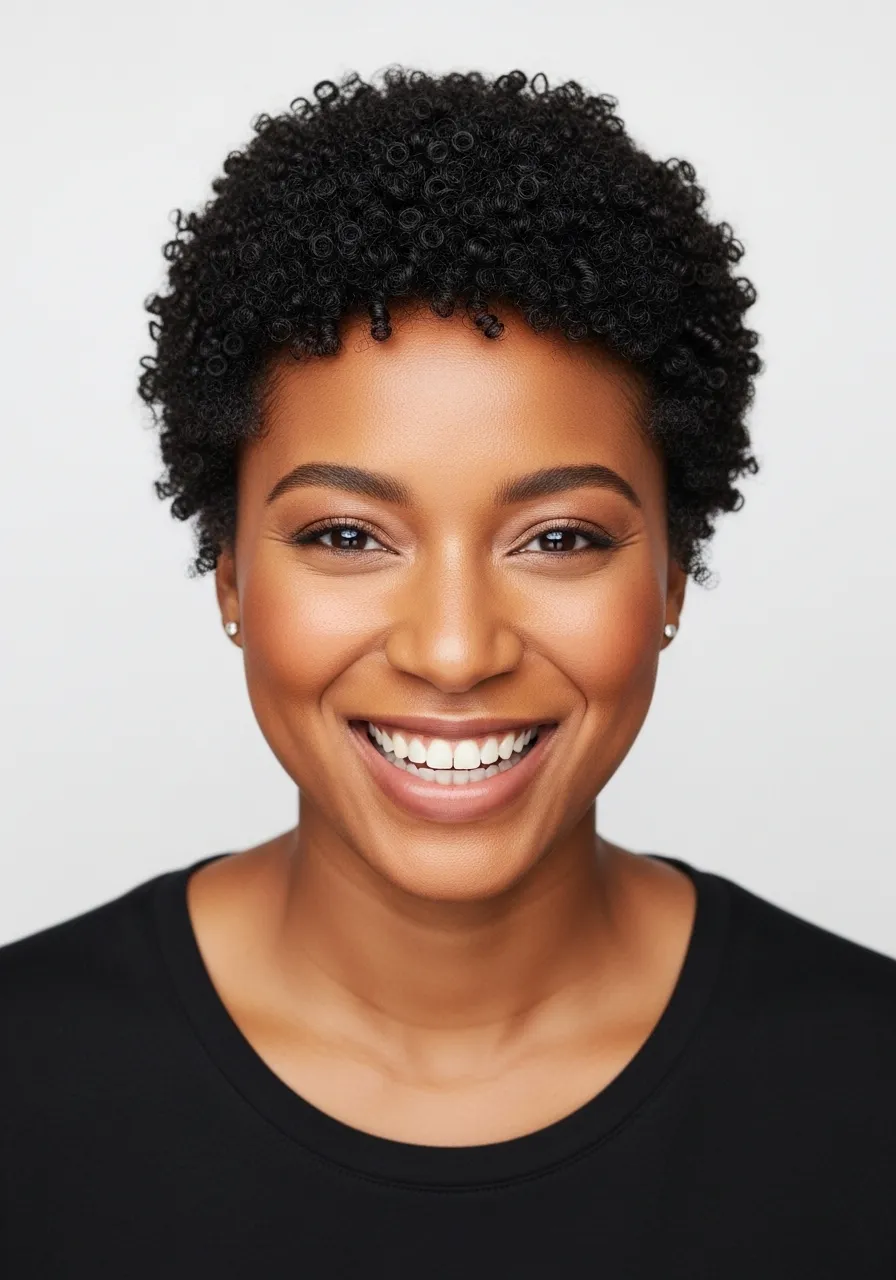
The natural coil pixie is a celebration of natural texture in its most concentrated form. Close-cropped coils form a full, rounded shape that is both powerful and beautiful.
This is the TWA. The teeny weeny afro. And it has been a symbol of confidence and identity since long before the 90s made it a mainstream fashion statement.
The most important thing with a coil pixie is a stylist who genuinely understands natural hair. A bad cut on coily hair looks very different from a bad cut on straight hair. Do your research before your appointment.
At home, keep the coils defined with a light curl cream or a co-wash conditioner. Moisture is the primary requirement for healthy coily hair.
A satin pillowcase protects the coils at night and reduces the amount of re-styling needed in the morning.
Trimming natural coils can be done wet or dry depending on the stylist’s preference. Ask which method your stylist uses and why. It tells you a lot about their experience with your hair type.
The coil pixie is genuinely low maintenance in terms of daily styling. Keep it moisturized. Protect it at night. Let it live.
Budget tip: a simple light-hold curl cream is all the product this cut requires on a daily basis.
14. The Pixie With Statement Color
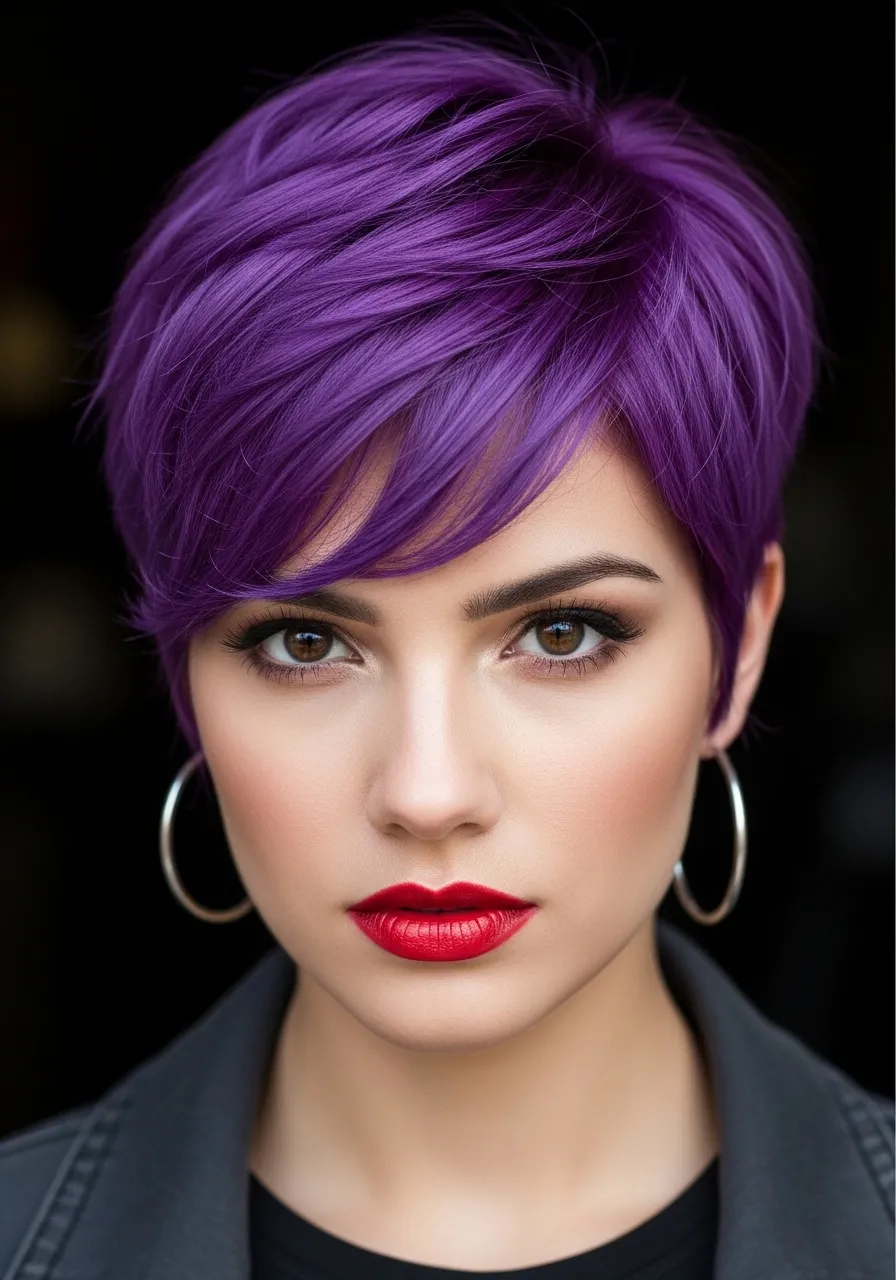
A pixie cut and a bold color are one of the most powerful combinations in hair. The short length means the color is completely concentrated and visible from every angle.
No hiding behind length. No diluting the effect with volume. Just pure color on a clean, sharp canvas.
Semi-permanent bold colors work beautifully on a pixie because they fade gradually over four to six weeks and do not require a harsh chemical removal process.
Brands like Arctic Fox, Manic Panic, and Adore are available at beauty supply stores and are affordable, gentle, and come in extraordinary shades.
Pre-lightening is required for dark hair to achieve true vivid tones. This is the part that benefits most from a professional. A bad bleach job can damage short hair visibly and severely.
Once the base is lightened, maintaining bold color at home is completely doable. Refresh the semi-permanent color at home every four to six weeks.
Use cold water only when washing. Hot water opens the cuticle and the color leaves with it.
A color-depositing conditioner in the same shade adds a small amount of color back every time you condition. This significantly extends the time between full color applications.
15. The 90s Skater Girl Pixie
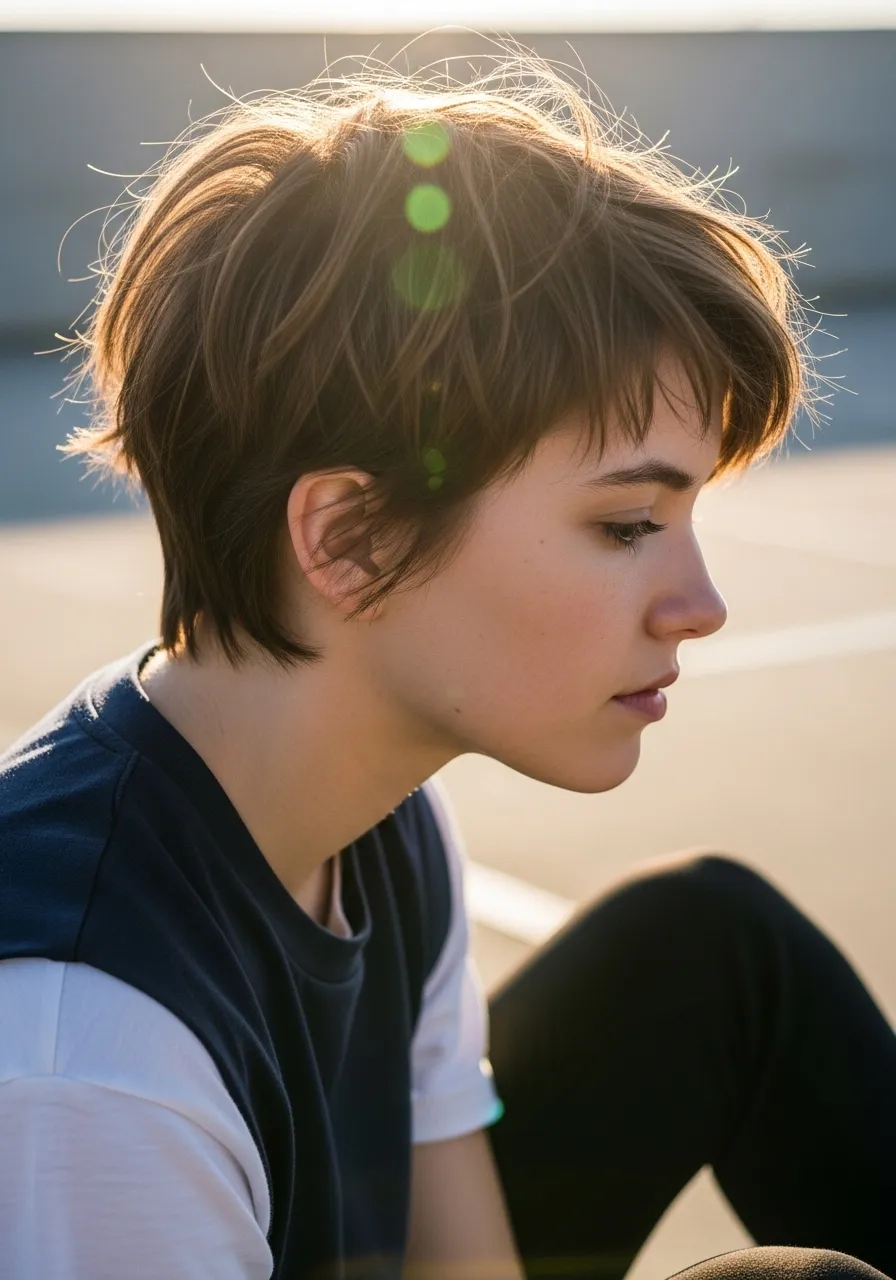
The skater girl pixie from the 90s was not a salon look. It was a haircut you got because it was practical, cheap, and cool.
Choppy. Slightly uneven. Cut without much ceremony.
The beauty of this look is that it improves when it is less perfect. A fresh scissor cut that is too precise loses the energy. Grown out a few weeks, it finds itself.
To style this, use no product or a very light sea salt spray. Rough dry with a towel. Let it do whatever it wants.
This pixie pairs naturally with casual, sporty, or streetwear aesthetics. It does not belong in a formal environment and it knows it.
For a DIY approach, this is actually one of the most manageable self-cuts if you are brave enough to try. Choppy cuts hide imprecision. A small pair of hair scissors, some YouTube tutorials, and decent lighting is all you need.
Do not expect perfection on your first self-trim. The skater aesthetic forgives and even rewards imperfection.
This cut is also one of the most inexpensive options at a salon because it requires less technical precision than a sculpted pixie. Ask for a quick choppy crop and keep the appointment short.
16. The Punk Pixie
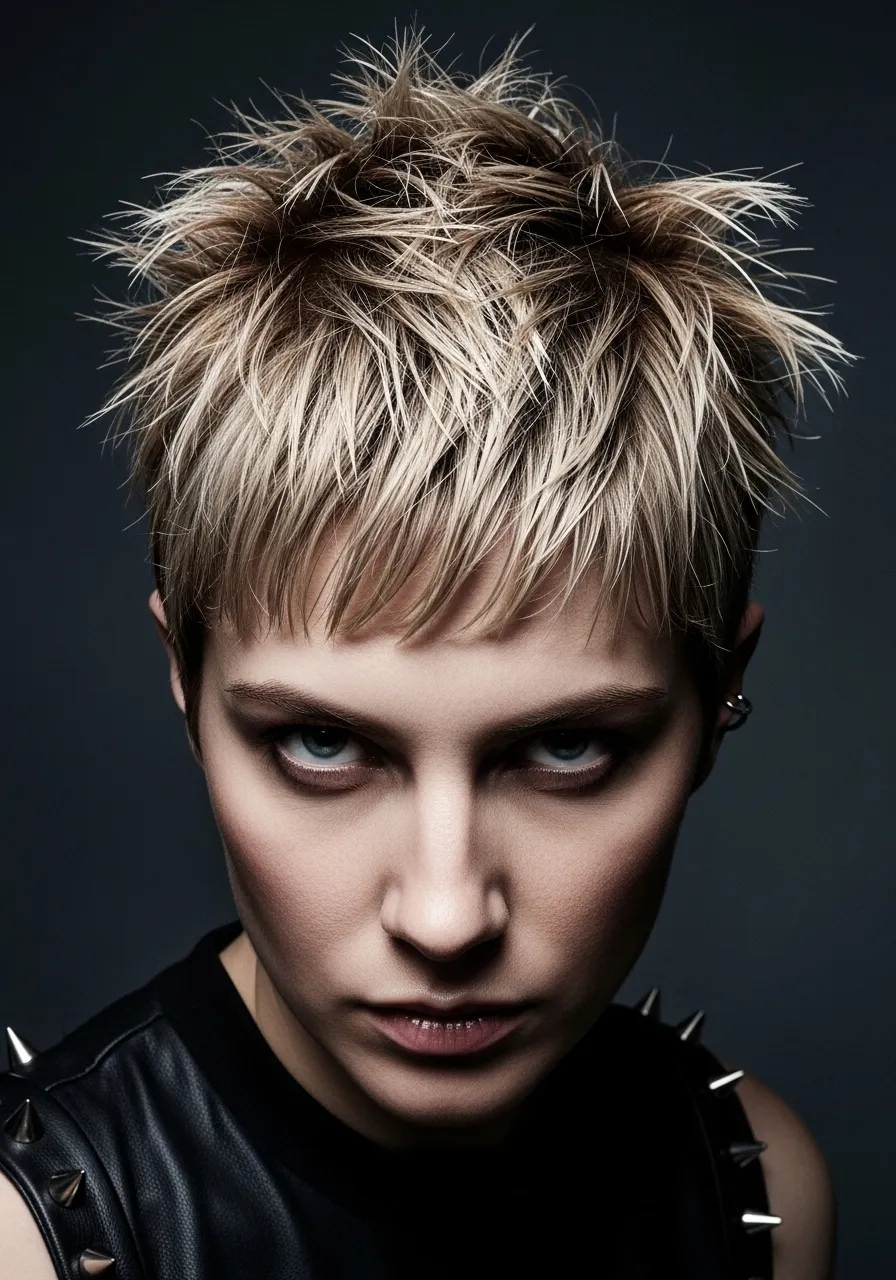
The punk pixie does not care about symmetry. It does not care about finishing smoothly. It is deliberately rough, deliberately loud, and completely free.
Multiple directions. Uneven pieces. A cut that looks like it was styled in a bathroom at a concert venue.
This is a state of mind as much as a haircut.
To achieve the punk pixie, ask your stylist to cut with maximum texture and minimal blending. Disconnected pieces. Uneven lengths. Nothing should match.
At home, apply a strong-hold matte paste to dry hair and push sections in conflicting directions deliberately. Some forward. Some back. Some straight up.
No hairspray. No finishing products. You want it to look like it could fall apart at any moment but somehow holds.
This style is particularly powerful with a shaved section somewhere, whether that is one side, the nape, or a patch at the temple.
Dark colors, bleached patches, or two-tone coloring amplifies the punk aesthetic dramatically.
This is one of the most truly DIY-friendly cuts on this list because intentional imperfection is the goal. Overly precise cuts actually work against the punk pixie.
Budget tip: this look thrives on neglect. Less product, less salon time, more attitude.
17. The Romantic Pixie With Curls
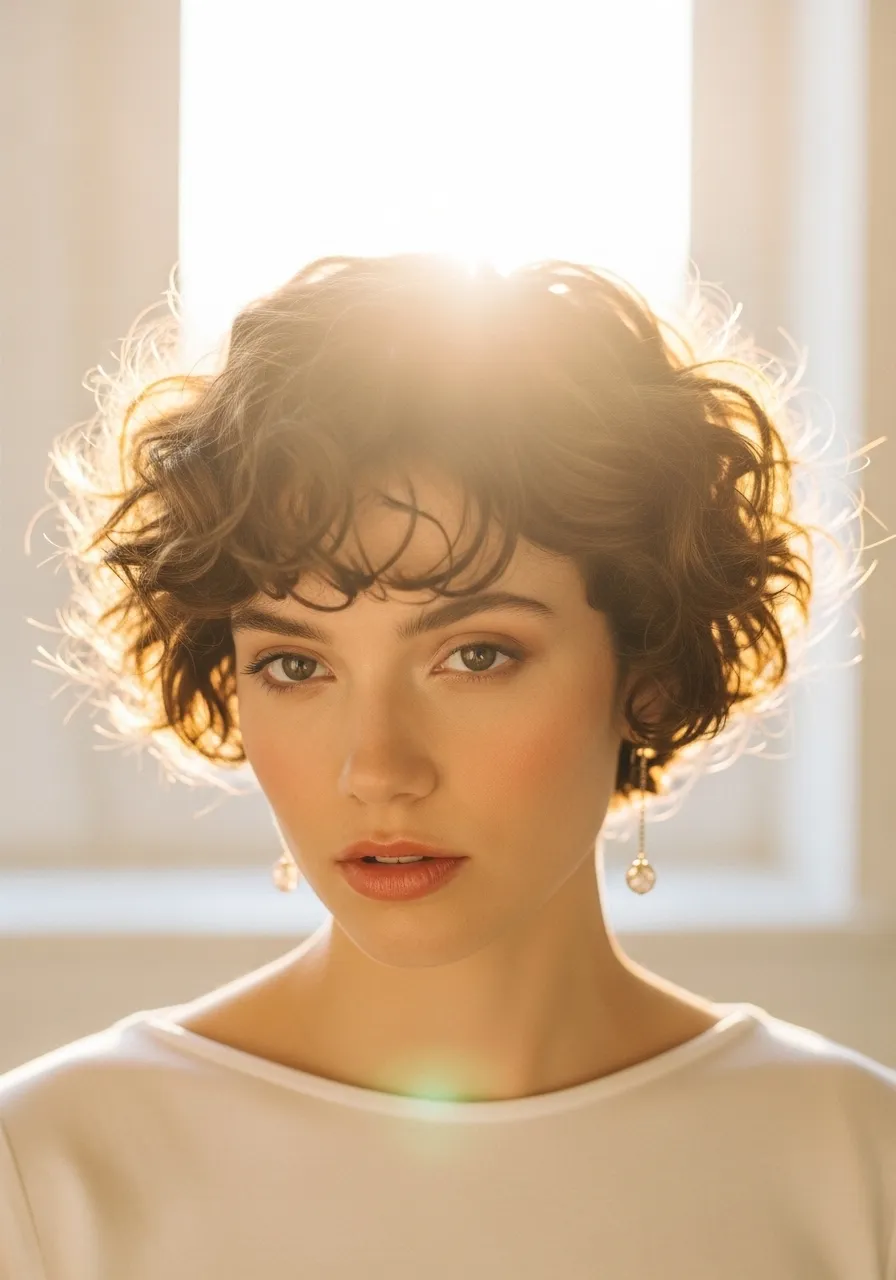
The curly pixie is simultaneously tough and soft. The pixie cut gives it structure. The curls give it romance.
It is a combination that feels very specifically 90s, referencing natural hair movements and the decade’s love of effortless beauty.
Curly hair and pixie cuts need each other. The cut gives the curls shape and prevents the volume from overwhelming the face. The curls give the cut dimension that straight-haired pixies have to work hard to achieve.
For tight ringlets, use a curl-defining cream applied section by section to soaking wet hair. Smooth each section downward. Let it air dry completely.
For looser waves, scrunch in a light mousse and let air dry. Less definition, more movement.
Do not brush curly pixies once dry. Only finger-comb or use a wide-tooth comb while wet and conditioned.
A deep conditioning treatment once a week keeps the curls soft, defined, and frizz-free. This does not need to be expensive. A rich drugstore conditioner left on for 10 minutes works beautifully.
Ask your stylist to cut the curls slightly longer than the desired final length. Curls spring up significantly as they dry.
18. The Pixie With Grown-Out Color
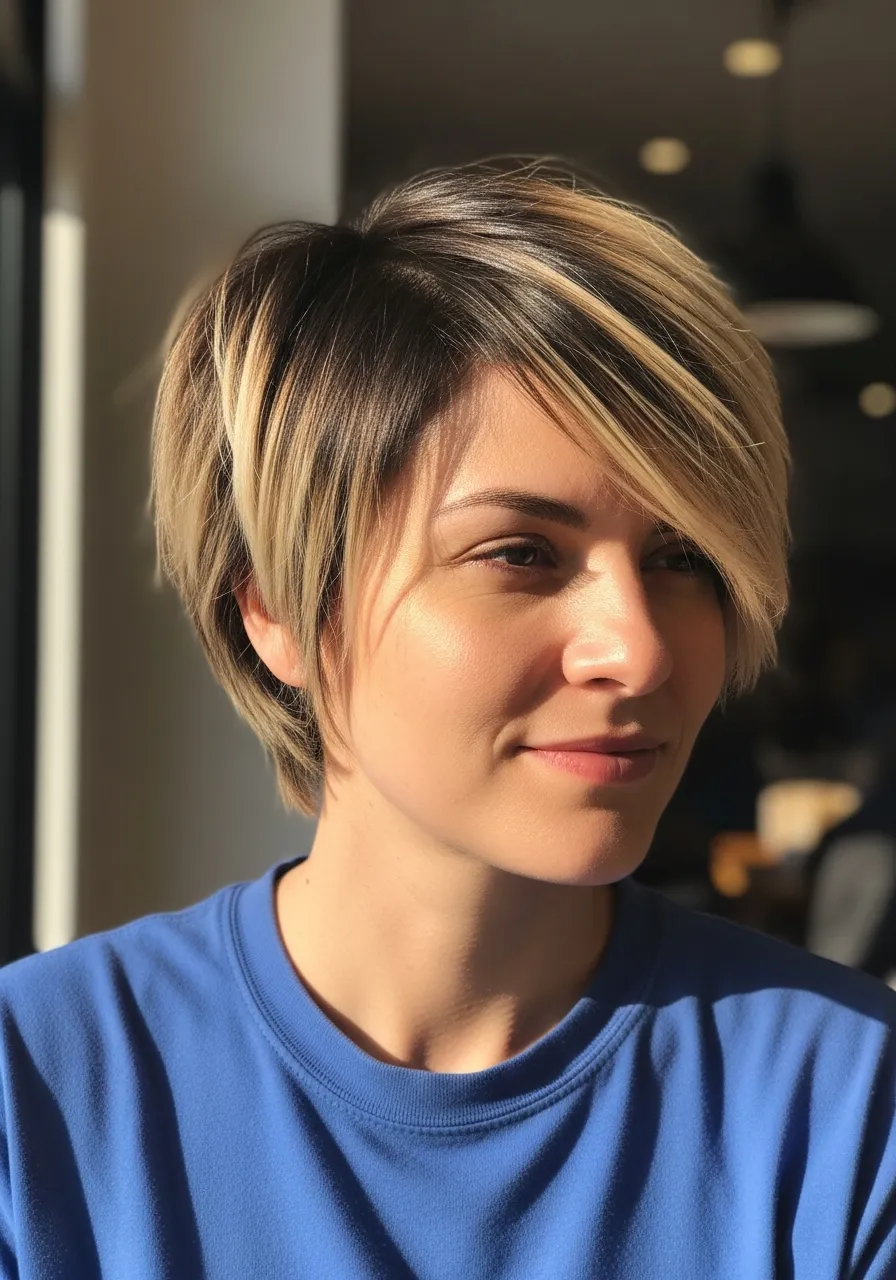
Grown-out color on a pixie creates a natural gradient that nobody had to plan. It simply happens when life gets busy and salon appointments get postponed.
And it looks incredible.
The dark root growing in against a lighter or colored end is one of the most organic-looking color effects possible. It reads as intentional and cool even when it started as an accident.
The key is leaning into it rather than panicking when the roots appear.
To maintain this accidentally-on-purpose look, use a color-safe shampoo to preserve whatever remains of the original color on the ends.
A toning shampoo once a week prevents the ends from going too brassy if they are lightened.
You do not need to go back to the salon specifically for this look. It maintains itself. The roots grow in. The ends continue to fade. The gradient shifts and changes.
When you are ready for a change, either refresh the ends with a new color or let everything grow to a uniform shade over time.
Budget tip: this is the least expensive color option on this entire list. No products, no salon visits, just time doing its work.
19. The Polished Executive Pixie
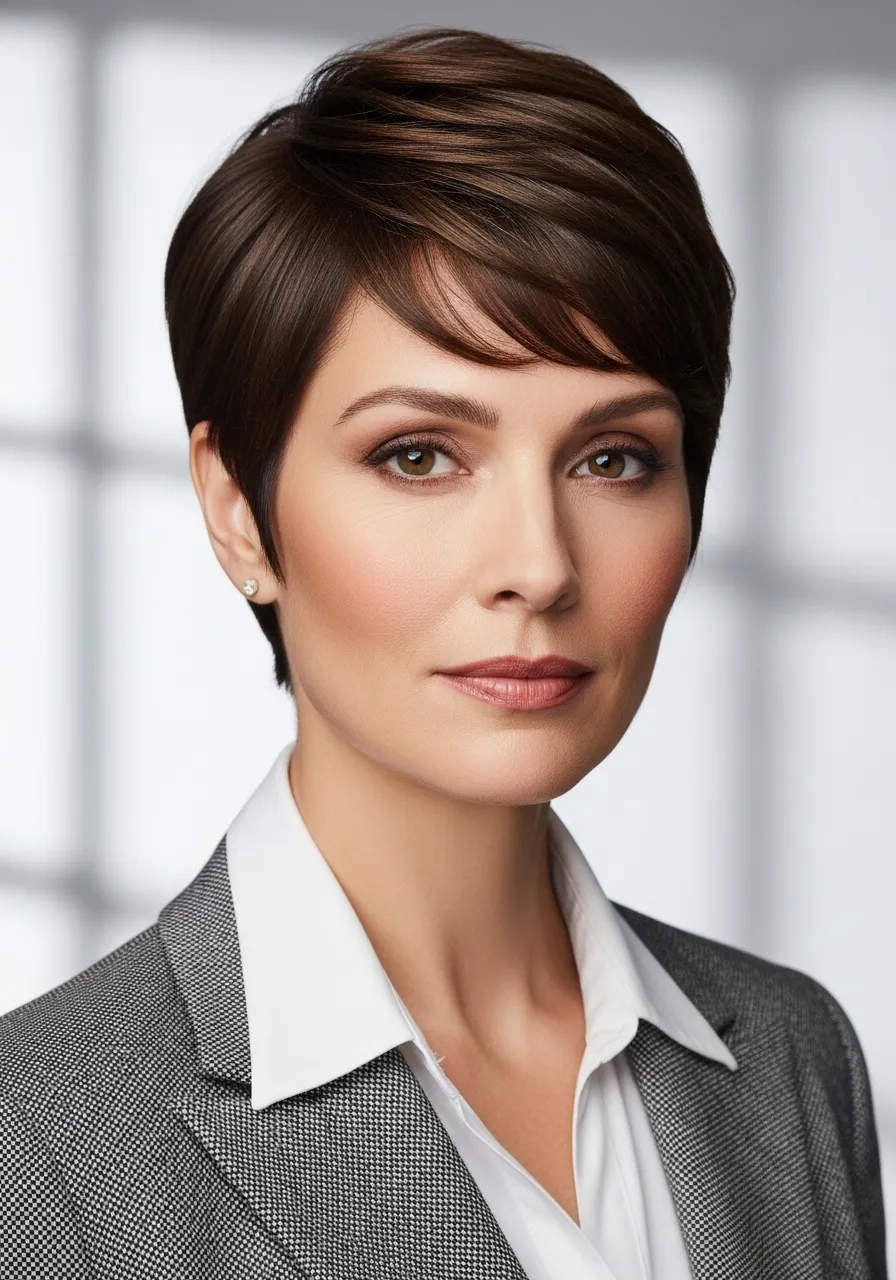
The polished executive pixie carries professional authority while being genuinely stylish. It is not trying to blend in. It just happens to look appropriate everywhere.
Clean lines. Smooth finish. Deliberate placement.
This is the pixie for people who want their hair to communicate competence and confidence in formal or professional settings.
To achieve a polished finish at home, blow dry with a small round brush. Work section by section from the nape upward. Smooth each section before moving to the next.
Finish with a very light pomade on the fingertips smoothed over the surface. Then a light-hold hairspray to set everything in place.
A fine-tooth comb is your best tool for this style. It smooths flyaways and creates the clean directional lines that define the polished pixie.
Regular trims every four to five weeks are more important for this pixie than for textured or messy versions. Clean lines show their age quickly.
This is a great entry pixie for people transitioning from longer professional hair. It feels significant but remains within expected professional grooming norms.
Ask your stylist for a “smooth, tapered pixie” and bring a photo. The word polished alone can mean different things to different stylists.
20. The Androgynous Pixie
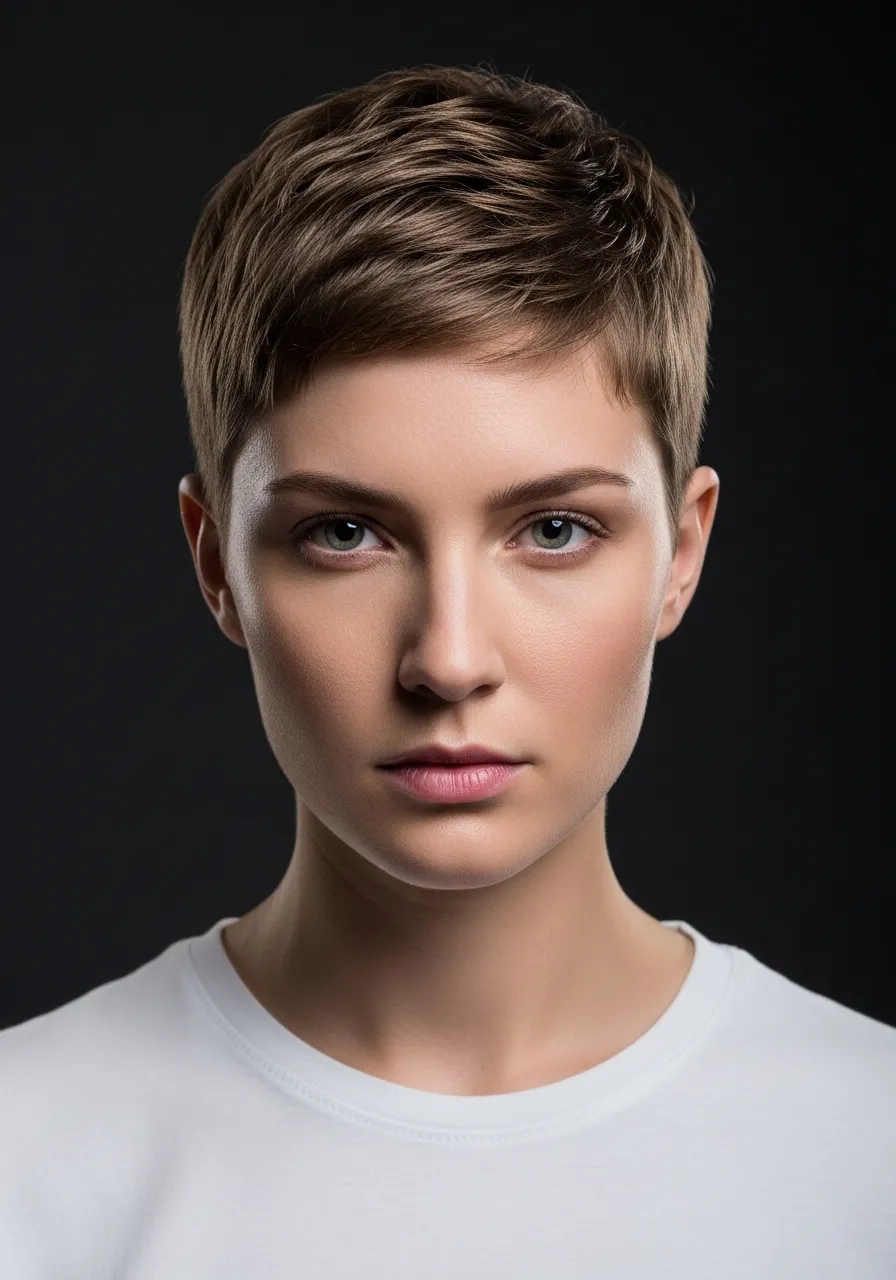
The androgynous pixie sits intentionally between traditionally feminine and masculine styling. It does not commit to either and that refusal is the entire point.
This cut was a significant cultural moment in the 90s. It was a statement about identity and the refusal of categories.
The androgynous pixie works because it is fundamentally about structure. Close sides, slightly longer top, clean lines throughout. The styling is minimal. The intention is clear.
To style it, apply a very small amount of matte product and push the hair into a clean, directional shape without any obvious gender cues. No overly feminine softness. No overly masculine harshness.
This cut is genuinely for everyone regardless of gender identity. It suits a wide range of face shapes and looks equally strong on all skin tones and hair textures.
Ask your stylist for a “gender-neutral crop” or “barbershop pixie.” These phrases communicate the structure and minimalism you are looking for.
A barbershop is often the better choice over a traditional salon for this cut. Barbers work with clippers and precision tools that create the clean lines this style requires.
Regular trims every three to four weeks maintain the clean structure that makes this cut work.
21. The 90s Demi Moore Pixie
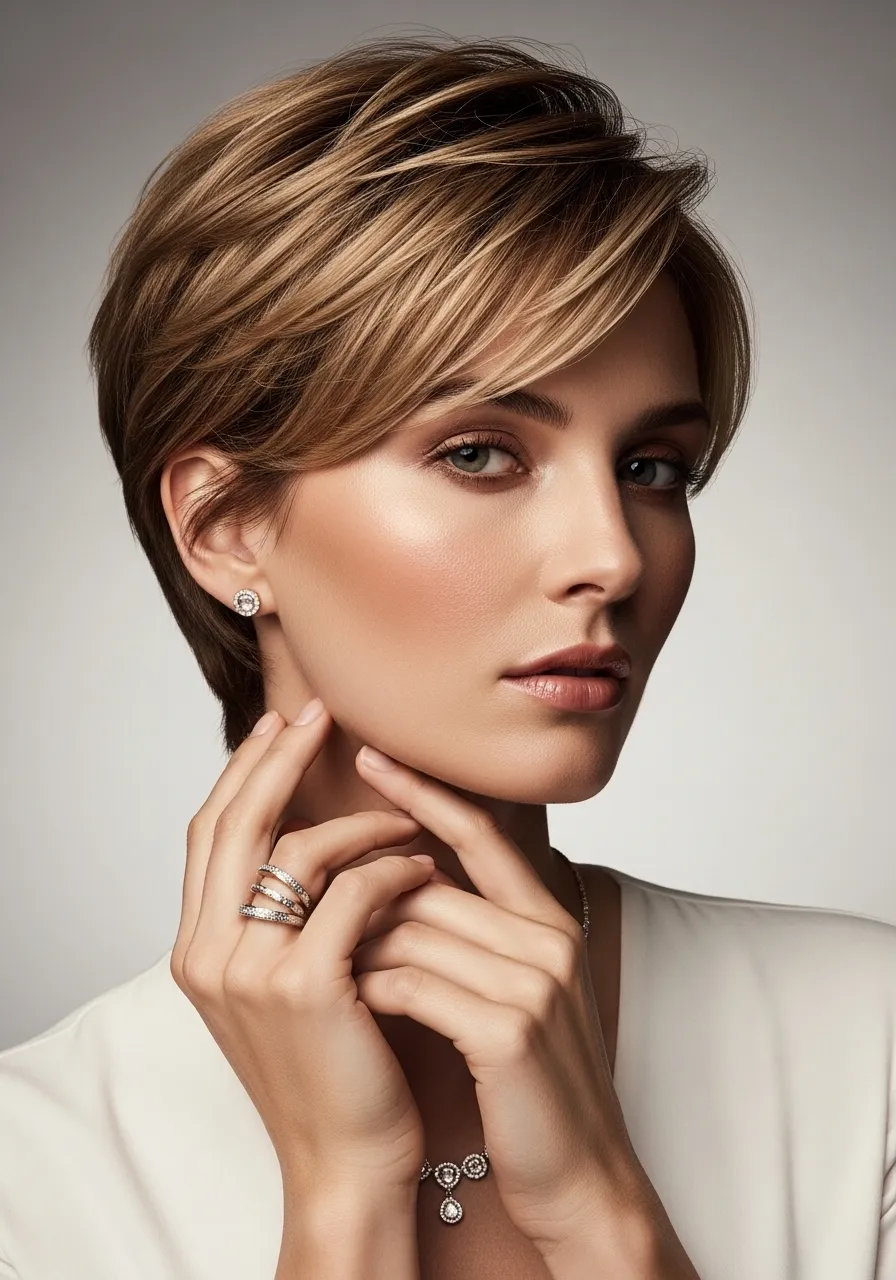
Demi Moore’s pixie in the early 90s was a revelation. It was not edgy or punk. It was glamorous. Movie-star short hair that proved you did not need length for allure.
The layers are soft. The finish is slightly smooth. The overall shape has a gentle volume at the crown.
This is the most conventionally glamorous pixie on this list. It photographs beautifully and works across a huge range of occasions from casual to formal.
To achieve the volume at the crown, blow dry the top section lifting it at the roots with a round brush. Finish with a light-hold hairspray while still warm to set the lift.
A lightweight volumizing mousse at the roots before drying adds fullness for fine hair without weight.
This cut suits most face shapes but is especially flattering on strong or angular features. The softness of the layers balances rather than emphasizes strong bone structure.
Ask your stylist for a “soft layered pixie with some crown volume.” That phrase gets you to the right place.
This is an excellent option for a first pixie because it is the least radical departure from longer layered cuts. The softness is familiar. The shortness is the only real shock.
22. The Half-Shaved Pixie
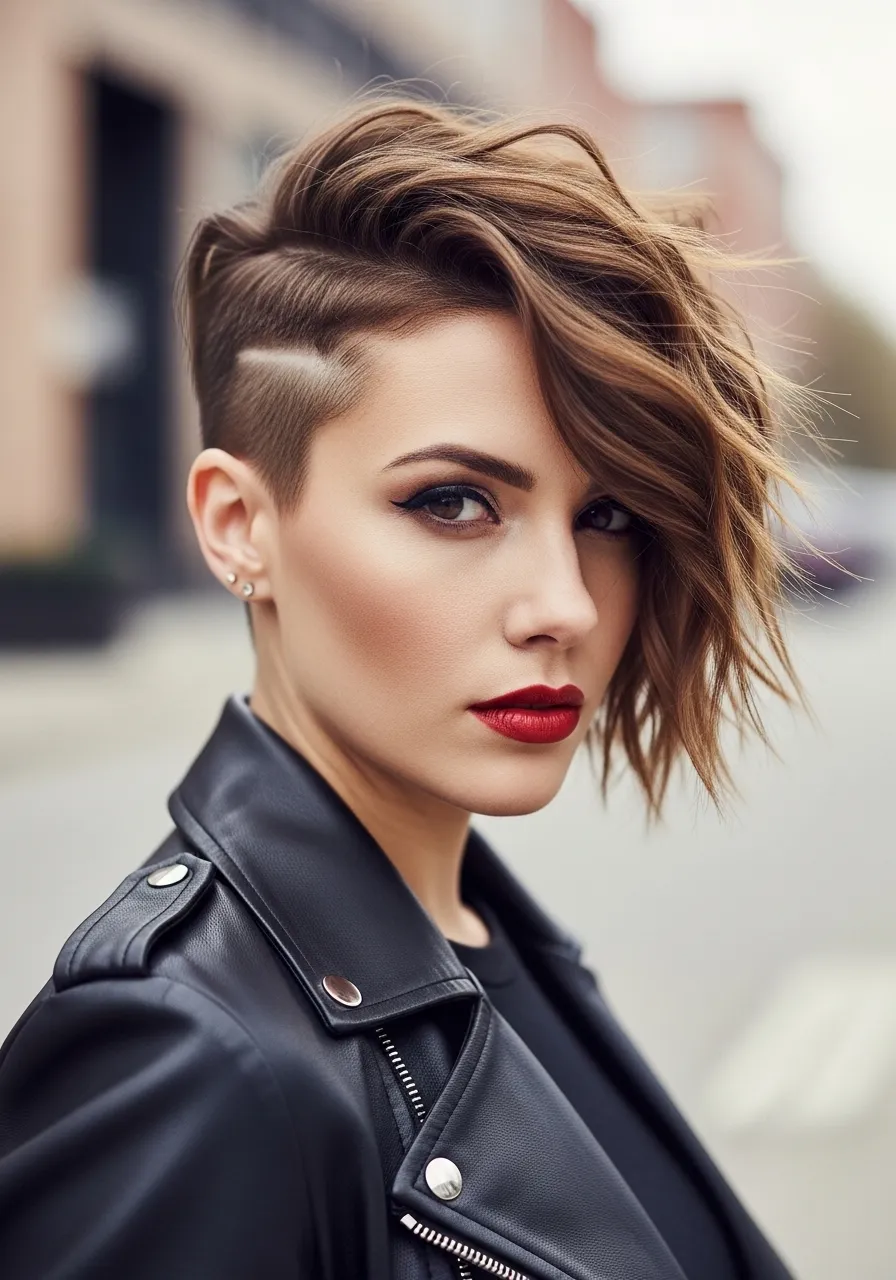
The half-shaved pixie is a direct line from the 90s underground music scene to your mirror. One side completely shaved or very close. The other side full, layered, and often sweeping over toward the shaved section.
It is one of the most dramatic looks you can achieve with short hair.
The contrast between the two sides creates a conversation every time you walk into a room. It reads as confident and deliberate.
At home, a small clipper maintains the shaved side between appointments. Set the guard to the same number your stylist used and go over it once a week.
The full side can be styled in multiple ways. Swept over the shaved side for full dramatic coverage. Pushed back to expose both sides equally. Tucked behind one ear.
This cut is genuinely permanent for the duration you keep it. The shaved section takes months to grow back to matching length.
Go to a stylist you trust for this cut. Discuss exactly how much you want shaved and where the shave line should start.
For a less permanent version, ask for a very close clipper cut on one side rather than a full razor shave. It creates a similar effect with slightly faster grow-out.
23. The Effortless French Girl Pixie
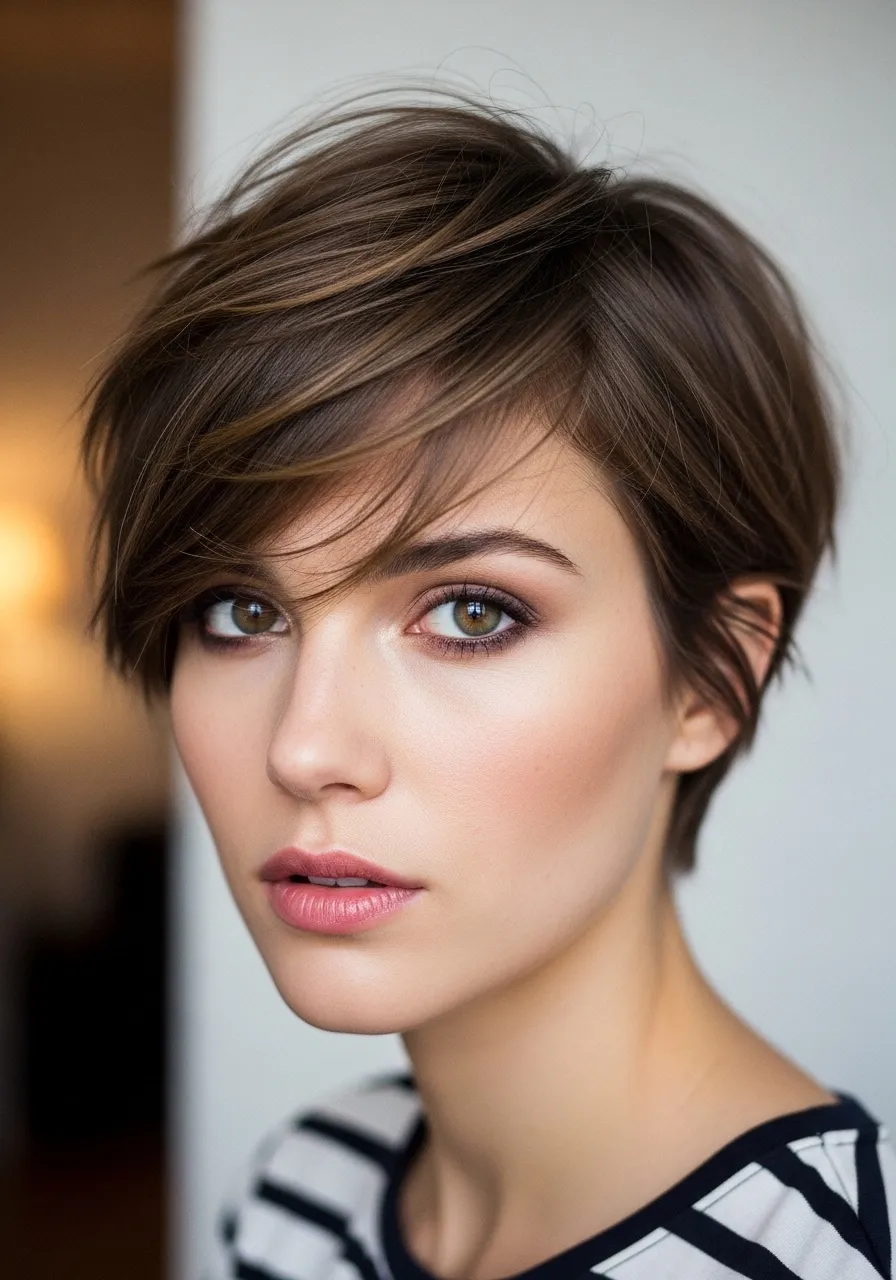
The French girl pixie is the most effortless entry on this list. It looks like the person simply woke up, did nothing, and walked out looking perfect.
It is the pixie that does not try.
The secret is a really well-executed cut. The effortlessness comes from the haircut itself, not from technique or product. When the cut is right, it falls into shape on its own.
To achieve this, ask your stylist for soft layering throughout with a few longer pieces left around the face and forehead. Nothing should be too precise or too even.
At home, wash, add a very small amount of light-hold cream, and let it air dry completely. Do not touch it while it dries.
Once dry, use your fingers to gently push one or two small pieces forward onto the forehead or toward one cheekbone. That is all.
No hairspray. No finishing products. You want it to look like it could be slightly different every day.
This is the most achievable high-style pixie on this list in terms of daily effort. It requires almost nothing from you once the cut is right.
Budget tip: this cut and this styling approach require the fewest products of any option here. One small tube of light-hold cream lasts months.
The Pixie Is Yours to Own
The 90s gave us something real with the pixie cut. It was never just a hairstyle. It was a declaration. A refusal to hide behind length. A choice to let your face and your personality do the talking without any help from a ponytail or a curtain of hair.
Every single option in this guide is wearable right now. The classic crop, the punk pixie, the curly romantic version, and the androgynous crop. They all carry that same original energy from the 90s while fitting completely into the present moment.
The step is simple. Choose the version that feels most like you. Bring a photo to your stylist. Have an honest conversation about what your natural texture and face shape can work with. Then sit in the chair and commit.
You do not grow into a pixie. You grow because of it.
Leave a Reply