
1. Classic Curtain Wispy Bangs

Curtain bangs are parted down the middle and swept to both sides. They open up the face instead of covering it. This style works on almost every face shape because it adds width near the cheeks and softens the forehead line. You can create this look at home with a round brush and a blow dryer set on low heat. Just blow dry the bangs outward and away from your face in small sections. If you don’t own a round brush, an old toothbrush or a soft comb can help guide the direction while drying. A light hairspray keeps the shape without making it stiff. Curtain bangs also grow out easily since they blend into the rest of your length. This makes them a good pick if you are unsure about committing to bangs long term. For a budget option, trim the ends yourself every few weeks using small sewing scissors and cutting only the very tips at an angle.
2. Side Swept Wispy Bangs

Side swept bangs sit mostly on one side of the forehead. They give an asymmetrical touch without looking uneven. This style suits people who want bangs but don’t want their whole forehead covered. To style them at home, dry your hair while pulling the bangs to one side with your fingers. A flat iron on a low setting can smooth any frizz for a cleaner finish. If you have a cowlick, side swept bangs can actually work in your favor since the natural direction of hair growth helps the sweep stay in place longer. For upkeep, use a small amount of leave in conditioner on damp bangs before drying so they stay soft instead of straw like. This style pairs well with long layers and works on both straight and wavy hair textures. It is also one of the easiest bang styles to grow out gracefully.
3. Feathered Wispy Bangs
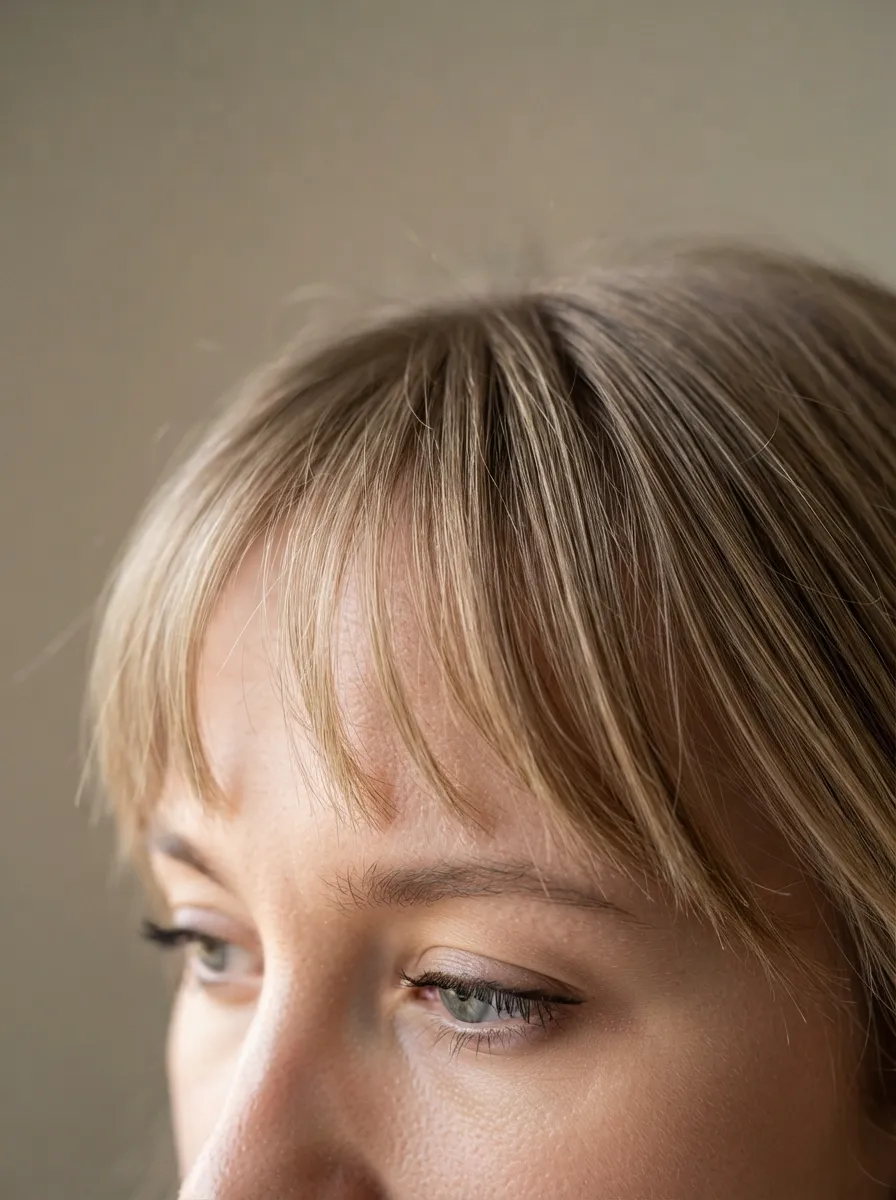
Feathered bangs have thin, uneven tips instead of one blunt line. This creates a soft, airy texture that looks less structured. Achieving this style is simple with point cutting, where scissors are held vertically and small snips are made into the ends. You can try this at home with sharp hair cutting scissors, working on small sections and cutting less than you think you need. It is easier to trim more later than fix bangs cut too short. Feathered bangs work well for people with fine hair because they avoid a heavy, blunt look. For thicker hair, this technique removes bulk without shortening the length too much. Style with a light texturizing spray and scrunch gently with your fingers instead of brushing them flat. This keeps the feathered movement visible. Feathered wispy bangs also hide split ends better than blunt bangs, making them a practical choice between trims.
4. Micro Wispy Bangs
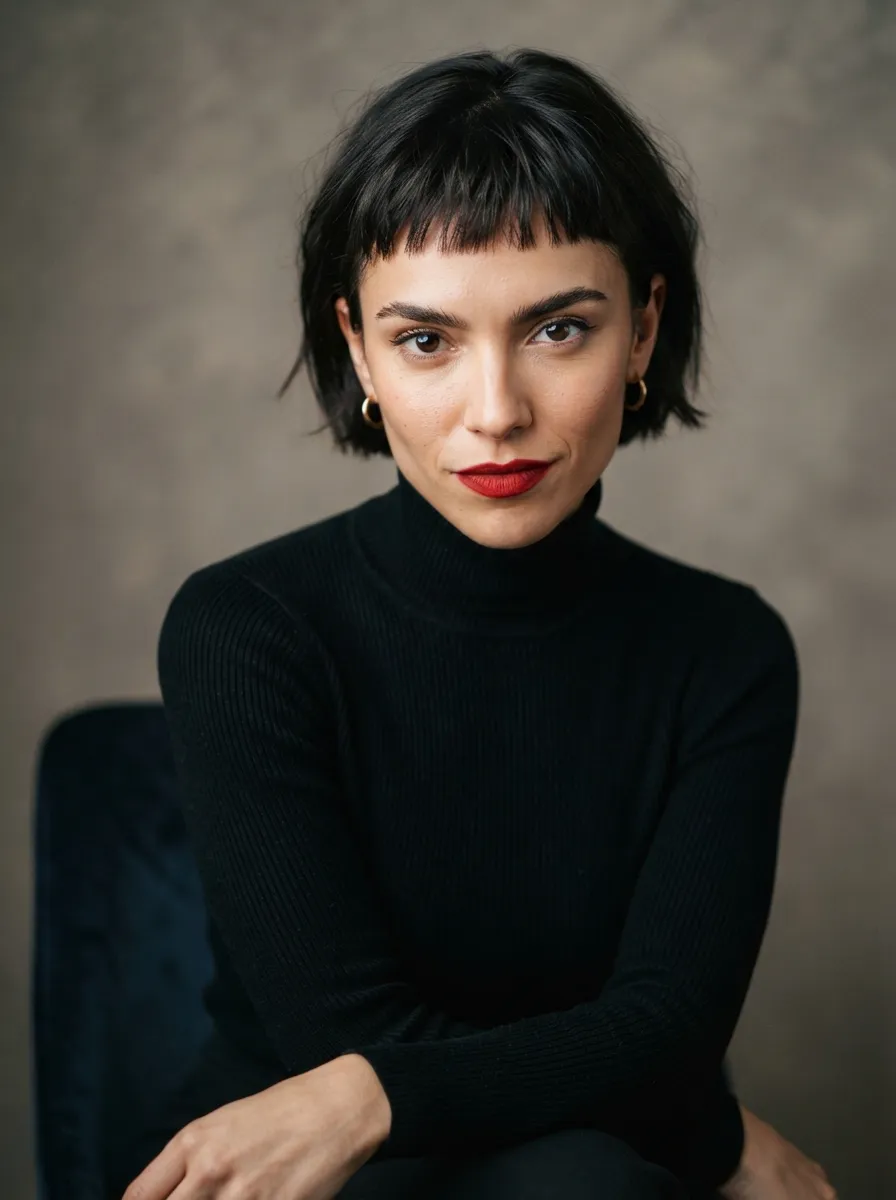
Micro bangs sit high on the forehead, often just above the eyebrows. They are short and light instead of full and heavy. This style draws attention to the eyes and cheekbones. Micro bangs work best on people with balanced or longer face shapes since they expose more of the forehead. If you want to try this without a permanent cut, ask your stylist for a trim only at the front section while keeping the rest of your hair the same length. At home, style with a small round brush and low heat to curve the ends slightly inward. A dab of pomade on your fingertips can tame any frizz without weighing the short strands down. Micro bangs need more frequent trims since even a small amount of growth changes the shape quickly. Keep small cutting scissors at home for touch ups between salon visits to save money.
5. Long Wispy Bangs
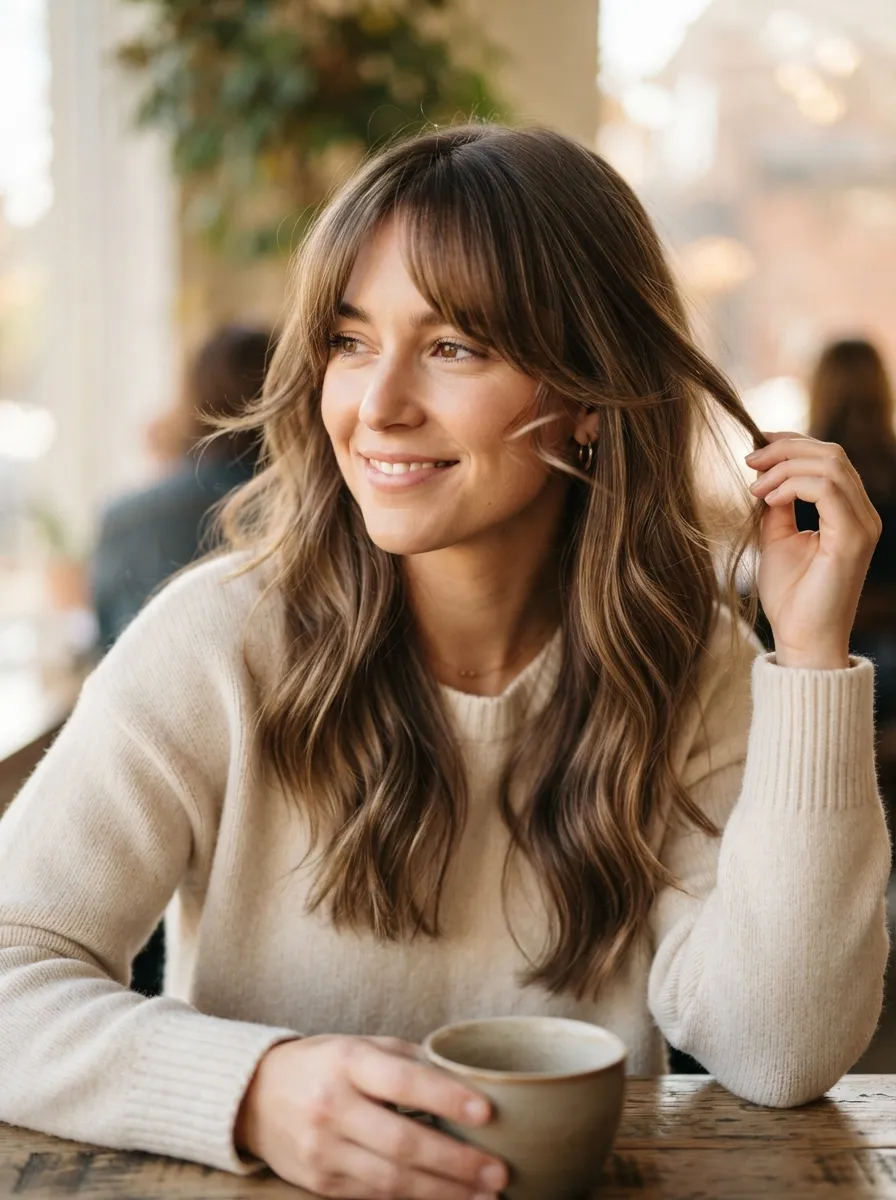
Long wispy bangs reach past the eyebrows, sometimes down to the cheekbones. They blend easily with the rest of your hair, making them low maintenance. This style is a good starting point if you are new to bangs and worried about commitment. You can style them by simply parting them slightly off center and letting them fall naturally. A light mist of sea salt spray adds texture without extra effort. Long wispy bangs also work well for people who want the option to pin them back on busier days using a small clip. Since they are longer, they take a bit more time to grow out, but they also require fewer trims compared to shorter styles. This makes them a practical option if visiting a salon often is not convenient. Pair long wispy bangs with a middle or side part depending on which side of your face you want to highlight.
6. Blunt Wispy Bangs

Blunt wispy bangs combine a straight cut line with soft, feathered ends. The straight base gives structure while the wispy tips keep it from looking too heavy. This style suits people with thicker hair since the fullness balances well with a straighter line. To maintain the look at home, use a flat iron to keep the base line smooth, then use scissors to point cut the very ends for texture. Avoid cutting too much at once. Small trims every two weeks keep the shape consistent. This bang style pairs nicely with a fringe that sits right above the eyebrows for a bold but soft finish. If your hair tends to get oily quickly, dry shampoo at the roots of the bangs can extend the time between washes. Blunt wispy bangs also photograph well since the straight line adds definition even in soft, natural lighting.
7. Wispy Bangs with Layers
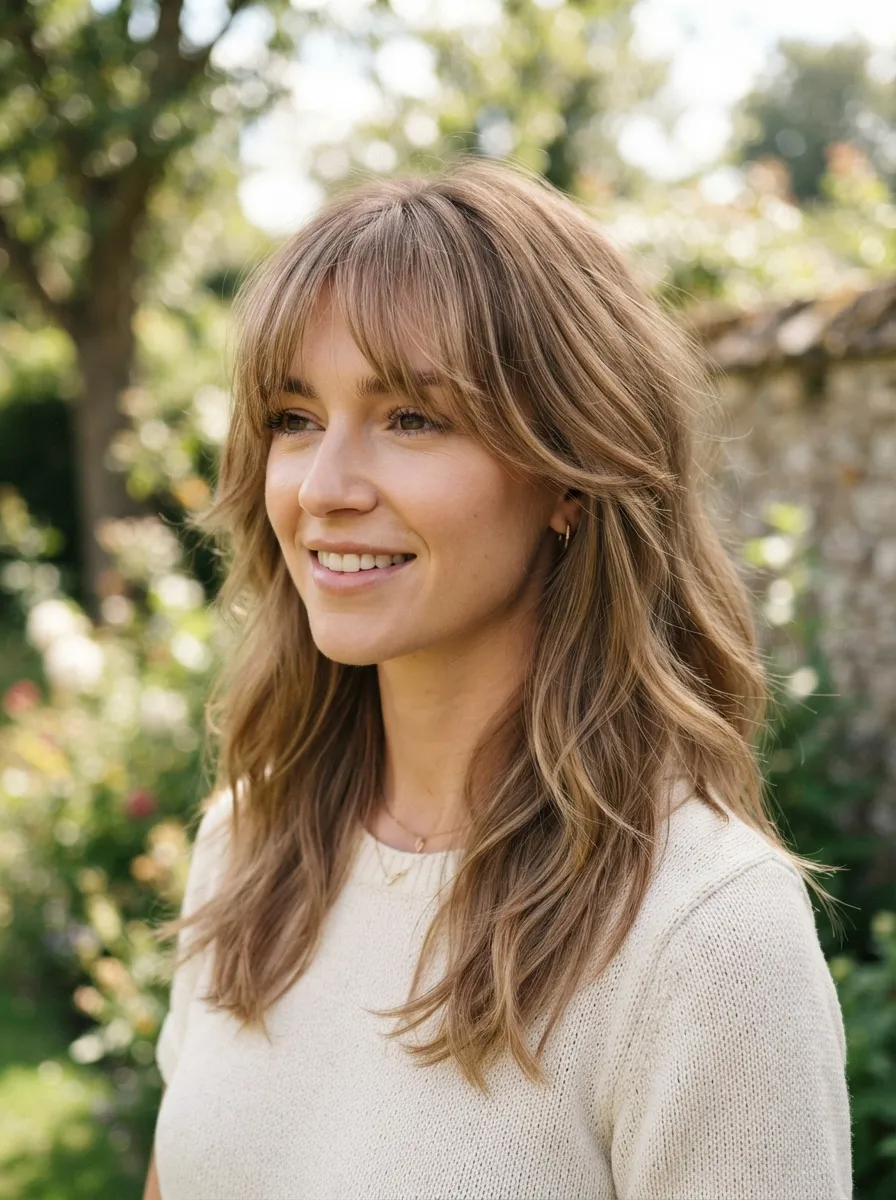
Adding layers underneath your bangs creates a smoother transition between the fringe and the rest of your hair. This avoids the harsh line that sometimes happens when bangs are cut separately from the rest of the style. Layers also add movement, which pairs well with the soft look of wispy bangs. At home, you can add texture to existing layers using a texturizing spray and scrunching your hair while damp. If you are getting this style done professionally, ask your stylist to blend the bangs into the first layer instead of cutting them completely separate. This creates a seamless look that grows out evenly. Wispy bangs with layers work on almost any hair length, from a short bob to long hair past the shoulders. This combination is a good choice if you want your hairstyle to feel connected rather than like two separate sections.
8. Wispy Bangs for Round Faces
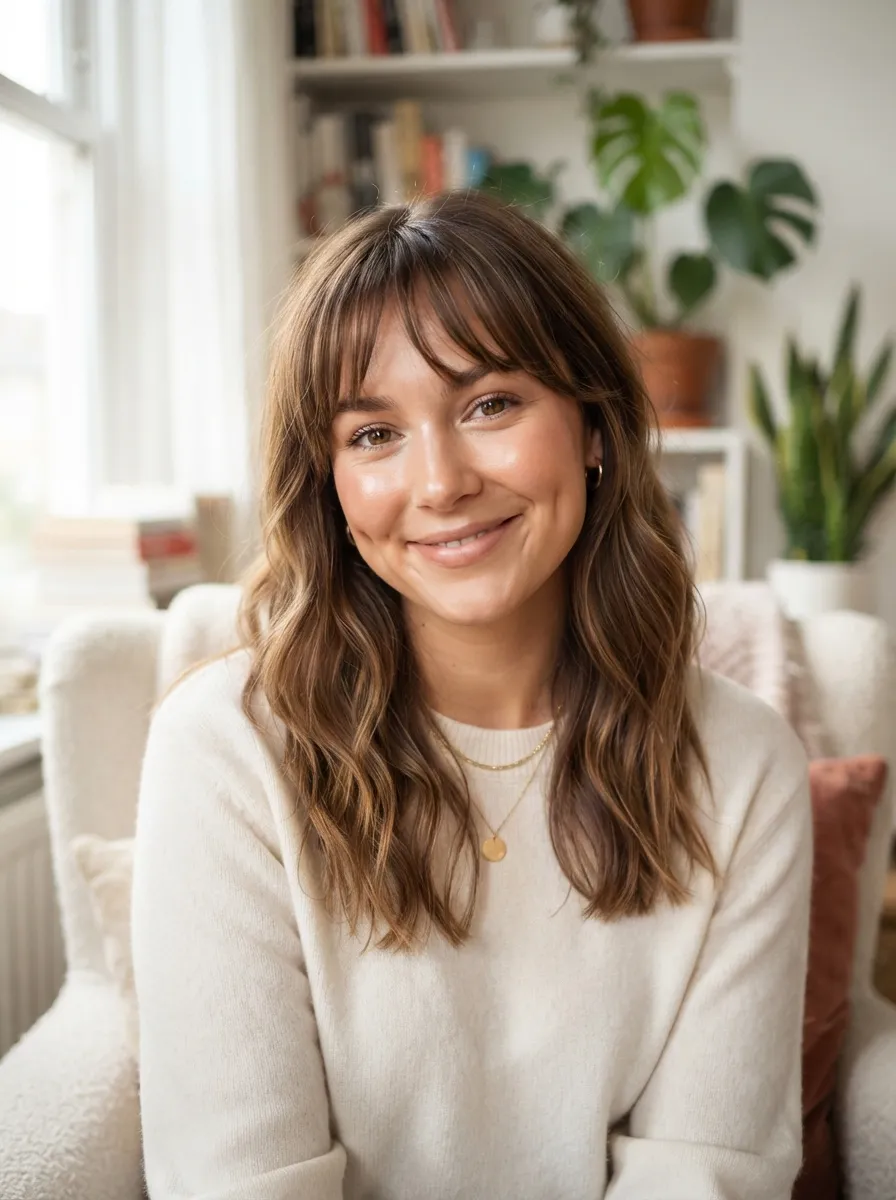
Round faces benefit from bangs that add length rather than width. Wispy bangs parted slightly off center, rather than straight across, create a diagonal line that elongates the face. Avoid full, blunt bangs since they can emphasize roundness. Instead, ask for bangs that taper longer at the sides and shorter in the middle. At home, style by drying the bangs with a slight upward angle at the roots before sweeping them to the side. This adds height, which balances a rounder face shape. A light hold hairspray at the roots keeps this lift throughout the day. If you have round cheeks, keeping some length near the cheekbone with the wispy ends can also help soften the width. This style works with both straight and wavy hair, though wavy hair naturally adds more of the diagonal movement that suits round face shapes.
9. Wispy Bangs for Square Faces
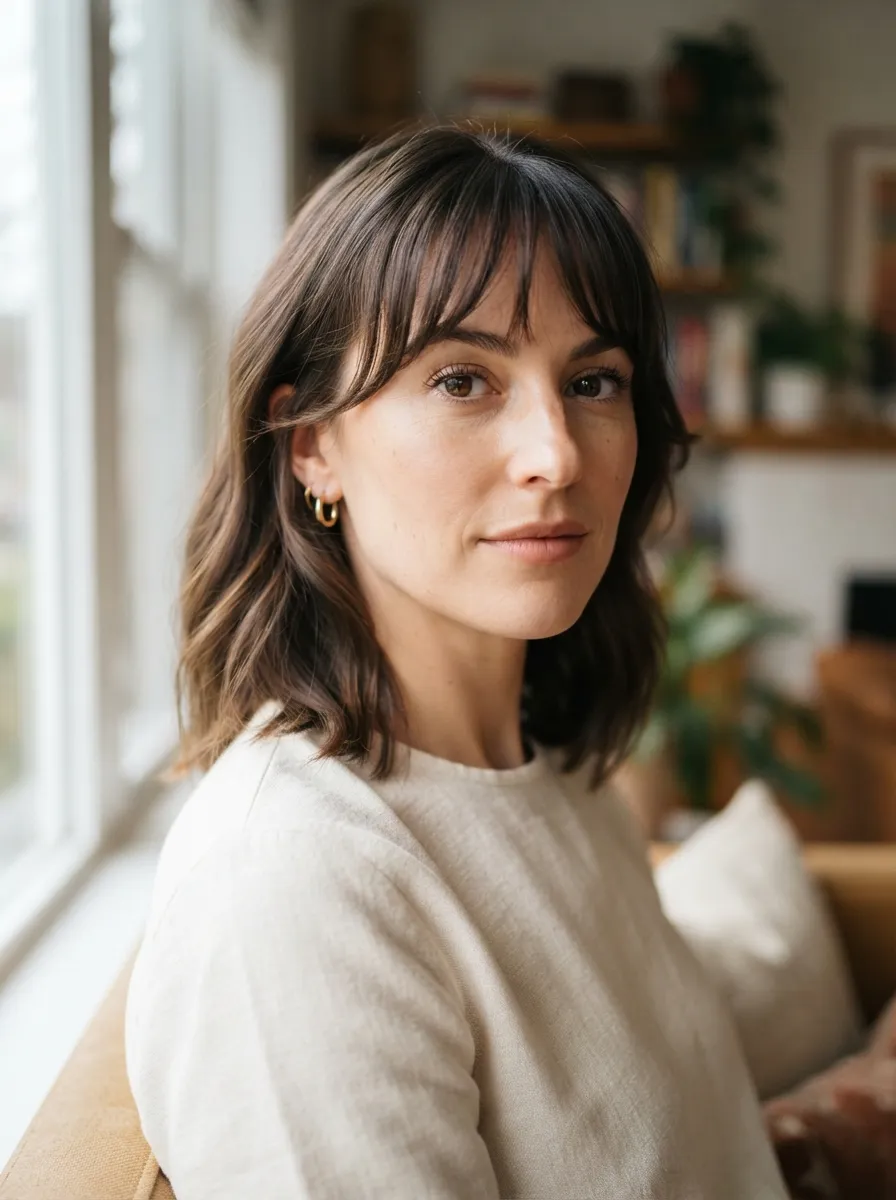
Square faces often have a strong jawline and forehead width. Wispy bangs with soft, curved ends near the temples help balance these strong angles. Avoid straight, blunt lines since they can make the forehead look wider. Instead, choose bangs that curve inward slightly at the sides. At home, use a round brush to curl the ends inward while blow drying on a low heat setting. This curve softens the overall shape of the face. A texturizing spray can help hold this curve without weighing the bangs down. Square face shapes also work well with slightly longer wispy bangs that blend into face framing layers, since this adds more curved lines around the jaw. If you don’t have a round brush at home, wrapping the ends of your bangs around a soft hair roller for a few minutes before removing it can create a similar curved effect.
10. Wispy Bangs for Oval Faces

Oval face shapes are considered flexible when it comes to bangs since most styles suit this shape well. Wispy bangs, whether curtain, side swept, or blunt, all work without needing much adjustment. This gives more room to choose a style based on personal preference rather than face shape rules. At home, styling is simple since oval faces rarely need extra volume or length adjustments to balance proportions. A quick blow dry with a paddle brush, followed by a light finishing spray, is often enough. If you want to experiment, oval face shapes are a good starting point to try shorter micro bangs or fuller blunt styles before deciding on a long term look. Since there is more flexibility, this is also a good face shape to try seasonal changes, switching between curtain bangs in warmer months and fuller bangs in cooler months without worrying about it not suiting your features.
11. Wispy Bangs for Fine Hair
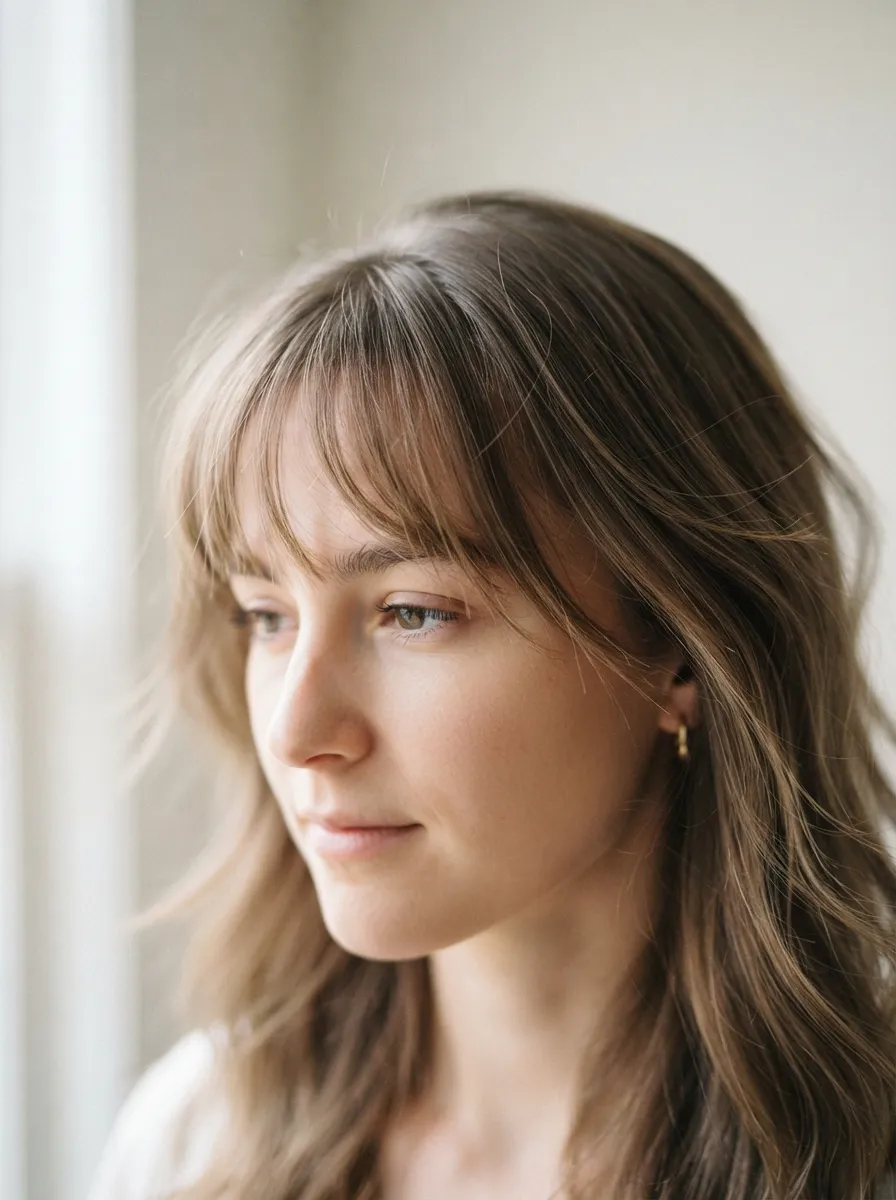
Fine hair benefits from bangs that are cut with a light hand. Wispy, feathered ends work better than blunt lines since blunt cuts can look too heavy on thin strands. Point cutting technique removes some of the length without making the bangs look thin or patchy. At home, avoid brushing fine bang hair too much since this can cause static and flatten the volume. Instead, use your fingers to shape the bangs while slightly damp. A volumizing mousse applied only at the roots of the bangs, not the ends, helps keep some lift without weighing the fine strands down. Washing fine hair bangs slightly less often, using dry shampoo in between, can also help maintain volume since fine hair tends to look flat faster after washing. Fine hair wispy bangs also work well with a side part since this naturally adds a bit more fullness near the crown.
12. Wispy Bangs for Thick Hair
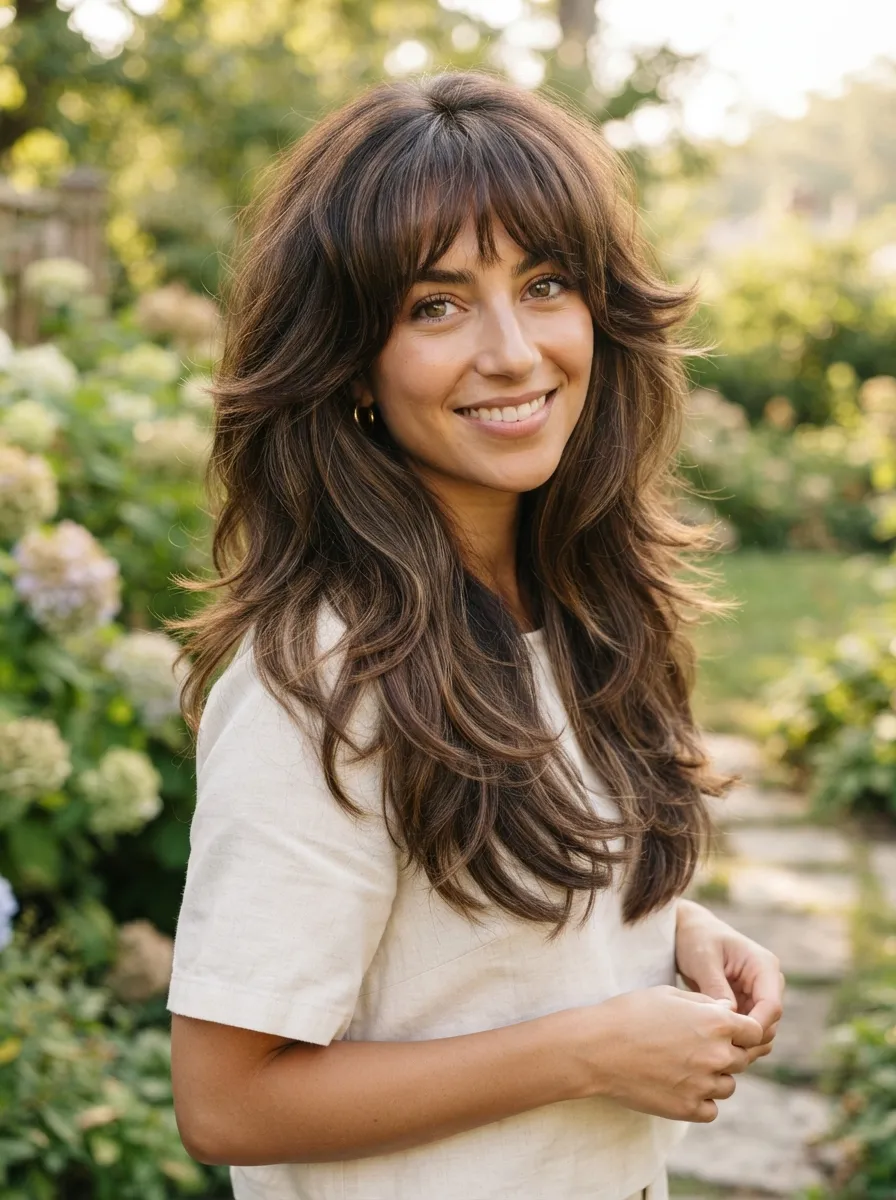
Thick hair can carry fuller wispy bangs without looking flat. However, too much thickness in the bangs can feel heavy, so thinning shears are often used to remove bulk while keeping length. At home, if you don’t have thinning shears, point cutting with regular scissors can achieve a similar lighter effect over time. Thick hair bangs also benefit from more frequent detangling before styling, since tangled bang sections can affect how the ends fall. Use a wide tooth comb on damp hair before blow drying. A flat iron on a slightly higher heat setting, used carefully, helps smooth thick bang sections without frizz. Thick hair wispy bangs pair well with curtain or side swept styles since the natural fullness gives the swept sections extra body already. If humidity is a concern in your area, a light anti frizz serum applied sparingly can help keep thick bangs smooth throughout the day.
13. Wispy Bangs for Curly Hair
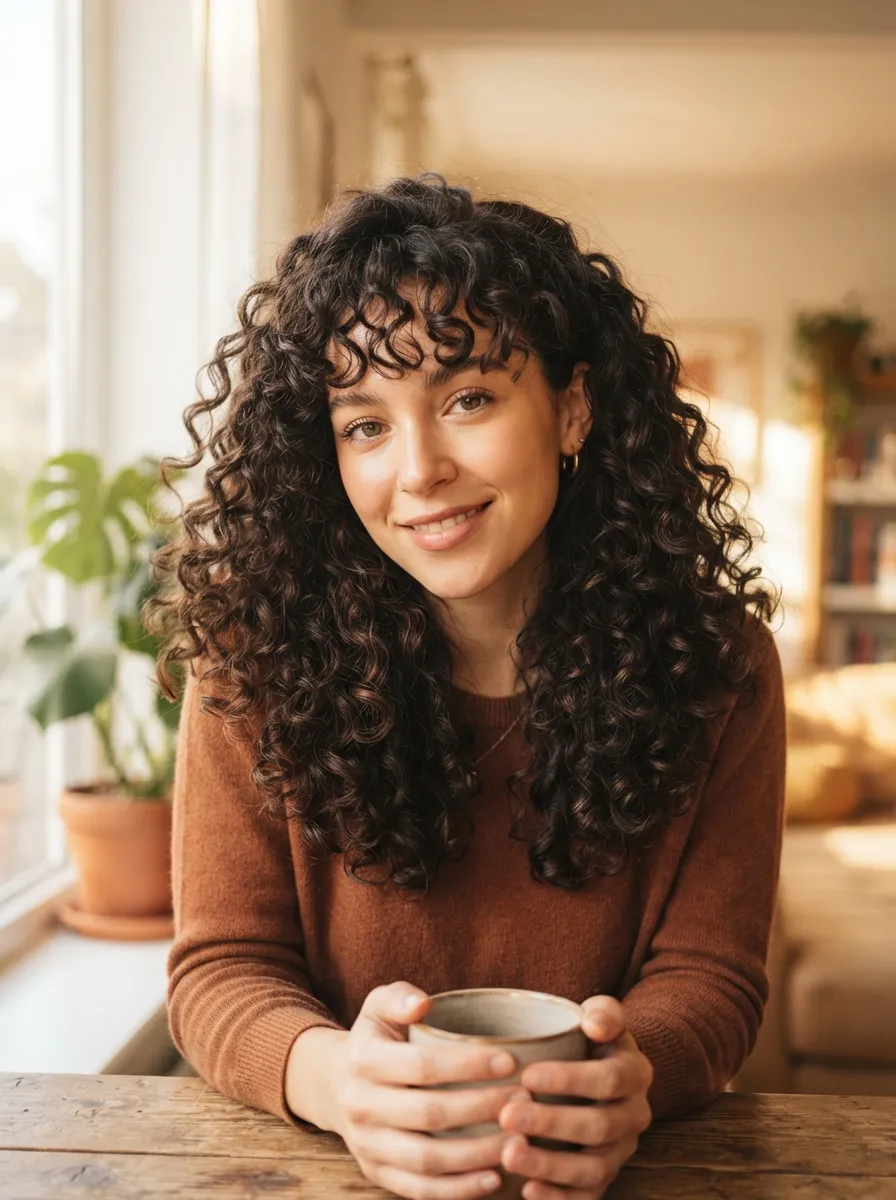
Curly hair bangs shrink up when they dry, so they are usually cut longer than the intended finished length. Wispy bangs on curly hair often settle into loose spirals that frame the face softly. At home, style curly bangs by applying a curl cream on wet hair and letting them air dry or diffuse on low heat. Avoid brushing curly bangs when dry since this can create frizz and break up the curl pattern. Instead, use your fingers to separate curls once fully dry. If you want to loosen tight curls in the bangs slightly, a large barrel curling iron on low heat can stretch the curl pattern a bit for a softer wispy look. Curly wispy bangs also benefit from a light gel applied at the roots to control frizz near the hairline, which tends to be more exposed to humidity throughout the day.
14. Wispy Bangs for Straight Hair

Straight hair bangs are the easiest to style since they naturally fall flat and smooth. Wispy bangs on straight hair usually need a light touch to avoid looking too sleek and structured. At home, add a slight bend using a round brush while blow drying instead of letting the bangs air dry completely flat. This gives a softer finish. A light texturizing spray can also break up the straight line without needing heat tools every day. Straight hair bangs tend to show grease faster near the roots, so keeping a small bottle of dry shampoo nearby helps extend time between washes. If you want more texture without heat damage, sea salt spray applied to slightly damp bangs before air drying can add a soft wave without a curling iron. Straight hair wispy bangs pair especially well with blunt or curtain styles since the natural shine highlights the clean lines.
15. Wispy Bangs with a Middle Part

A middle part with wispy bangs creates a symmetrical, balanced look. This style pairs naturally with curtain bangs since both sides fall evenly. At home, use a fine tooth comb to create a clean center part before styling the bangs outward on each side. This part works well for most face shapes but especially suits oval and heart shaped faces since the even sections balance facial proportions. If your hair naturally parts on one side, retraining it to a middle part may take a few days of consistent combing in the new direction. A light gel applied along the part line can help keep flyaways down while the new part sets. Middle part wispy bangs also work well styled with the rest of your hair pulled back into a low ponytail or bun, since the bangs become the main focus of the look.
16. Wispy Bangs with a Side Part

A side part with wispy bangs creates an asymmetrical, softer look compared to a middle part. This works well if you have a natural cowlick near your hairline, since the direction of hair growth already supports a side swept style. At home, decide which side has more natural volume and part your hair in that direction before styling the bangs. A round brush helps sweep the bangs across the forehead in one smooth motion. This style is a good option for covering a slightly uneven hairline or a small forehead scar, since the deeper side part naturally shifts more hair coverage to one area. Side part wispy bangs also work well when you want to grow out a middle part bang style gradually, since shifting the part slowly to one side is an easy way to change the look without a fresh cut.
17. Wispy Bangs for Short Hair

Short haircuts like bobs and pixie cuts pair well with wispy bangs since both styles share a light, airy quality. On shorter hair, wispy bangs help soften a more structured cut. At home, style short hair wispy bangs with a small round brush, focusing heat only on the bang section for a quick daily routine. A texturizing paste applied to the ends of the rest of your short hair can help tie the whole look together so the bangs don’t look separate from the cut. Short hair with wispy bangs also dries faster, which is convenient for busy mornings. If you want to switch up a short haircut without committing to a full change, adding wispy bangs is one of the simplest ways to update the look. Trims for short hair bangs are usually needed every three to four weeks to keep the proportions balanced.
18. Wispy Bangs for Long Hair

Long hair with wispy bangs creates contrast between a short framing section and the rest of the length. This combination adds dimension to hair that might otherwise look one dimensional. At home, style long hair wispy bangs separately from the rest of your length by focusing a round brush only on the front section. The rest of your hair can be left to air dry or styled simply with a loose wave. Long hair with bangs also benefits from a slightly angled layer near the temples, which helps the bangs blend rather than looking cut off suddenly. If your long hair is prone to dryness at the ends, keep the bang section trimmed more often than the rest, since bangs tend to gather more oil near the roots while the length can go longer between trims.
19. Wispy Bangs with Beach Waves

Beach waves paired with wispy bangs give a relaxed, undone look. The soft waves in the rest of the hair complement the light, airy quality of wispy bangs. At home, create beach waves using a curling wand on sections of hair, leaving the bang section mostly untouched or lightly waved with a smaller barrel. A sea salt spray applied throughout damp hair before air drying can create a similar wave texture without heat. This combination works well for casual, everyday looks and doesn’t require precise styling since the messy wave pattern hides small imperfections. Wispy bangs with beach waves also hold up well through humid weather since both elements are meant to look slightly undone rather than sleek. If you want a low effort version, simply braid damp hair overnight and unravel the braids in the morning for a wave pattern that pairs naturally with soft bangs.
20. Wispy Bangs with a Bun
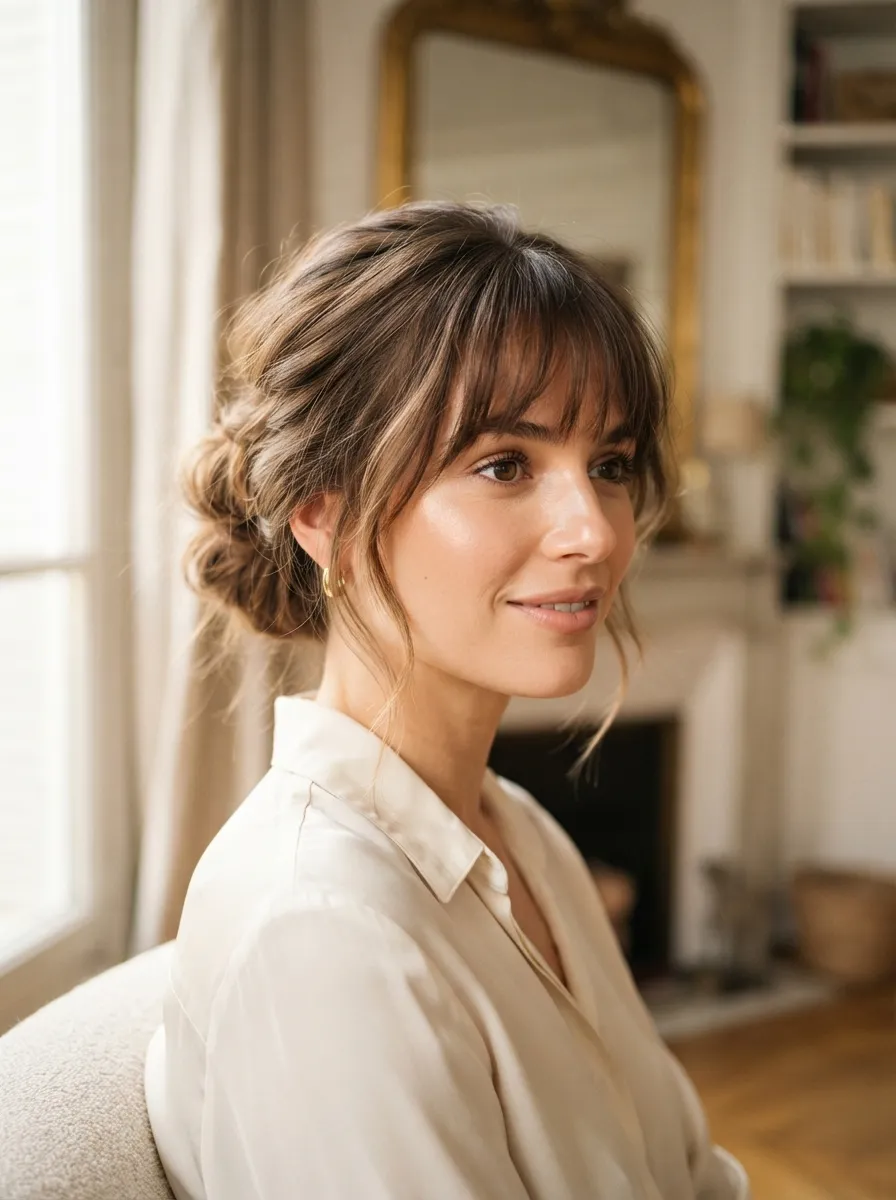
A bun with wispy bangs balances a pulled back style with a softer front section. The bangs keep the look from feeling too severe, which can happen with a fully slicked back bun. At home, gather the rest of your hair into a low or high bun, leaving the bang section loose in front. A light hairspray on the bangs after styling helps them hold their shape while the rest of your hair stays secure in the bun. This combination works well for both casual days and slightly dressed up occasions since the bun keeps hair out of the way while the bangs add a soft, finished touch. If you want a quick everyday version, a simple hair tie for the bun paired with bangs styled using just your fingers and a small amount of pomade is enough for a put together look without much time spent.
21. Wispy Bangs with a Ponytail
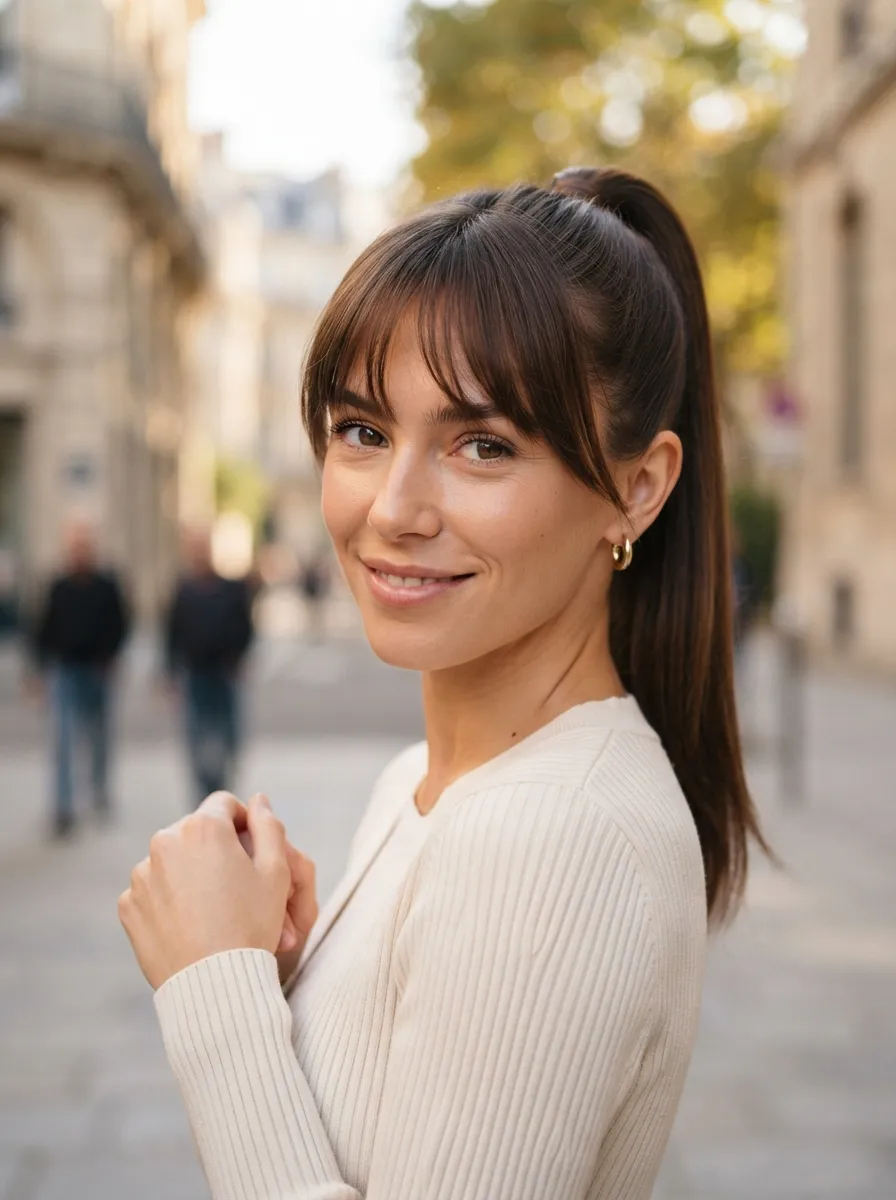
A ponytail with wispy bangs is one of the quickest ways to change a simple hairstyle into something more polished. The bangs add a soft frame to the face while the rest of the hair stays neat and out of the way. At home, brush the length of your hair back smoothly into a ponytail, then style the bang section separately using a round brush or your fingers. A small amount of smoothing serum along the ponytail keeps flyaways down without needing extra tools. This style works for both low and high ponytails, though a lower ponytail tends to pair more naturally with longer wispy bangs. If you are short on time, a ponytail with bangs is a reliable option since it takes only a few minutes and still looks intentional rather than rushed, which makes it a practical choice for busy mornings.
22. Wispy Bangs for Special Occasions

For special occasions, wispy bangs can be styled with a bit more polish while keeping the soft, light quality intact. A gentle curl inward using a small curling iron or round brush adds a slightly more formal touch compared to everyday styling. At home, set the curled bangs with a light hold hairspray so they hold shape through a longer event without looking stiff. Pairing wispy bangs with soft curls or an updo for the rest of the hair keeps the overall look balanced rather than too done up. If you want to add a bit of shine for photos, a small amount of hair oil applied only to the very ends of the bangs, avoiding the roots, adds a subtle glow. This approach works well for weddings, parties, or any event where you want your hairstyle to look finished but still soft and natural rather than overly styled.
Conclusion
Wispy bangs offer a light, easy way to change your look without a dramatic haircut. From curtain styles to micro bangs, there is an option here for every hair type, face shape, and daily routine. Most of these styles can be maintained at home with basic tools like a round brush, a flat iron on low heat, and small cutting scissors for touch ups between salon visits. Pick the style that matches your hair texture and lifestyle, then adjust the details, like part placement or curl direction, to fit your face shape. With a little practice, these soft wispy bang ideas can become a simple part of your everyday styling routine.
Leave a Reply