
Salon appointments are expensive, time-consuming, and honestly not always necessary for a simple trim or a quick cleanup. Cutting your own hair at home is a skill that more people are picking up and for good reason. With the right tools, a little patience, and a clear step-by-step approach, you can get results that look clean, intentional, and surprisingly professional without ever leaving your bathroom. If you’re learning how to make a ponytail look thicker, combining the right haircut techniques with smart styling tricks can help your hair appear fuller, more voluminous, and well-shaped every day.

Here is everything you need to know to cut your own hair at home the easy way.
Get the Right Tools Before You Touch Your Hair
The tools you use make the single biggest difference between a home haircut that looks great and one that looks like a mistake. This is not the place to cut corners.
What you need before you start:
Sharp hair-cutting scissors are non-negotiable. Kitchen scissors, nail scissors, and craft scissors all crush the hair shaft instead of slicing cleanly through it. That crushing is what creates split ends and damaged tips immediately after cutting. A decent pair of hair scissors costs as little as ten to fifteen dollars and is worth every penny. A fine-tooth rat tail comb for sectioning and creating clean parts. Sectioning clips to hold hair out of the way while you work through one area at a time. A handheld mirror so you can see the back of your head clearly by using it alongside your bathroom mirror. A spray bottle with water for controlling the hair during the cut.
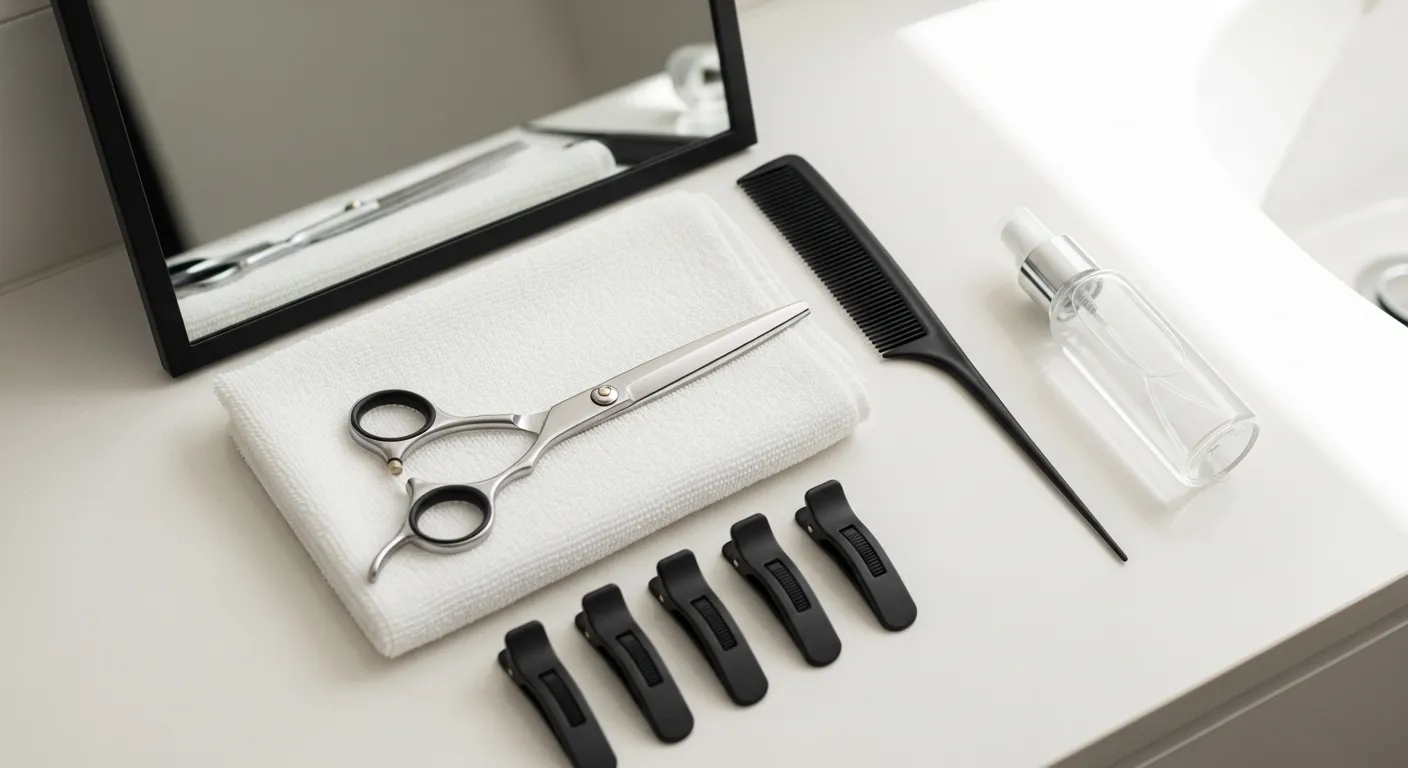
One important tip before picking up the scissors: second-day hair is easier to cut than freshly washed hair. Clean hair is soft, slippery, and harder to control. Hair with a little natural texture sits more cooperatively while you work.
The Most Important Rules for Cutting at Home
Before getting into specific techniques, there are a few ground rules that apply to every single home haircut, regardless of hair type, length, or style.
Always cut less than you think you need to. This is the rule that saves the most home haircuts from going wrong. Hair looks longer when held taut between your fingers. The moment you release it, especially on wavy or curly hair, it springs back and looks shorter than expected. Cut a little, check the result, cut a little more if needed. You can always take more off, but you cannot put it back.
Section your hair before cutting anything. Trying to cut all the hair at once without sectioning leads to uneven results, missed patches underneath, and a shape that does not sit correctly. Work through one section at a time and keep everything else clipped away.
Use point cutting instead of cutting straight across whenever possible. Point cutting means holding the scissors vertically and making small upward snips into the ends rather than one horizontal slice across. This creates softer, more natural-looking ends that blend seamlessly instead of sitting in a harsh, blunt line.
Step by Step: How to Trim Your Own Hair
This approach works for a basic length trim on medium to long hair and is the best starting point for anyone new to cutting at home.

Start by brushing the hair completely tangle-free. Section it into four parts, two at the front and two at the back, and clip each section up. Work through one section at a time, starting at the back.
Take a one-inch piece of hair from the first section, hold it firmly between your index and middle fingers, and slide your fingers down to the length you want to keep. Snip straight across or use point cutting for a softer finish. This first piece becomes your guide for the rest of the section. Match every subsequent piece to this guide length as you work across the section.
Move through all four sections using the same guide length. After all sections are cut, take the hair down, comb through it completely, and check for any longer pieces that need a quick cleanup snip.
Use the two-mirror system throughout the back sections. Hold a handheld mirror in front of you, angled to reflect the back of your head in the bathroom mirror behind you. This lets you see exactly what you are cutting rather than working completely blind.
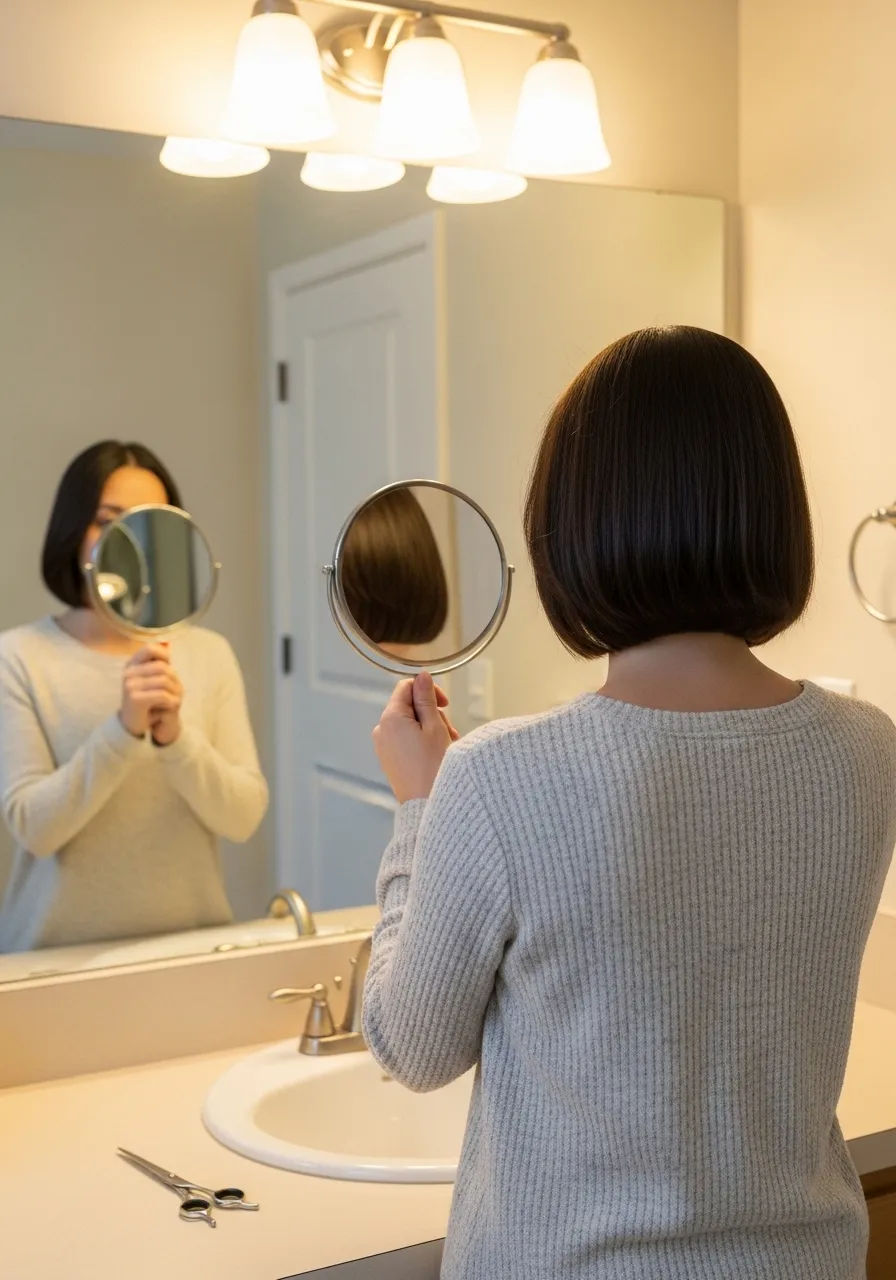
Finish with a light dusting of point cutting along all the ends to remove any remaining bluntness and give the overall trim a softer, more polished finish.
Frequently Asked Questions
Should I cut my hair wet or dry at home?
For beginners, dry hair is the safer choice. Wet hair appears longer than it actually is which means you can accidentally cut significantly more than intended. When the hair dries it springs back and suddenly looks much shorter than expected. Cutting dry lets you see the exact result in real time with no surprises. The exception is very blunt, straight cuts on straight hair where slightly damp hair can help create a cleaner, more even line.
How much should I cut off at home?
Always start by cutting less than you think you need to. A quarter inch at a time is a safe and controlled approach, especially for beginners. You can always go back and take a little more off but there is no way to fix cutting too much without waiting for the hair to grow back. Err on the side of conservative every single time.
What is point cutting, and why does it matter?
Point cutting means holding the scissors vertically and making small snips upward into the ends of the hair rather than cutting straight across in one horizontal line. It creates softer, more natural-looking ends that blend seamlessly with the rest of the hair. A blunt horizontal cut creates a harsh, heavy edge that can make hair look flat and one-dimensional. Point cutting is the technique that makes home haircuts look salon-done.
How often should I trim my hair at home?
To maintain healthy ends on medium- to long-length hair, a light trim every six to eight weeks keeps split ends from traveling up the shaft and causing more damage over time. For shorter styles like bobs or pixie cuts, the edges and neckline may need attention every two to three weeks to stay looking clean and intentional. Listen to your hair and trim when the ends start feeling rough or looking frayed, rather than following a rigid schedule.
Pick Up Those Scissors
Cutting your own hair at home is a skill that gets easier and more satisfying every single time you do it. The first trim feels uncertain, the second feels more comfortable, and by the third you will be moving through it with real confidence. Start with a simple length trim, use sharp scissors, cut less than you think, and check your work constantly. Save this guide and come back to it every time you are ready to pick up the scissors again.
Leave a Reply