
The butterfly wolf cut ideas are one of the most talked-about haircuts right now, and for good reason. It takes the raw, shaggy energy of the wolf cut and softens it into something that feels lighter, more feminine, and more wearable for everyday life. The result is a cut with heavy layers, a voluminous crown, wispy ends, and movement that makes hair look alive whether you style it or leave it completely natural. It works across hair types, lengths, and face shapes. And unlike more structured cuts, it actually looks better with a little imperfection. This list covers 22 different ways to wear and style the butterfly wolf cut, from beginner-friendly variations to more defined looks with color and texture. Each idea includes practical advice on how to get the look, maintain it, and style it affordably at home. If you’re also exploring Spring Hairstyle Ideas for Medium Hair, soft layers, airy waves, curtain bangs, and lightweight textured cuts can help create a fresh, effortless look that feels perfect for the season while remaining easy to style and maintain every day.
1. Classic Butterfly Wolf Cut Ideas on Medium Length Hair
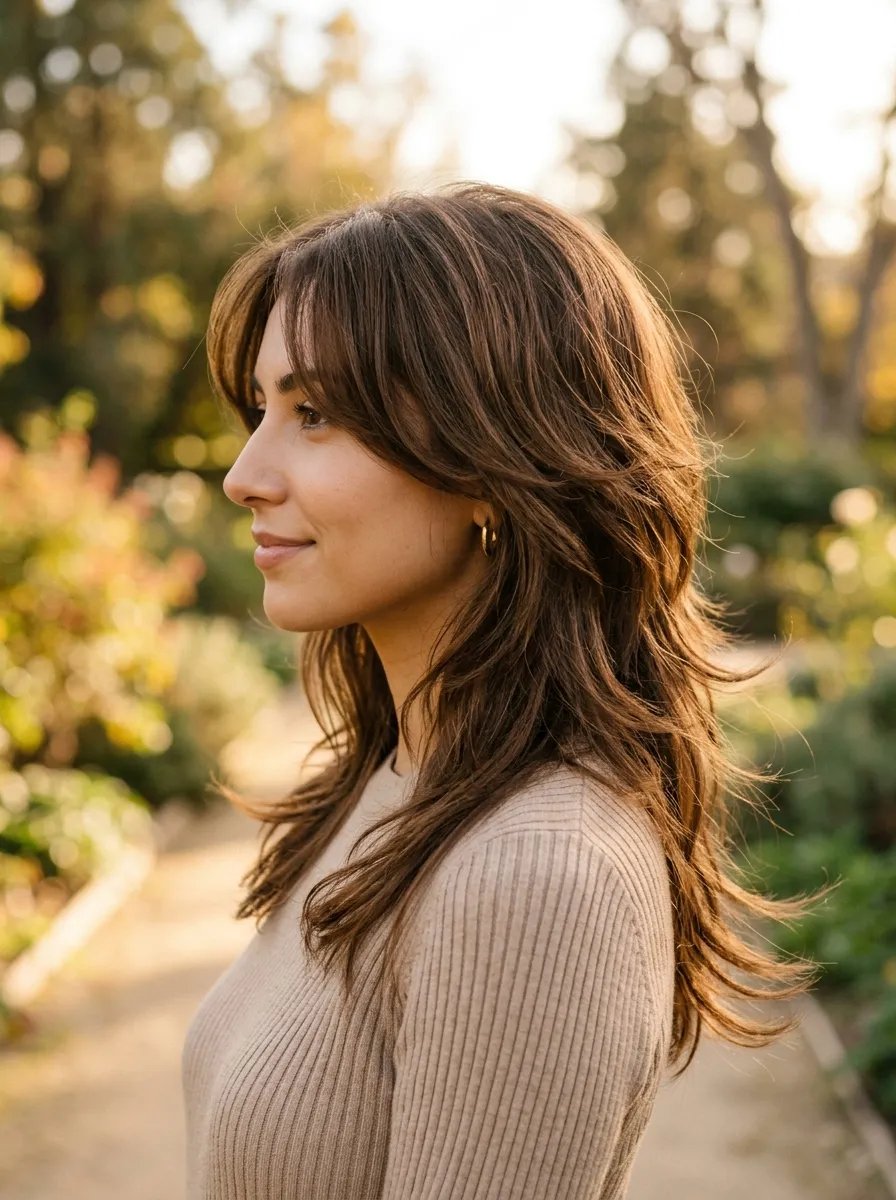
The classic butterfly wolf cut on medium length hair is the most popular version of this trend. It sits roughly between the collarbone and the shoulder, with layers that start high at the crown.
The defining features are the heavy crown layers, wispy feathered ends, and curtain bangs that frame the face softly.
This cut works beautifully when air-dried. The layers naturally separate and fall into a relaxed, textured shape without much styling effort.
If you are going to a salon, bring reference photos. Ask for a wolf cut with butterfly layers, meaning the layers are cut to fan outward rather than fall straight down.
The cost at most salons ranges from $40 to $80 depending on your location and stylist. For a budget option, many hair schools offer this cut at a reduced price with supervised students.
For a DIY trim at home, use sharp hair scissors and work in small sections. Only trim the very ends rather than attempting the full layering yourself. A professional should handle the initial shape.
Style with a diffuser on low heat for extra volume at the crown. Or scrunch in a small amount of curl cream while damp and let it air dry.
This is the ideal starting point for anyone new to the butterfly wolf cut.
2. Butterfly Wolf Cut with Curtain Bangs

Curtain bangs are practically built into the butterfly wolf cut. They frame the face with two soft, face-framing pieces that part in the middle and sweep to the sides.
These bangs are one of the most flattering things you can add to any haircut. They soften the forehead, frame the eyes, and work on almost every face shape.
The key is keeping curtain bangs long enough to blend seamlessly into the rest of the layers. They should reach at least to the cheekbone when swept to the side.
Ask your stylist to cut them with a point-cutting technique rather than a blunt line. This creates a softer, feathered edge that blends naturally with the rest of the cut.
Growing out curtain bangs is also easy. As they grow, they simply become longer face-framing layers, so there is very little awkward in-between phase.
Style curtain bangs by blow-drying them with a round brush, sweeping each side away from the center. A small amount of lightweight styling cream helps them hold shape without looking stiff.
For days when you do not want to style them, a simple center part lets them fall naturally into their swept position with no effort.
Curtain bangs are low maintenance and high impact. They are a strong reason to try the butterfly wolf cut even if you are hesitant about the full look.
3. Butterfly Wolf Cut on Long Hair
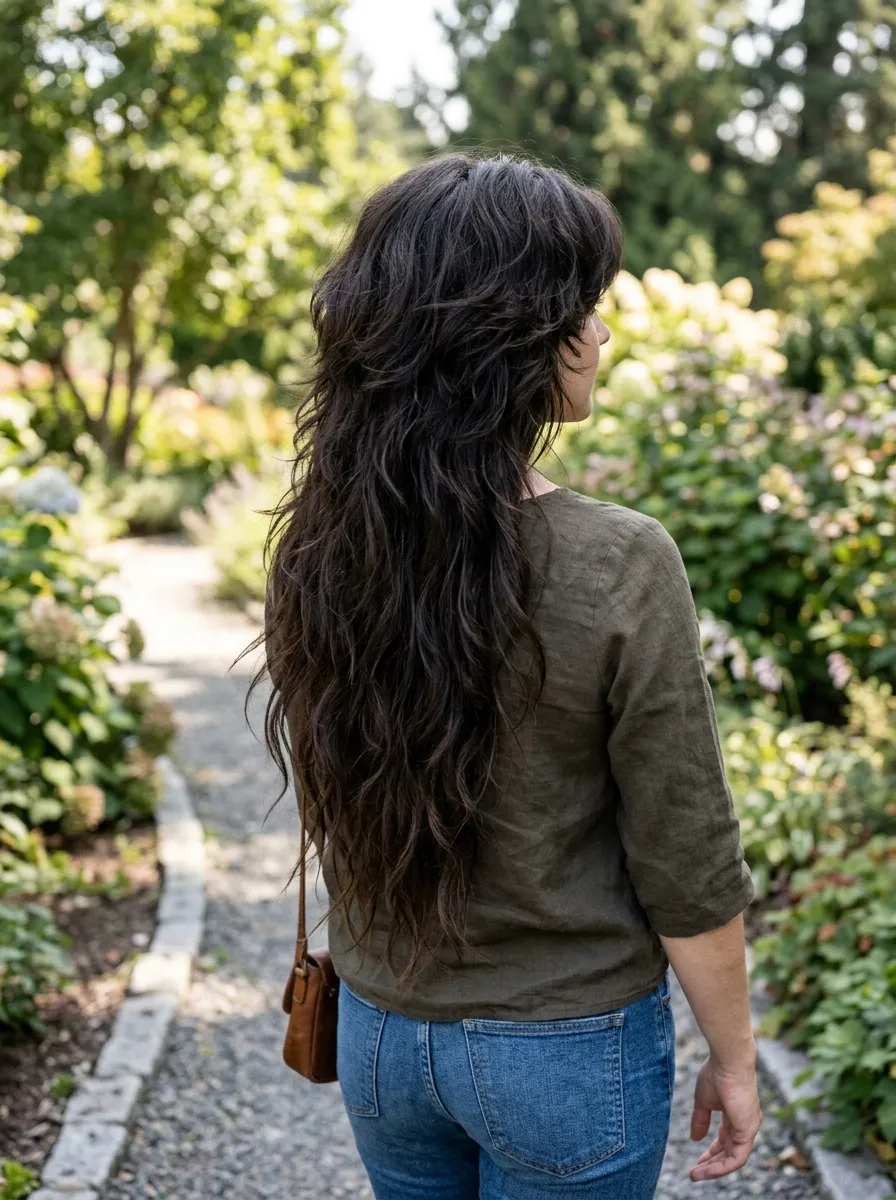
The butterfly wolf cut on long hair creates a dramatic contrast between a voluminous, heavily layered crown and long, flowing length below. The result is a lot of movement and dimension.
This version keeps more length overall, which appeals to people who want the texture and style of a wolf cut without losing significant length.
The layers at the crown and through the mid-section do most of the work. They create lift, volume, and that signature butterfly shape when the hair moves.
Ask your stylist for wolf cut layers starting at the crown, with the shortest layers sitting no shorter than chin level. This preserves the length while creating the shape.
Long butterfly wolf cuts benefit from a bit of styling. Use a large round brush while blow-drying to build volume at the roots. Then let the ends dry naturally for a relaxed, lived-in finish.
A sea salt spray or texturizing spray spritzed through the mid-lengths and ends adds definition to the layers and prevents the hair from looking flat on longer styles.
Overnight braids on damp hair also create beautiful wave texture that suits this cut perfectly. Braid loosely, sleep on it, and release in the morning for effortless waves.
Long hair with butterfly wolf layers is one of the most low-maintenance ways to have stylish hair.
4. Butterfly Wolf Cut on Short Hair
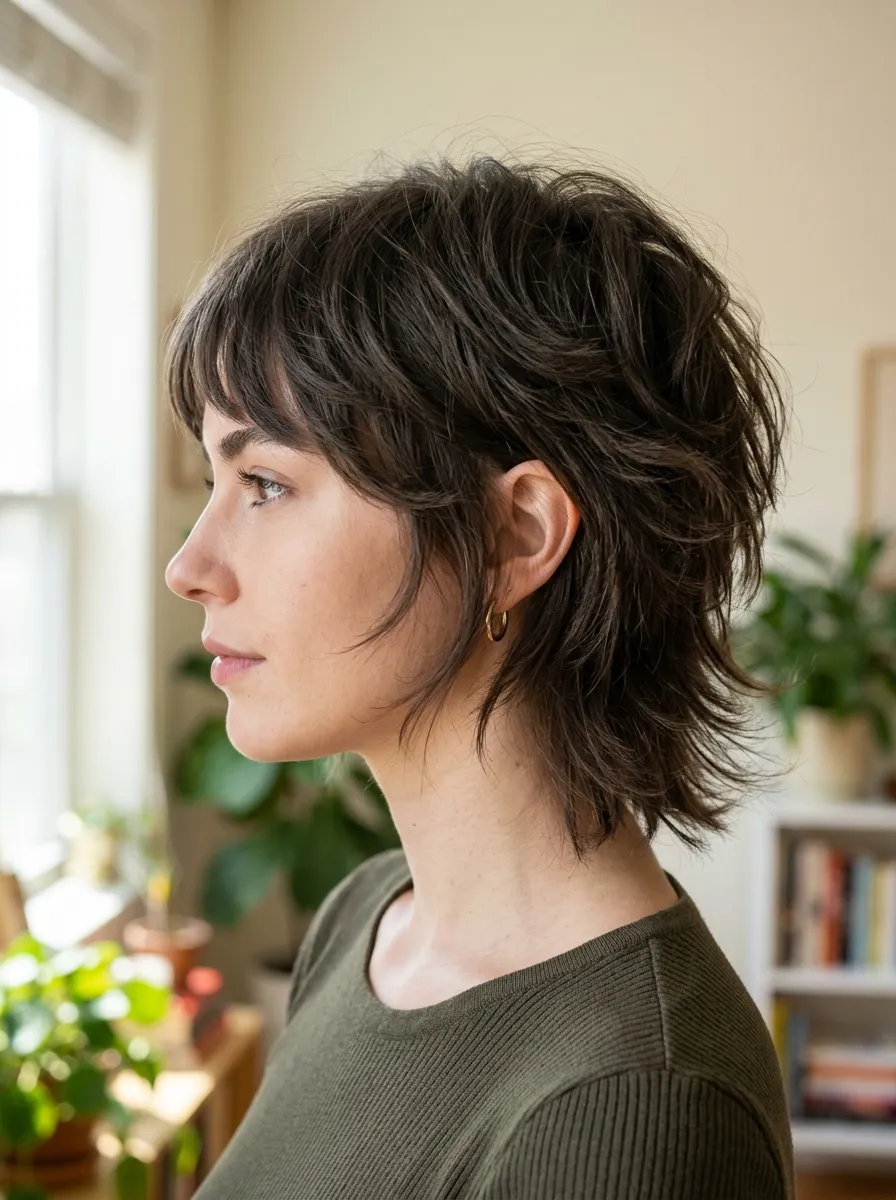
The butterfly wolf cut on short hair is bold and high-impact. With length sitting around the jaw or chin, the layers have nowhere to hide. Every section of the cut shows.
This version suits people who want a lot of personality in a short cut without going fully pixie or bob.
The layers are stacked and choppy from the crown down to the jaw level. The ends feather outward to create that signature butterfly flare rather than falling straight.
This cut requires more regular maintenance than longer versions. Plan for a trim every six to eight weeks to keep the shape from growing out awkwardly.
Short butterfly wolf cuts are very easy to style. A small amount of texturizing paste or pomade worked through the ends with your fingers is often all you need.
Blow-dry with a diffuser to build volume at the roots and separate the layers. Finish by scrunching the ends upward to encourage them to lift and spread outward.
This is a great cut for fine or thin hair. The heavy layering removes weight and makes thin hair appear much fuller and thicker than it actually is.
It also suits naturally wavy or slightly curly hair very well. The layers work with the natural texture rather than fighting it.
5. Butterfly Wolf Cut with Face-Framing Layers
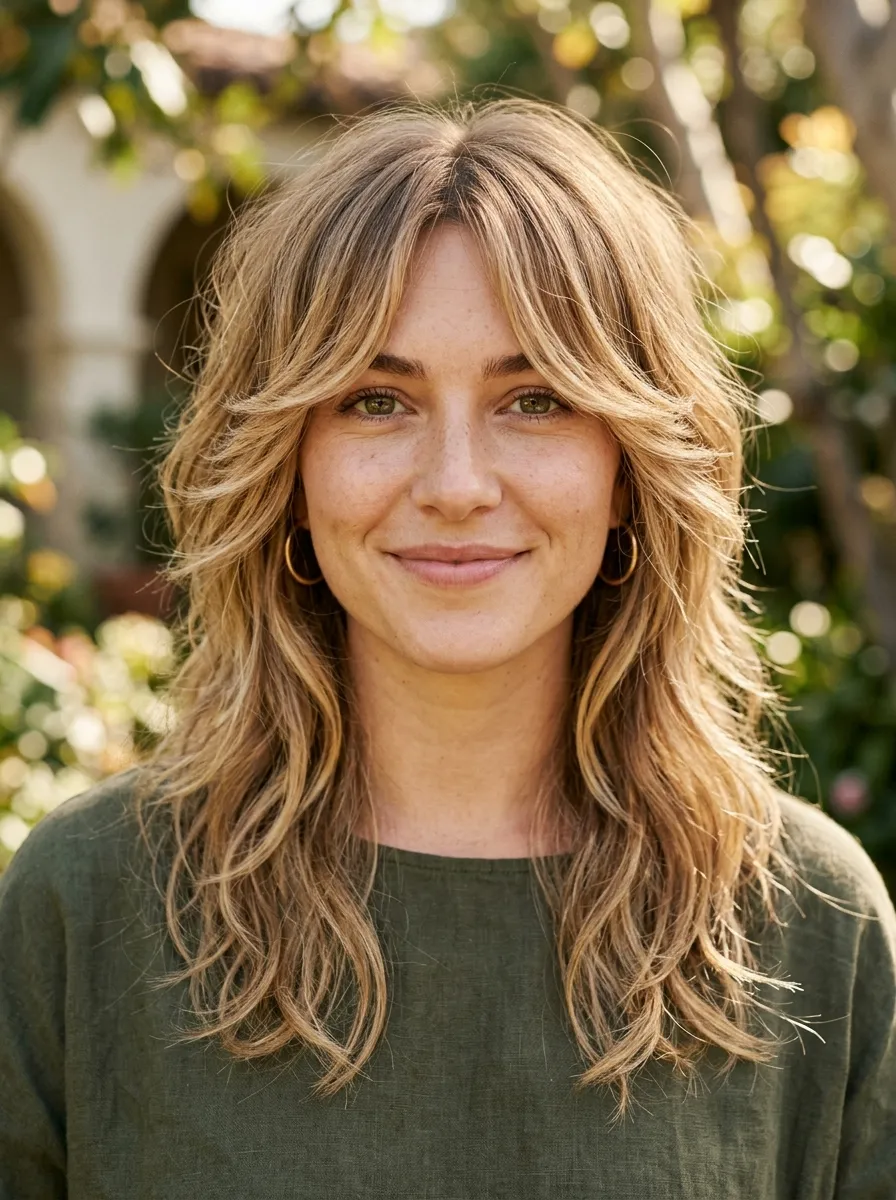
Face-framing layers are one of the best features of the butterfly wolf cut. When done well, they act like a soft halo around the face, drawing attention to the eyes and cheekbones.
The face-framing pieces in a butterfly wolf cut start shorter around the face and gradually blend into the longer layers behind.
Ask your stylist to cut the shortest face-framing layers to cheekbone or chin length. These create the most flattering frame without looking choppy or disconnected.
For a softer look, the face-framing pieces should be point-cut rather than blunt-cut. This creates a wispy, feathered edge that transitions smoothly rather than making a hard line.
These layers are especially flattering on round or square face shapes. They draw the eye downward and create the illusion of a more oval face shape.
Style the face-framing pieces separately from the rest of the hair. Use a small round brush or a flat iron to curve them slightly inward or outward. A slight curve toward the face is very flattering.
For a no-heat version, wrap the face-framing pieces around your finger while damp and pin them in place. Release after they dry for a soft curl that frames the face beautifully.
Face-framing layers make every version of the butterfly wolf cut look more intentional and polished.
6. Butterfly Wolf Cut for Thick Hair
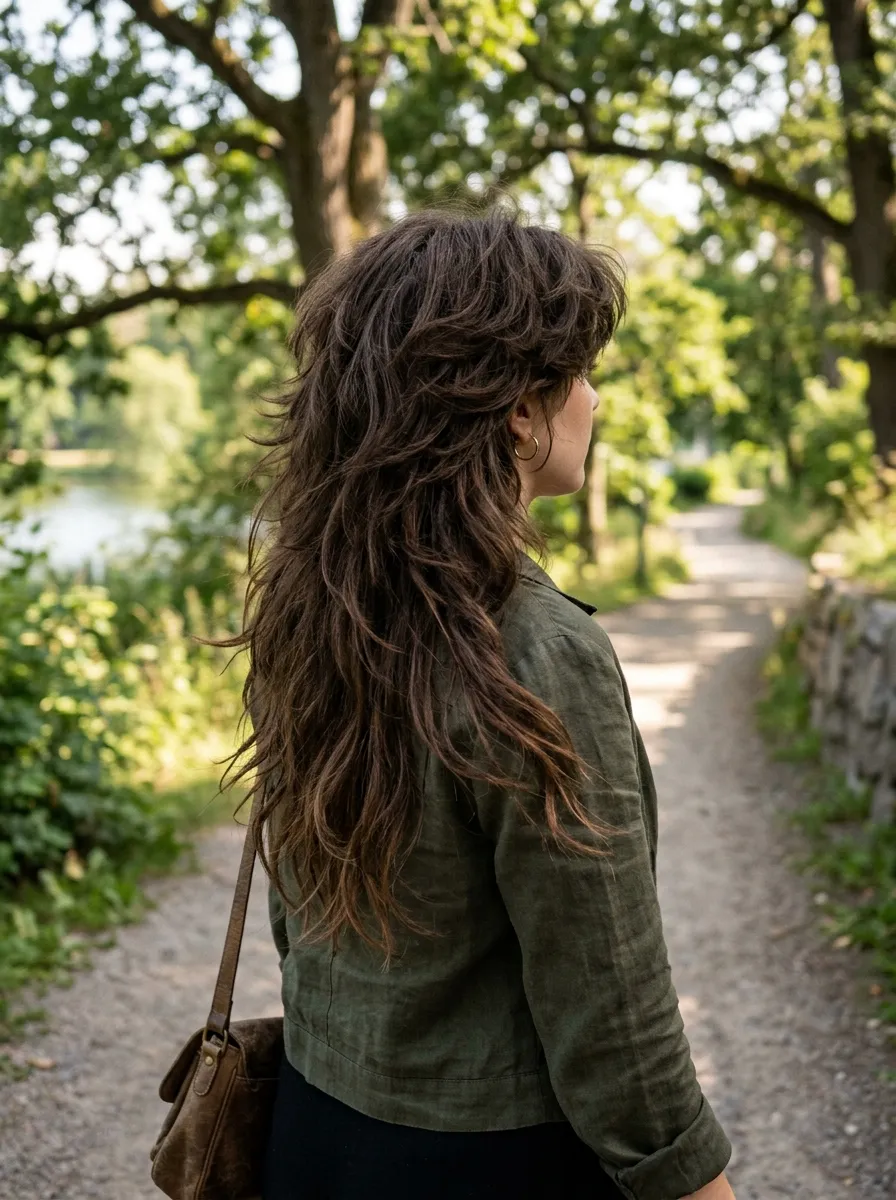
Thick hair and the butterfly wolf cut are a natural match. The heavy layering removes bulk, reduces weight, and creates the movement that thick hair can struggle to achieve on its own.
Without layers, thick hair can look heavy, flat on top, and shapeless at the ends. The butterfly wolf cut solves all three of those problems at once.
Ask your stylist to use both razor cutting and point-cutting techniques on thick hair. A razor removes bulk from the interior while point-cutting creates soft, wispy ends rather than a blunt wall of hair.
Thinning shears can also be used through the mid-lengths to reduce density without removing length. This keeps the weight where it is needed while lightening the overall feel.
Thick hair versions of the butterfly wolf cut require slightly more product to style well. A lightweight styling mousse or foam applied to damp hair before diffusing creates volume and separation without weighing the hair down.
Avoid heavy oils or creams on thick hair before styling. These flatten the layers and prevent the cut from showing its shape.
The wolf cut actually gets better on thick hair as it grows out. The layers lengthen gradually and the shape stays interesting rather than just looking grown-out and shapeless.
This is one of the most flattering cuts available for naturally thick hair.
7. Butterfly Wolf Cut for Fine Hair
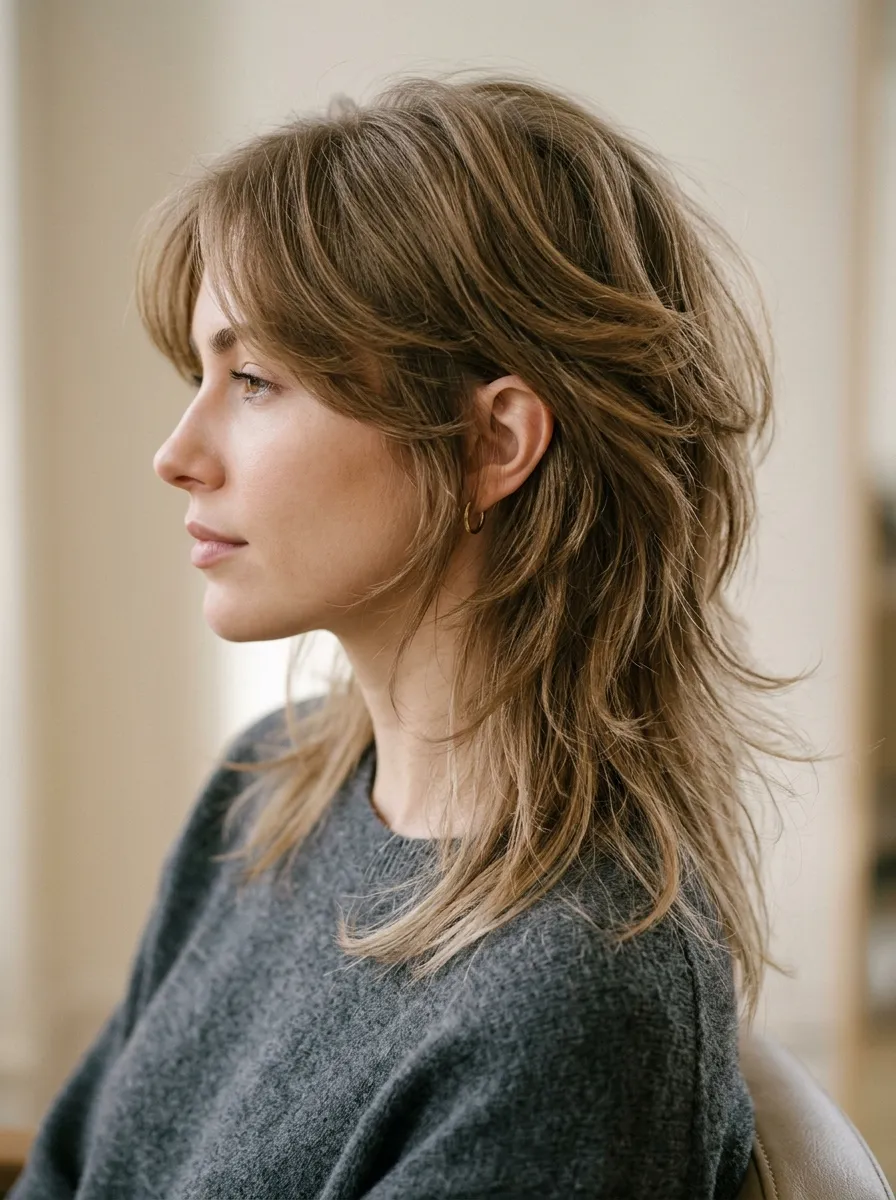
Fine hair is one of the hair types that benefits most from the butterfly wolf cut. The layering adds movement and dimension that fine hair naturally lacks.
The cut works by removing length from the top layers while keeping weight in the lower sections. This creates volume at the crown without losing the appearance of fullness below.
Ask your stylist to keep the layers longer than usual for fine hair. Very short top layers on fine hair can look wispy and thin rather than voluminous. Longer layers blend better.
Avoid over-thinning fine hair with thinning shears. This can make fine hair look even more sparse. Stick to point-cutting at the ends.
Use a volumizing mousse on damp hair before blow-drying. This is one of the most effective and affordable ways to add body to fine hair. Most drugstore mousse products work just as well as salon versions.
Blow-dry with your head flipped upside down to maximize root lift. Then flip back and style the top section with a round brush for extra crown volume.
Dry shampoo applied at the roots on day two hair also adds volume and grip, making the layers easier to work with.
Fine hair with a butterfly wolf cut looks dramatically fuller than the same hair in a one-length cut. The difference is immediate and visible.
8. Butterfly Wolf Cut with Curtain Bangs and Layers for a 70s Feel

The butterfly wolf cut has strong roots in 1970s style. The feathered layers, curtain bangs, and soft, flowing movement are all hallmarks of that decade’s iconic hair.
Leaning into that aesthetic intentionally creates a retro-inspired look that feels very current without being a costume.
The 70s version of this cut uses longer curtain bangs that feather back at the sides. The layers through the mid-lengths are also more defined, with a slight outward flick at the ends.
Style this look with a large round brush and a blow-dryer. Work section by section, directing each layer outward and slightly upward as you dry it.
A slight outward curve at the ends rather than a straight fall gives the most authentic retro feel.
Warm tones in the hair color amplify the 70s quality. Caramel, honey, amber, and golden brown shades all suit this aesthetic beautifully. Ask for a lived-in balayage in these tones for a sun-kissed effect.
Use a light-hold hairspray to set the flicked ends without making them stiff. The style should feel soft and moveable, not sprayed into place.
Pair this hair with wide-leg trousers or a printed blouse and the full vintage look comes together naturally.
This is one of the most personality-rich versions of the butterfly wolf cut.
9. Butterfly Wolf Cut on Curly Hair
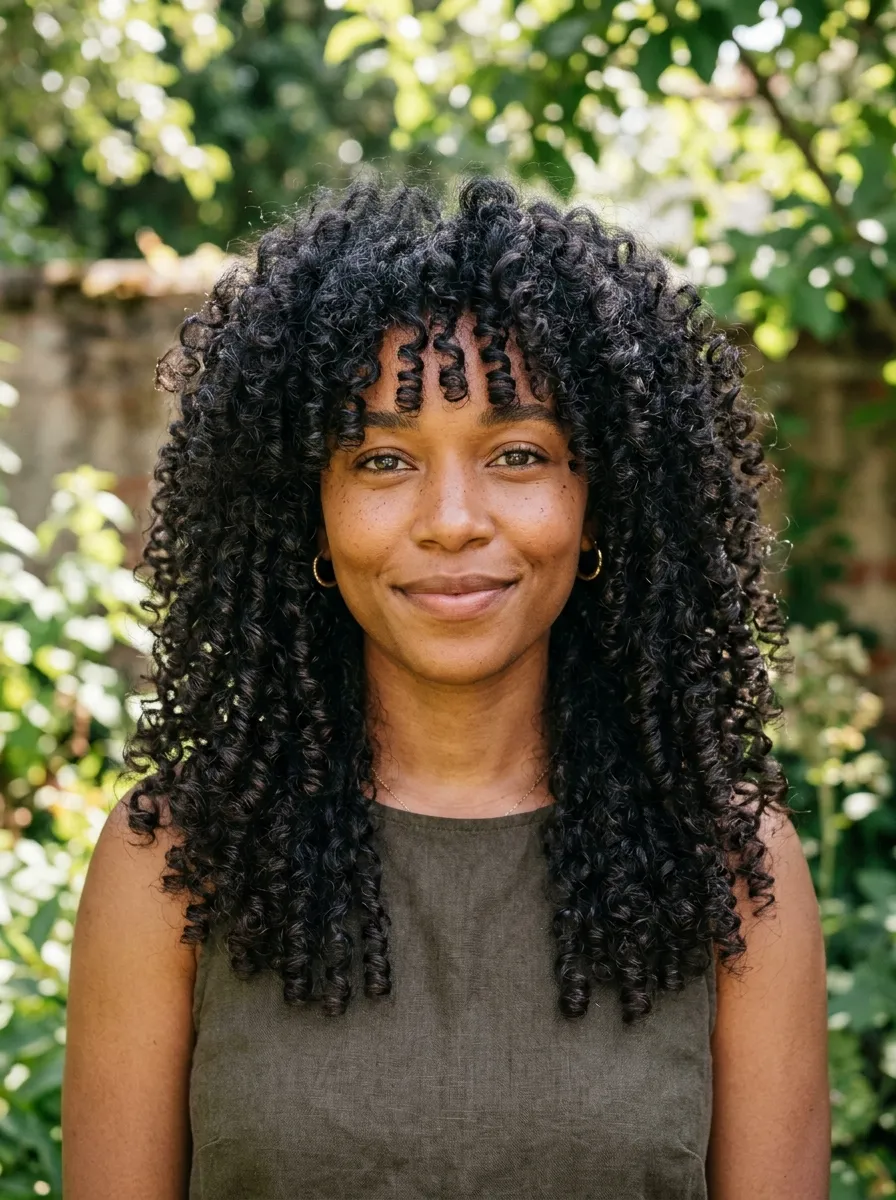
The butterfly wolf cut on curly hair is one of the most striking versions of this trend. Natural curl patterns work with the layered shape to create a full, defined silhouette with serious volume.
Curly hair cut in a wolf style is sometimes called a curly wolf cut or shag. The butterfly variation adds even more definition to the layered shape.
Always get this cut done on dry hair if possible. Cutting curly hair dry allows the stylist to see exactly how each curl falls and layer in its natural state. Wet cuts can result in surprising length changes once the hair dries and contracts.
Use a rake or wide-tooth comb rather than a brush when styling. Brushing curly hair disrupts the curl pattern and creates frizz.
Apply a curl-defining cream or gel to soaking wet hair and scrunch upward. Then either diffuse on low heat or air dry completely before touching.
The butterfly wolf cut on curls requires almost no daily styling once you have a good product routine in place. The layers encourage the curls to clump and define rather than frizz.
Get trims every eight to ten weeks to maintain the shape and remove any split ends that dull the curl pattern.
Curly hair in a butterfly wolf cut is one of the most low-maintenance and naturally beautiful hairstyles available.
10. Butterfly Wolf Cut with Money Piece Highlights

Money piece highlights are two bright sections of color framing the front of the face. They sit right at the face-framing layers of the butterfly wolf cut and create instant contrast and dimension.
This combination is extremely popular because it requires less color maintenance than a full highlight or color job. Only two sections need refreshing as the hair grows.
The money piece works best when the highlight is two to three shades lighter than the base color. For dark brown hair, a honey or caramel money piece looks warm and natural. For medium brown, a blonde or platinum piece creates a bolder contrast.
You can DIY a money piece at home with a box bleach kit and careful application. Section off just the front pieces before applying. Process carefully and tone with a purple or blue toner if the result is too yellow.
For a more polished result, have a colorist do this service. Because only two small sections are colored, it is one of the more affordable salon color services. Many salons offer it for $40 to $80.
The money piece draws attention directly to the face-framing layers of the butterfly wolf cut, making those layers look more intentional and styled.
This color addition completely changes the feel of the cut without requiring a full color commitment.
11. Butterfly Wolf Cut with Curtain Bangs on Wavy Hair
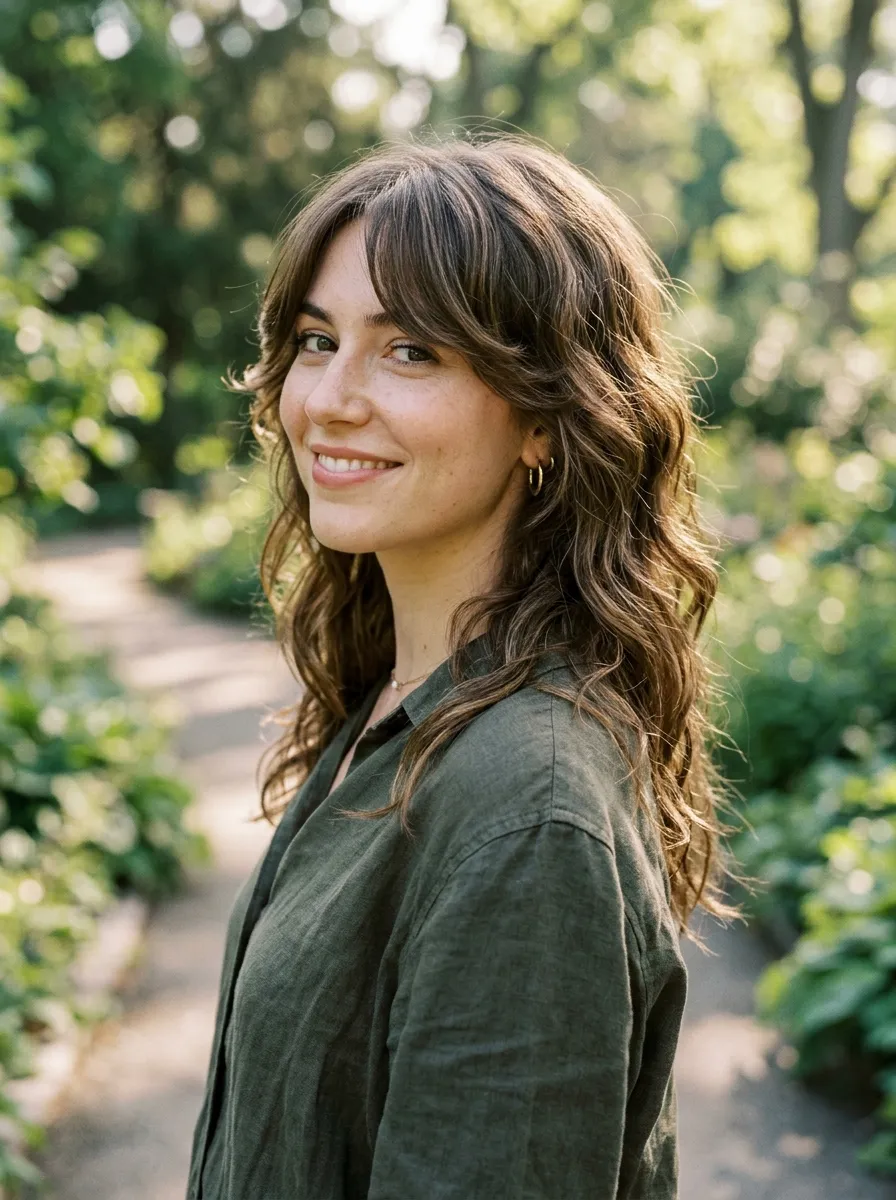
Wavy hair and the butterfly wolf cut are one of the best natural pairings in hairstyling. The waves fill out the layers, create natural movement, and make the cut look effortlessly styled even when it is completely air-dried.
The curtain bangs on wavy hair behave slightly differently than on straight hair. They tend to have a natural wave or curve that actually looks more organic and flattering.
Allow wavy curtain bangs to air dry without touching them. Touching them too much while wet disrupts the wave and causes frizz. Let them set naturally.
If your curtain bangs are too wavy and you want them smoother, use a light-hold straightening balm on them while damp and blow-dry with a round brush.
The rest of the wavy butterfly wolf cut can be styled with a wide-tooth comb run through wet hair, followed by a light styling cream scrunched in. Air dry completely for the most natural result.
A diffuser attachment on a blow-dryer speeds up drying time and helps define the wave pattern without creating frizz.
This is one of those cuts where doing less is often better. The natural wave texture works with the layers to create the full butterfly effect without any heat or styling products.
Wavy hair grows out of the butterfly wolf cut gracefully because the wave disguises the growth phase beautifully.
12. Butterfly Wolf Cut Updo Styling
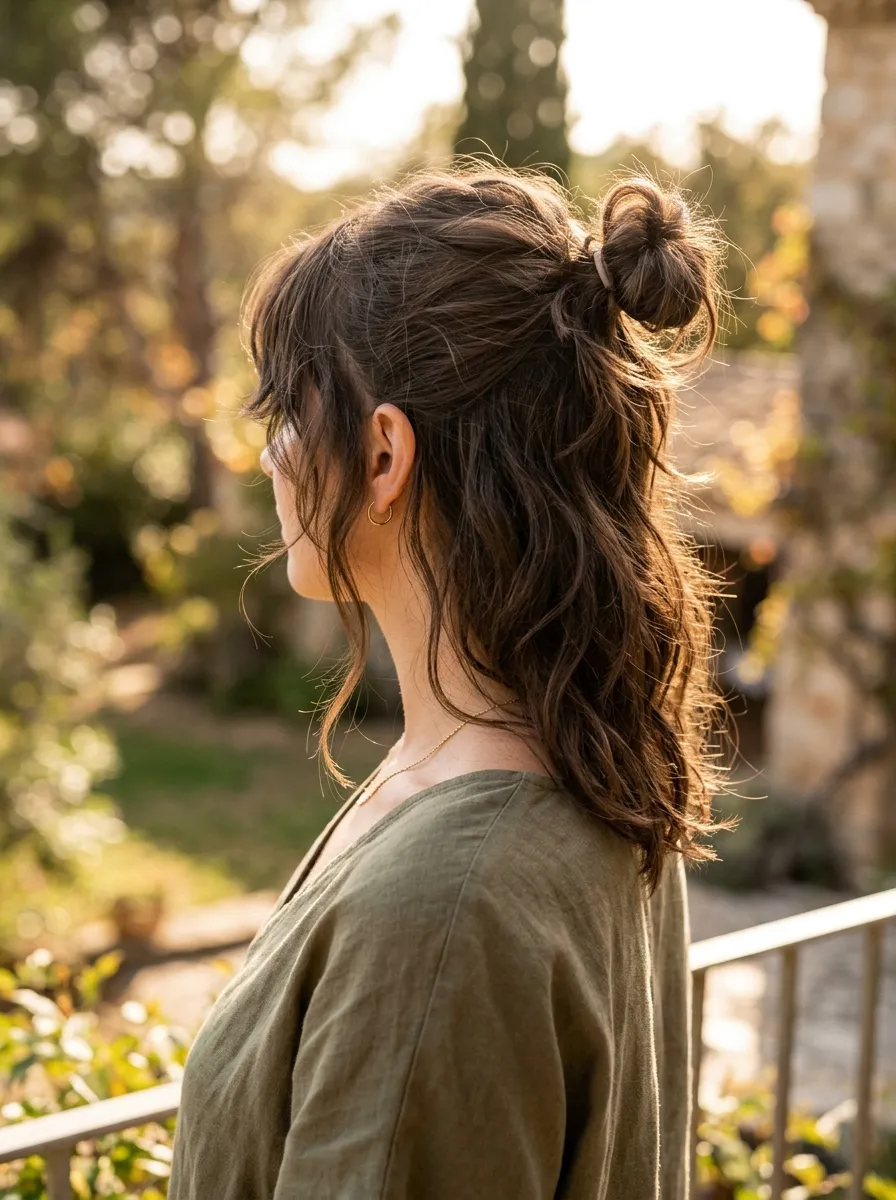
One of the best things about the butterfly wolf cut is how well it works in casual updos. The layers and wispy ends mean there are always pieces escaping and framing the face, which makes any updo look more relaxed and romantic.
A messy half-up bun is the go-to updo for this cut. Gather the top half of the hair and twist it into a loose bun at the crown. Let the shorter layers fall around the face naturally.
Do not try to make the updo too neat. The escaping pieces are part of the look. They are what make the butterfly wolf cut look so good when the hair is partially up.
A simple low bun at the nape of the neck with all the shorter layers loose around the face is another quick and effective option.
Use a few bobby pins to secure the bun without making it too tight. Leaving it slightly undone is always better than over-pinning.
For a more dressed-up updo, try a loose French twist with the front layers and bangs left out. The short layers around the face soften the formality of the twist.
You do not need special styling skills to put a butterfly wolf cut into an updo. The cut does most of the work. Whatever you put up, something interesting is left down to frame the face.
This makes it one of the most practical cuts for people who regularly wear their hair up.
13. Butterfly Wolf Cut with Textured Ends

Textured ends are one of the signature details of the butterfly wolf cut. Unlike blunt cuts or smooth rounded ends, the ends in this style are deliberately choppy, wispy, and separated.
This texture is created by point-cutting and razor-cutting techniques. Both methods break up the blunt line at the ends and create a feathered, lived-in finish.
Point-cutting means the stylist holds the scissors vertically and snips into the ends rather than cutting straight across. This removes bulk and creates separation between individual strands.
Razor-cutting uses a straight razor to slice through the hair at an angle. This creates an even softer, more feathered edge than point-cutting alone.
At home, you can enhance textured ends with texturizing scissors, which have notched blades. These create a similar effect without requiring professional technique.
Style textured ends by applying a small amount of light hold pomade or hair wax to dry hair. Work it through the ends with your fingers to separate and define each wispy section.
A texturizing spray worked through the ends before air-drying also adds separation and prevents the ends from clumping together.
Textured ends on the butterfly wolf cut are what give the style its airy, effortless quality. They are also what make this cut look great even on day-three hair.
14. Butterfly Wolf Cut with Balayage Color
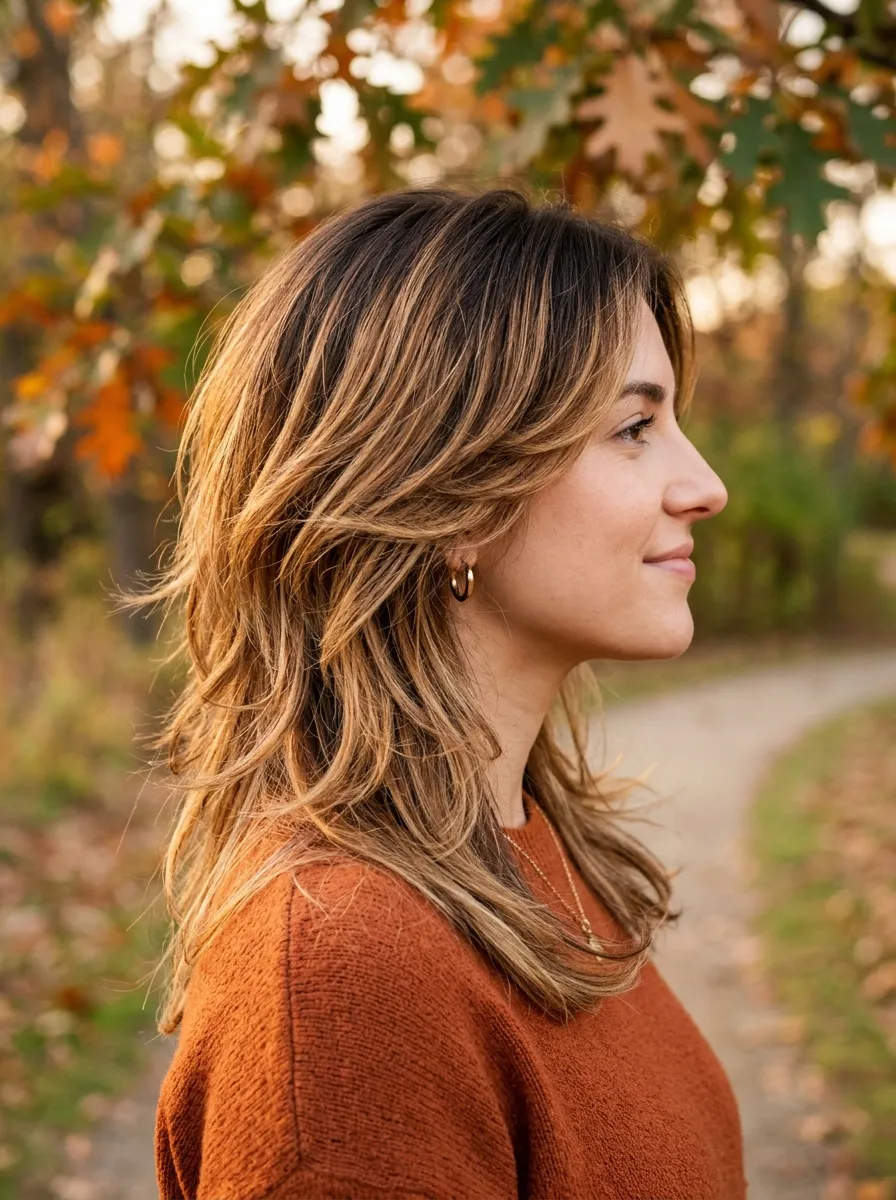
Balayage color and the butterfly wolf cut are one of the most popular combinations in salons right now. The freehand painted color technique creates natural-looking dimension that suits the layered, lived-in quality of this cut perfectly.
Balayage lightens the mid-lengths and ends while leaving the roots dark. This creates a natural, sun-kissed effect with very low maintenance as it grows.
Unlike all-over color, balayage does not show a harsh root line as it grows. This means you can go three to six months between color appointments without the color looking grown-out.
The cost of a balayage varies widely, from $80 to $200 or more depending on your hair length, thickness, and salon location. It is an investment but a long-lasting one.
For a budget-friendly approach, ask for a partial balayage rather than a full one. This applies color only to the most visible top sections and costs significantly less.
The butterfly wolf cut enhances balayage beautifully because the layers move independently, showing off the different tones as the hair shifts.
Choose warm tones like caramel, honey, or amber for a golden, natural look. Or go cooler with ash blonde or champagne for a more modern, muted result.
Balayage on a butterfly wolf cut genuinely looks like salon quality even as it grows. This is one of the smartest color investments for this cut style.
15. Butterfly Wolf Cut for a Soft Grunge Aesthetic
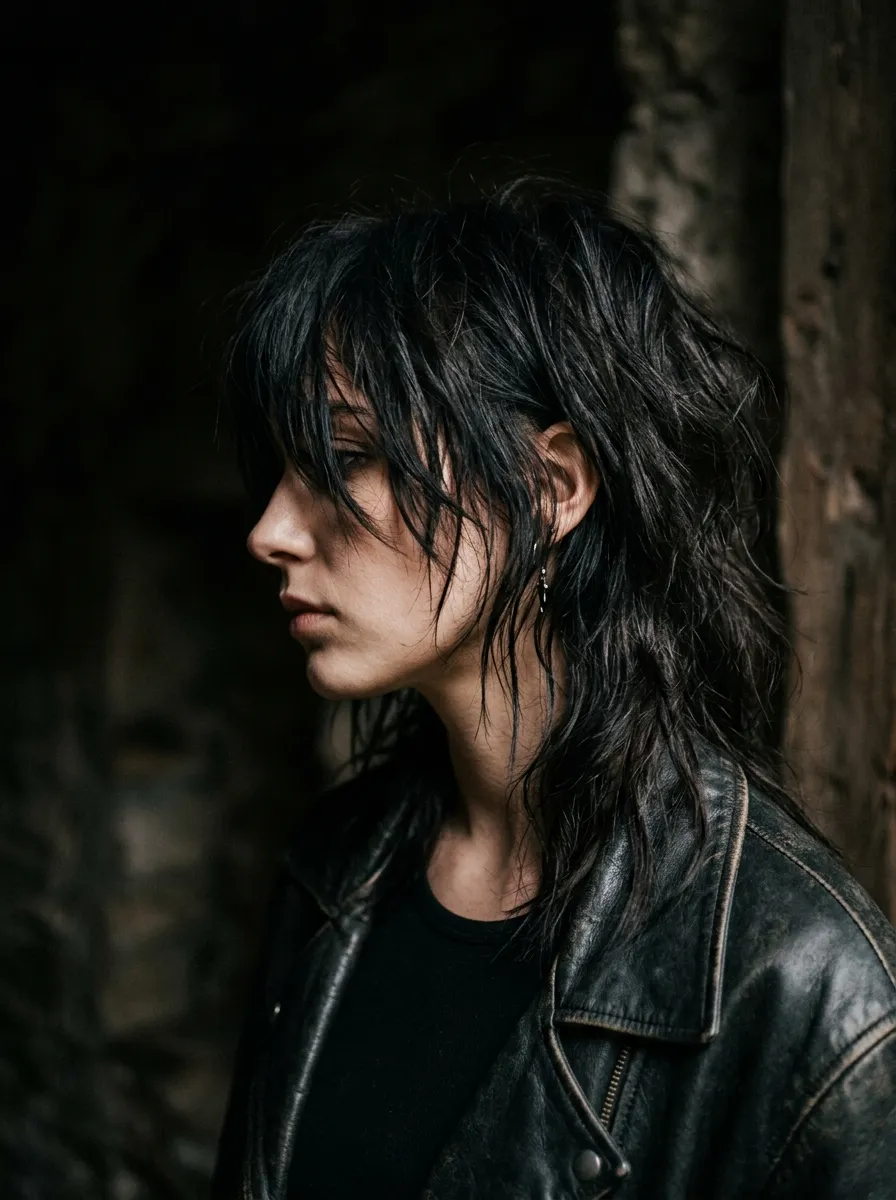
The butterfly wolf cut has a soft grunge energy built into its DNA. The choppy layers, wispy ends, and lived-in texture all lean naturally toward an edgier aesthetic without requiring much effort.
Leaning into that grunge quality intentionally creates a cool, slightly undone look that feels very of-the-moment.
Tousle the hair with your fingers after blow-drying rather than smoothing it out. Work a small amount of light-hold wax or pomade through the ends to separate them and give them definition.
Let a few pieces fall across the face rather than pushing everything back. This asymmetrical quality is central to the grunge aesthetic.
Dark hair colors suit this version best. Deep black, dark brown, or even burgundy and dark red tones all fit naturally.
For a more pronounced grunge look, ask your stylist to cut the layers slightly more aggressively. Shorter top layers and more dramatic length variation increase the shaggy quality of the cut.
Add a simple black headband, small claw clip, or a few metal bobby pins as accessories. These small details reinforce the aesthetic without being overdone.
Pair this hair with oversized vintage clothing, band tees, or dark outerwear for a cohesive look that feels genuinely personal.
The grunge version of the butterfly wolf cut is very low-maintenance. The more it is left alone, the better it tends to look.
16. Butterfly Wolf Cut with a Center Part

The center part is the most natural parting for the butterfly wolf cut. It creates symmetry and allows the face-framing layers to fall evenly on both sides, reinforcing that signature butterfly wing shape.
The center part also emphasizes curtain bangs, as the bangs naturally split along the center part line and sweep to each side.
Use a fine-tooth comb to create a clean center part while hair is still damp. This sets the part in place as the hair dries.
If your hair naturally falls to one side, hold the center part in place with a little light-hold gel or styling cream applied right at the parting line. A blow-dryer directed downward along the part also helps train it into place.
The center part suits oval, heart, and oblong face shapes best. For round faces, a very slight off-center part creates a more elongating effect.
Once the center part is set, the rest of the butterfly wolf cut styles itself. The layers fall into their natural position on each side and the curtain bangs settle into their sweeping frame.
This is the easiest version of the cut to maintain because the parting is always in the same place and the hair always falls the same way.
A center part with a butterfly wolf cut is one of those combinations that just works, every single day.
17. Butterfly Wolf Cut with a Side Part for Asymmetric Volume
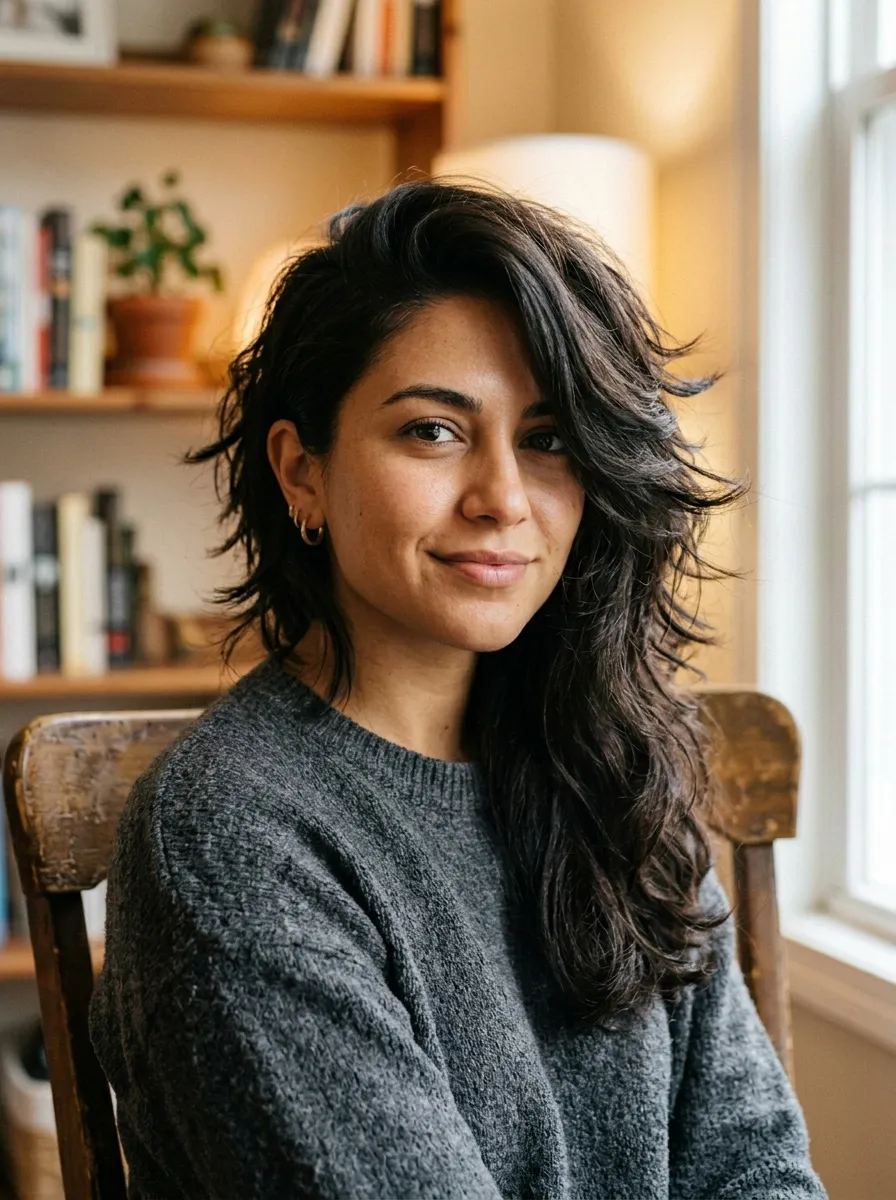
A deep side part on the butterfly wolf cut creates a completely different effect from the centered version. It throws volume to one side and creates asymmetric drama that suits bolder personalities.
The side with more hair gets a dramatic sweep of layered volume. The shorter side sits closer to the head and shows off the layering in a more structured way.
A deep side part works especially well on thick or voluminous hair. The extra volume on the heavier side becomes a feature rather than a problem.
Blow-dry the heavier side with a large round brush, directing it over and down for maximum volume. Smooth the lighter side flat against the head.
This parting gives the butterfly wolf cut a more dressed-up, editorial quality. It suits formal events, work environments, or any occasion where you want the cut to look intentional.
On finer hair, a deep side part on the butterfly wolf cut can look too flat on the lighter side. Add a little volumizing spray to both sides before styling.
Switching between a center part and a side part is one of the easiest ways to get two completely different looks from the same cut. Try both and see which suits your face shape better.
This is a great option for anyone who finds the center part too symmetrical or expected.
18. Butterfly Wolf Cut Color Blocked with Two Tones
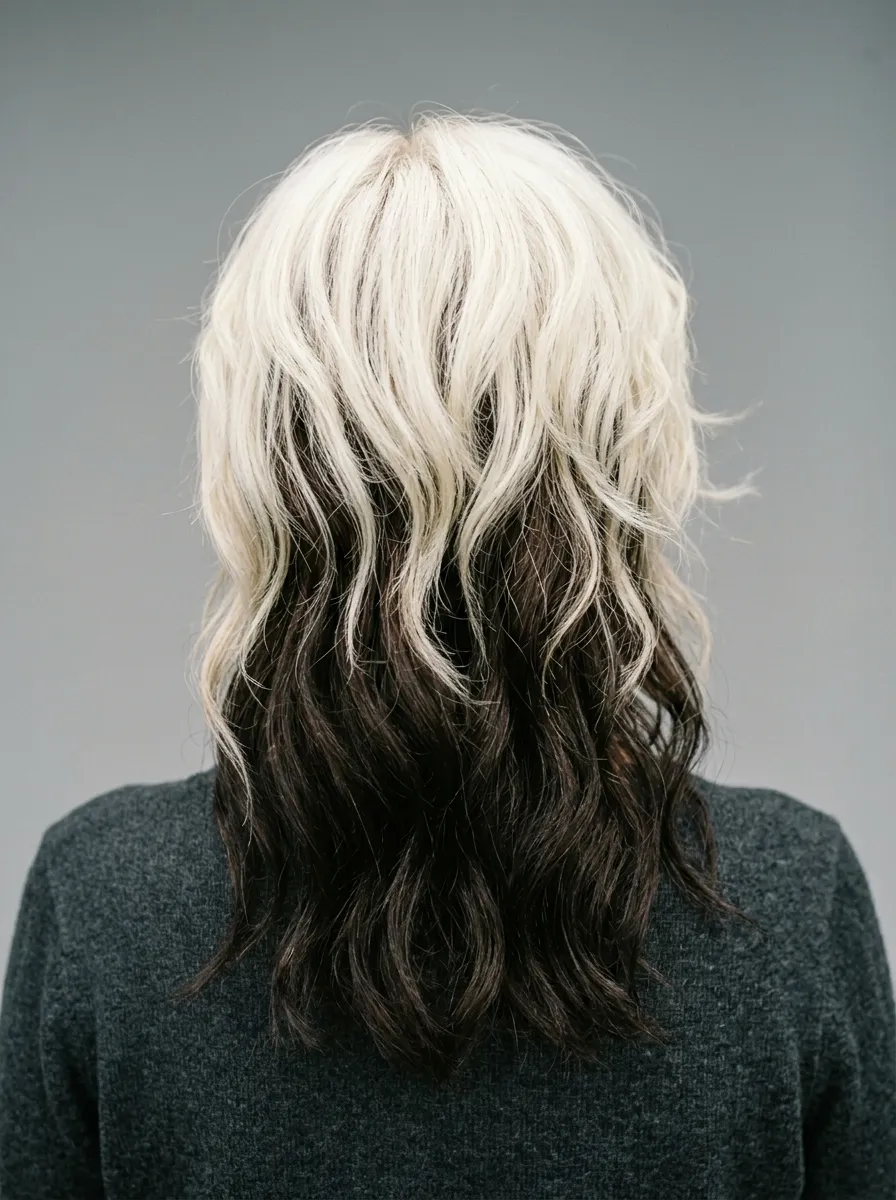
Color blocking in the butterfly wolf cut uses two distinct colors placed in different layers to create a dramatic, graphic effect. When the layers move, both colors reveal themselves alternately.
The most popular version uses dark roots or undertones with a lighter or contrasting color on the top layers and face-framing pieces.
The butterfly wolf cut is ideal for two-tone color because the layers are cut specifically to show separation. When the layers part and move, the color contrast becomes part of the visual effect.
Popular combinations include black and platinum, dark brown and copper, or natural brown and honey. More adventurous options include dark roots with pastel pink or lavender tips.
Two-tone color can be achieved at a salon or at home. Home dyeing of just the lighter sections using a box bleach kit requires care and some practice. Protect the darker sections with clips and foil during application.
This color style does require more maintenance than natural tones. Touch up the lighter sections every eight to twelve weeks to keep the contrast looking clean.
Use a color-safe shampoo and a weekly conditioning mask to keep both sections of color looking vibrant and healthy.
Two-tone color on a butterfly wolf cut is one of the most striking hair looks you can create. It makes the layered structure of the cut immediately visible and artistic.
19. Butterfly Wolf Cut Styled with a Blow-Out
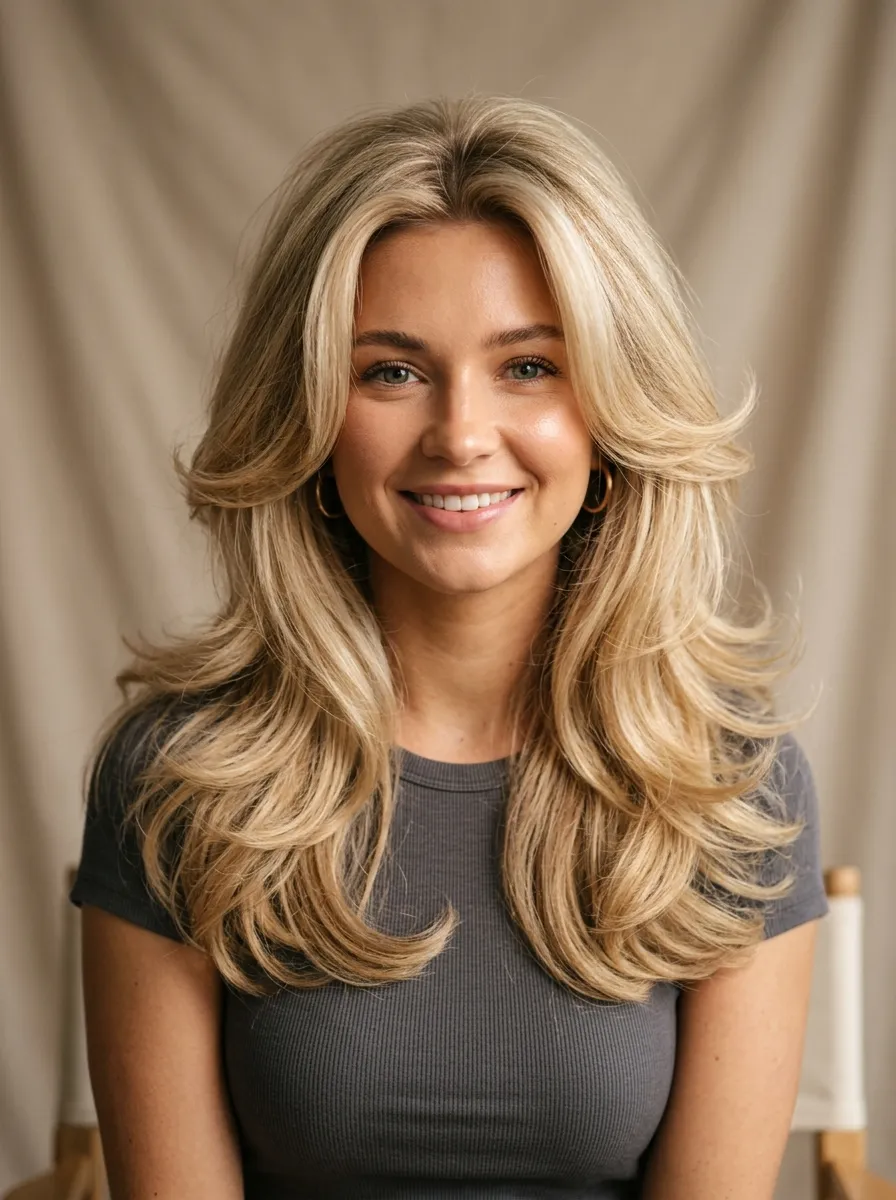
While the butterfly wolf cut looks beautiful air-dried, styling it with a blow-out completely changes its character. A blow-out makes the cut look polished, smooth, and high-volume all at once.
The layers get lifted and rounded by the blow-dryer and round brush, creating a full, bouncy shape rather than the relaxed texture of the air-dried version.
Start at the nape of the neck and work your way up in sections. Place the round brush underneath each section and roll it slightly as you direct the blow-dryer downward along the hair shaft.
Use a medium to large round brush depending on how smooth or curved you want the ends. A larger brush creates a more rounded, voluminous effect.
Apply a heat protectant spray before blow-drying. This is non-negotiable for protecting the ends of the butterfly wolf cut, which are already thinned and more fragile than a blunt cut.
Finish with a light-hold hairspray to set the volume without stiffness.
A blow-out on a butterfly wolf cut lasts two to three days with minimal restyling. Use dry shampoo at the roots on day two to refresh volume.
This styled version of the cut works well for interviews, formal events, date nights, or any occasion where you want your hair to look deliberately groomed and polished.
20. Butterfly Wolf Cut Grown Out for an Effortless Look
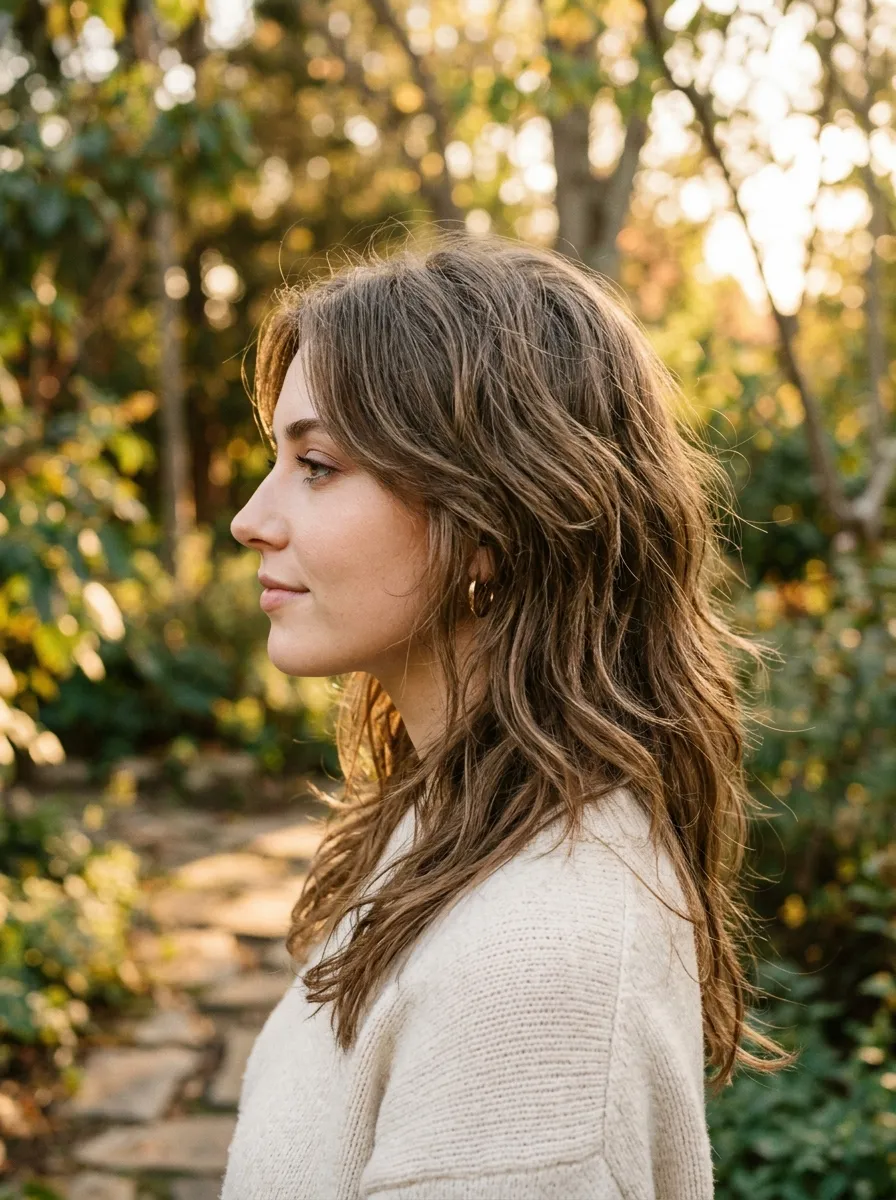
One of the most appealing things about the butterfly wolf cut is how gracefully it grows out. Unlike blunt cuts or very geometric styles, the layered wolf cut simply gets softer and longer as it grows rather than looking awkward.
At two to three months of growth, the layers are softer and the wispy ends have more length. The overall shape is more relaxed but still attractive.
This grown-out phase is actually a style in its own right. Many people prefer the butterfly wolf cut at the two-month mark rather than freshly cut.
If you want to maintain the cut precisely, book a trim every eight weeks. If you prefer to let it evolve, you can go three to four months between trims without the style looking bad.
As the cut grows, keep the ends healthy with regular conditioning treatments. Deep condition once a week with a nourishing hair mask to keep the wispy ends from becoming dry and brittle.
A light oil worked through the mid-lengths and ends adds shine and prevents the grown-out layers from looking dry or frizzy.
The grown-out butterfly wolf cut eventually becomes a long layered cut with soft movement. This gives you the option to either maintain the wolf cut shape with a trim or let it grow into something different.
Either direction is a good one. The cut works at every stage of growth.
21. Butterfly Wolf Cut with Bangs for Extra Softness

While curtain bangs are the most common bang choice with the butterfly wolf cut, full bangs across the forehead create a very different and equally appealing look.
Full bangs add softness to the forehead and create a more defined facial frame. Combined with the butterfly wolf cut layers, the overall effect is soft, romantic, and slightly retro.
Go for slightly wispy full bangs rather than a hard blunt cut. Wispy bangs suit the overall texture of the butterfly wolf cut much better than a geometric blunt fringe.
Ask your stylist to point-cut the bang edge so it has a soft, feathered quality. This makes the bangs feel lighter and less heavy on the face.
Full bangs require more maintenance than curtain bangs. They need trimming every three to four weeks to keep them at the right length above the eyebrow.
Between salon visits, you can trim full bangs at home. Use sharp scissors and cut small amounts at a time. Cut slightly longer than you think you want, because cut bangs always look shorter once dry than when wet.
Style full bangs with a small, flat boar bristle brush and a blow-dryer. Direct the heat straight down across the bangs to keep them smooth and flat.
Avoid heavy products on full bangs. They make them look greasy and flat, and they can cause forehead breakouts with daily contact.
22. Butterfly Wolf Cut for a Low Maintenance Lifestyle

The butterfly wolf cut is genuinely one of the most low-maintenance cuts available. Once it is properly cut, it requires minimal daily effort to look good.
Air-drying is the default for this cut and the result is always appealing. The layers create natural texture and movement without any tools or products.
The minimum routine for a butterfly wolf cut is wash, apply a small amount of leave-in conditioner or light styling cream, and let it air dry. That is all many people do and their hair looks styled and intentional.
Choose a gentle, sulfate-free shampoo to keep the wispy ends healthy. Sulfate-free formulas are more widely available now and many affordable options exist at drugstores.
Condition the mid-lengths and ends every wash. The textured ends of this cut can dry out faster than the ends of a blunt cut, so consistent conditioning makes a real difference.
A weekly deep conditioning mask keeps the hair healthy and the layers looking defined rather than dry and frayed. Many effective hair masks cost under $10 at drugstores.
On days when you genuinely do not have time to do anything, the butterfly wolf cut still looks presentable. The layers and texture make even completely unstyled hair look like a deliberate choice.
This is the cut for anyone who wants to look like they put effort into their hair without actually having to put much effort in at all.
Conclution
The butterfly wolf cut is one of those rare haircuts that works hard for you every day. Whether you wear it air-dried with zero products or style it with a full blow-out and careful detailing, the cut itself carries the look. It suits more hair types, face shapes, and lifestyles than almost any other trending style right now. If you have been considering this cut, take that as your sign to book the appointment. Bring a reference photo to your stylist, communicate the length and layer depth you want, and walk out with a haircut that will continue to look good for months. Start with one of the ideas on this list, whether it is the classic medium-length version, a color addition like balayage or money piece highlights, or a styling experiment like the blow-out or grunge tousle. Every variation here is a real, achievable look. Pick the one that excites you and go get it.
Leave a Reply